Lake Constance - setting the standard for sustainable and responsible travel
06.07.2026
Lake Constance - setting the standard for sustainable and responsible travel
- Sustainable destination: Lake Constance blends eco-friendly travel with nature and culture.
- Green mobility: E-bikes, clean-energy ferries, and eco-certified hotels.
- Biodiversity & local food: Protected habitats and farm-to-table dining support the environment.
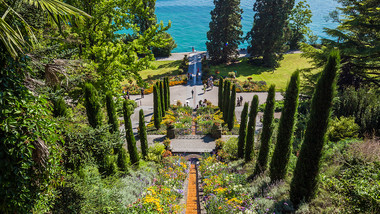
As travellers increasingly seek destinations that combine stunning experiences with environmental responsibility, Lake Constance stands out as a leading example of sustainable tourism in Central Europe. Straddling Germany, Austria, Switzerland and Liechtenstein, the region offers eco-conscious visitors a variety of ways to explore while protecting the environment.
Environmental protection and water quality
The Lake Constance Foundation (Bodensee-Stiftung) leads efforts to protect the lake, focusing on water quality, biodiversity, and sustainable use of resources. After past over-fertilisation altered species composition, measures have helped restore species adapted to nutrient-poor conditions. Challenges remain, such as the invasive quagga mussel, which affects the food chain and requires costly infrastructure solutions. These initiatives ensure that Lake Constance remains a thriving habitat for wildlife and a safe, clean resource for local communities and visitors alike.
Sustainable tourism and mobility
Sustainable travel is at the heart of the Lake Constance experience. Projects such as Mobility Lake promote cross-border, eco-friendly mobility for tourists and leisure activities. Visitors can explore the region on emission-free e-bikes or ferries powered by clean energy, while the Bodensee-Ticket offers seamless access across borders. ECHT nachhaltig (‘genuinely sustainable’) is an initiative which brings together over 60 hotels, restaurants and attractions committed to long-term preservation. The city of Constance declared a climate emergency in 2019, and the entire fleet of Lake Constance cruise ships is set to be carbon-neutral by 2035.
Agriculture and climate action
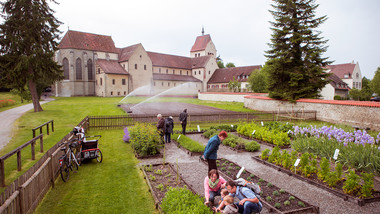
Sustainability extends to agriculture, where the Lake Constance Foundation supports projects like Insect-Friendly Regions, aimed at increasing insect populations and protecting ecosystems. Farmers are encouraged to reduce pesticide use, plant insect-friendly flower strips, and adapt to climate change through responsible practices. Local initiatives, such as the Unpacked store in Lindau, promote low-waste shopping and highlight regional, sustainably produced goods.
Local cuisine and farm-to-table dining
Lake Constance also celebrates its culinary heritage, with farm-to-table dining and locally sourced ingredients at the forefront. Restaurants such as Pinus at Seegut Zeppelin showcase seasonal, local produce, giving visitors authentic culinary experiences while supporting sustainable agriculture. Many eateries participate in eco-label schemes such as Swisstainable, ensuring meals align with responsible consumption.
Protected natural areas
The region is home to unique natural habitats, including the Wollmatinger Marsh and the Rhine Delta Nature Reserve, as well as UNESCO-protected cultural sites. These areas are carefully managed to preserve biodiversity while allowing visitors to experience their beauty responsibly.
A commitment to the future
Manfred Melchhammer of the Lake Constance Foundation comments:
‘Sustainability at Lake Constance is a multi-faceted effort - from protecting our water and biodiversity to supporting eco-friendly travel and climate action. Our goal is to ensure that future generations can enjoy the lake’s natural and cultural treasures as much as we do today.’
NOTES TO EDITOR
Getting there from UK:
- Flights: Direct flights from London, Manchester, and other major UK airports to Zurich, Memmingen and Munich. Limited direct flights from the UK into the closest airport, Friedrichshafen.
- Trains: Efficient links via German and Swiss rail networks; Zurich Airport is a key gateway, only 1 hour by train to Constance or St. Gallen.
- Ferries: Regular passenger ferries connect towns across the lake, offering scenic travel.
Getting there from US:
- Flights: Major U.S. airports connect to Zurich and Munich, with limited flights to Friedrichshafen. Zurich is only one hour by train to Constance or St. Gallen.
- Trains: Efficient German and Swiss rail networks make it easy to reach towns around the lake.
- Ferries: Regular passenger ferries connect lakeside towns, offering scenic and leisurely travel.
About Lake Constance:
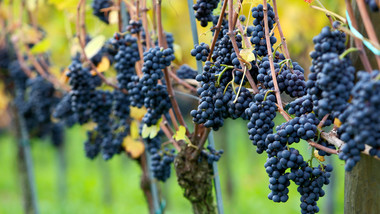
The heart of Europe, one lake, four countries. The Lake Constance region, lovingly called ‘Bodensee’ by local residents, borders Germany, Austria, Switzerland and is just a short hop from the Principality of Liechtenstein. This international region benefits from magnificent views of the Alps. Visitors can choose to drive or cycle along rolling hills, past apple orchards and vineyards, visit Baroque churches and castles or take a dip in Europe’s third-largest freshwater lake.
Contact
Internationale Bodensee Tourismus GmbHHafenstrasse 6
78462 Konstanz
Germany