15 fun facts about Lake Constance - Bodensee
Strange but true facts about beautiful Lake Constance - Bodensee
06.07.2026
15 fun facts about Lake Constance - Bodensee
Lake Constance, or Bodensee as locals call it, sits at the heart of Europe where Germany, Switzerland, Austria, and the Principality of Liechtenstein meet. Known for its stunning scenery, UNESCO World Heritage Sites, and year-round activities, the lake also hides some wonderfully strange and surprising facts.
- No borders on the water! When you’re in a boat, Lake Constance is technically a shared international ‘no-man’s-lake.’
- Cycle across three countries - The Bodensee Radweg (Lake Constance cycle path) stretches over 260 km through Germany, Austria, and Switzerland.
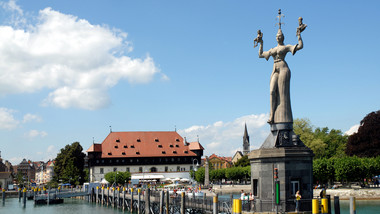
- Constance survived WWII - One of the only German cities untouched in the Second World War because it was mistakenly thought to belong to Switzerland.
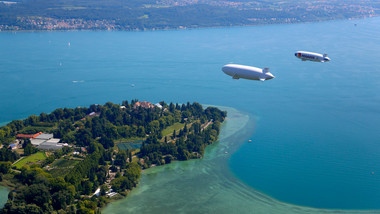
- Zeppelins still fly – Count Zeppelin built his first airship over the lake in 1900, and today modern Zeppelins give visitors panoramic aerial views.
- Shared national anthem - Liechtenstein’s anthem, Oben am jungen Rhein, has the same tune as Britain’s God Save the King.
- The world’s biggest floating stage - The Bregenz Festival stage holds a Guinness World Record and appeared in the 2008 James Bond film Quantum of Solace.
- Illegal grape smuggling… for wine! - In 1925, vines were smuggled from Switzerland to Germany to grow Müller-Thurgau grapes, now used in famous wines like Liebfrauenmilch.
- Bird paradise - The Lower Lake is a key stopover for migratory birds, making it a must for bird-watchers. Click here to find out which bird species can be observed in the different months.
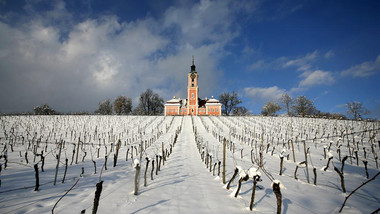
- Frozen over rarely - The last ‘Seegefrörne’ (frozen lake) was in 1963; the lake freezes only once every 70 years.
- Europe’s drinking water - Lake Constance provides up to four million households with fresh water every day.
- Rhine Falls: Europe’s biggest waterfall - In summer, 600,000 liters of water crash over the falls every second.
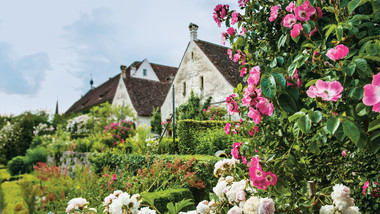
- English gardens in Switzerland - Wartegg Castle in Rorschacherberg has English-style landscaped gardens designed in 1860 for Empress Zita.
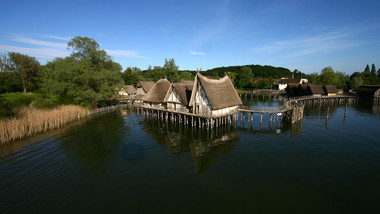
- Stone Age on stilts - UNESCO-protected prehistoric pile dwellings along the lake reveal life over 4,900 years ago.
- Lake Constance’s own dragon legend – Locals tell of the ‘Lindau Dragon,’ a mythical lake creature that inspired folklore across the region.
- Flower Island Mainau – Known as the “Island of Flowers,” Mainau is home to over 500,000 blooming plants each year, including rare tropical and Mediterranean species.
Key Facts about Lake Constance
- Lake size and dimensions - Spanning 63 km long and up to 14.8 km wide. Lake Constance has a max depth of 254 metres in the upper Lake and 147.4 metres in the Uberlingen lake.
- Territory - with three nations bordering Lake Constance, the land and shores are divided up as follows: Germany: 55%, Switzerland: 34%, Austria: 11%.
- Average annual temperature: 8–11°C (46–52°F)
- Freshwater lake: Europe’s third-largest by volume
- The population around Lake Constance: is approximately 450,000 to 500,000 people.
NOTES TO EDITOR
Getting there from UK:
- Flights: Direct flights from London, Manchester, and other major UK airports to Zurich, Memmingen and Munich. Limited direct flights from the UK into the closest airport, Friedrichshafen.
- Trains: Efficient links via German and Swiss rail networks; Zurich Airport is a key gateway, only 1 hour by train to Constance or St. Gallen.
- Ferries: Regular passenger ferries connect towns across the lake, offering scenic travel.
Getting there from US:
- Flights: Major U.S. airports connect to Zurich and Munich, with limited flights to Friedrichshafen. Zurich is only one hour by train to Constance or St. Gallen.
- Trains: Efficient German and Swiss rail networks make it easy to reach towns around the lake.
- Ferries: Regular passenger ferries connect lakeside towns, offering scenic and leisurely travel.
About Lake Constance:
The heart of Europe, one lake, four countries. The Lake Constance region, lovingly called ‘Bodensee’ by local residents, borders Germany, Austria, Switzerland and is just a short hop from the Principality of Liechtenstein. This international region benefits from magnificent views of the Alps. Visitors can choose to drive or cycle along rolling hills, past apple orchards and vineyards, visit Baroque churches and castles or take a dip in Europe’s third-largest freshwater lake.
Contact
Internationale Bodensee Tourismus GmbHHafenstrasse 6
78462 Konstanz
Germany