


from Hard
Hard Lake Tour—A Journey Through Time on the Lake with an App and VR Technology
Description
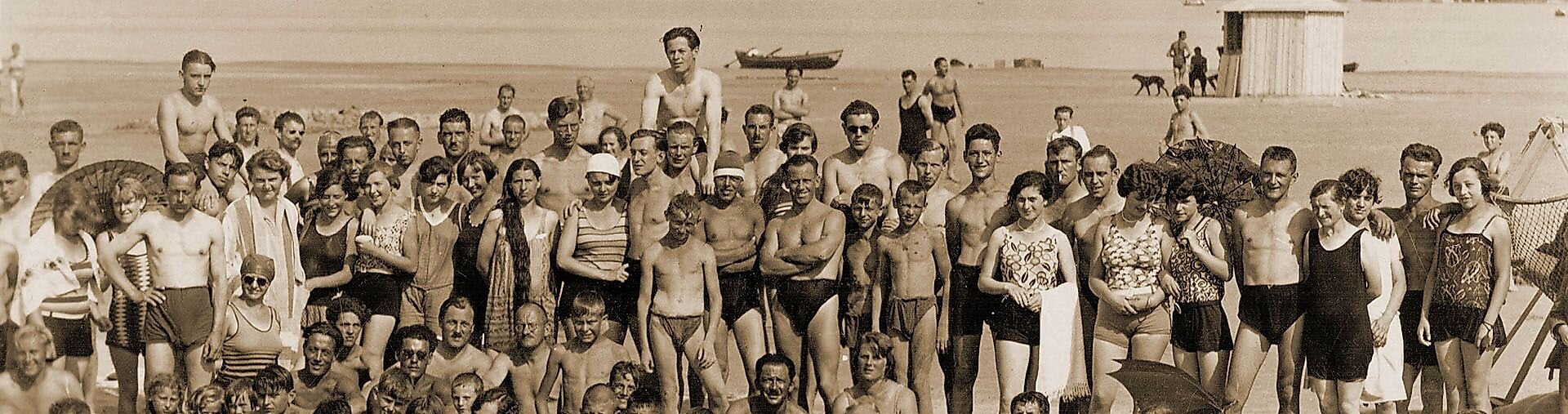
Along the idyllic shores of Lake Constance in Hard, a special themed trail awaits you, bringing history to life in a modern way. On a leisurely stroll along the lake, you’ll journey through two eventful centuries and learn fascinating facts about the lives of people back then. Did you know, for example, that there was once an “Island of Sin” in Hard? Or that in an old house on Stedepark, bodies were dissected, children were born, and the poor were cared for over the course of generations? With the help of virtual reality headsets, audio plays, and interviews with eyewitnesses, these stories come to life right at the original locations.
An experience for the whole family
The lake tour takes you to eight stops, easily recognizable by a sea-blue bench where you can pause and listen. Even little explorers won’t get bored: an interactive children’s book guides kids on their own adventure through Hard’s history. In addition, there’s a lovingly packed explorer’s backpack with everything young researchers need—from a telescope to craft supplies to a flip book.
Good to know:
From May through early September, the children’s backpack—including the children’s book, a map of the area, and VR glasses—is available free of charge at the Hohentwiel Office at Kirchstraße 16a.
Experience it anytime—with the Seerunde app
The route is accessible year-round. You can download the free app here. Or simply scan the QR code right on site at one of the blue benches and download the app there. Your journey through time at the lake begins right away.
With the handy Seerunde app, you can also listen to and experience the content later at home.
More info: https://hard.at/seerunde
Waypoints
A Windowless Church
: What Happens When Fire Meets History? The parish church of St. Sebastian is not only a spiritual center but also the scene of heated debates, tragic losses, and astonishing twists. Why are some windows missing? What does a plague epidemic have to do with the church’s patron saint? And which countess is said to have built a church here out of gratitude for her rescue?
A place brimming with stories that weave together faith, architecture, and village life—discover what lies behind the walls (and the missing windows).
From an Island of Sin to a Well-Kept Lakeside
Where walking paths, boats, and well-maintained green spaces now dominate the scene, a fierce battle between nature and humankind once raged. Marshes, reeds, and sandbars characterized the lakeshore—an enchanted place where frogs croaked and brave swimmers ventured onto a small island that soon sparked heated debates: Welcome to the infamous “Island of Sin.”
How this wild spot became a modern lakeside landscape, why the Rhine carved out its own path, and what all of this has to do with a botched fireworks display—you’ll learn all about it at this station.
Frost, Floods, and Landfills
What does a lake feel like when it freezes all the way to the horizon? When people walk across the ice to Lindau—and some never return?
Cold, disasters, and climate change have shaped Hard over the centuries. From biblical floods to freezing tragedies, from churchgoers floating on the ice to wild dumpsites at today’s favorite spots—this station shows how the forces of nature and human behavior have repeatedly reshaped life on the lake.
Floating Wood
Imagine this: A tree falls in the Bregenzerwald and doesn’t wash up in Hard until two years later.
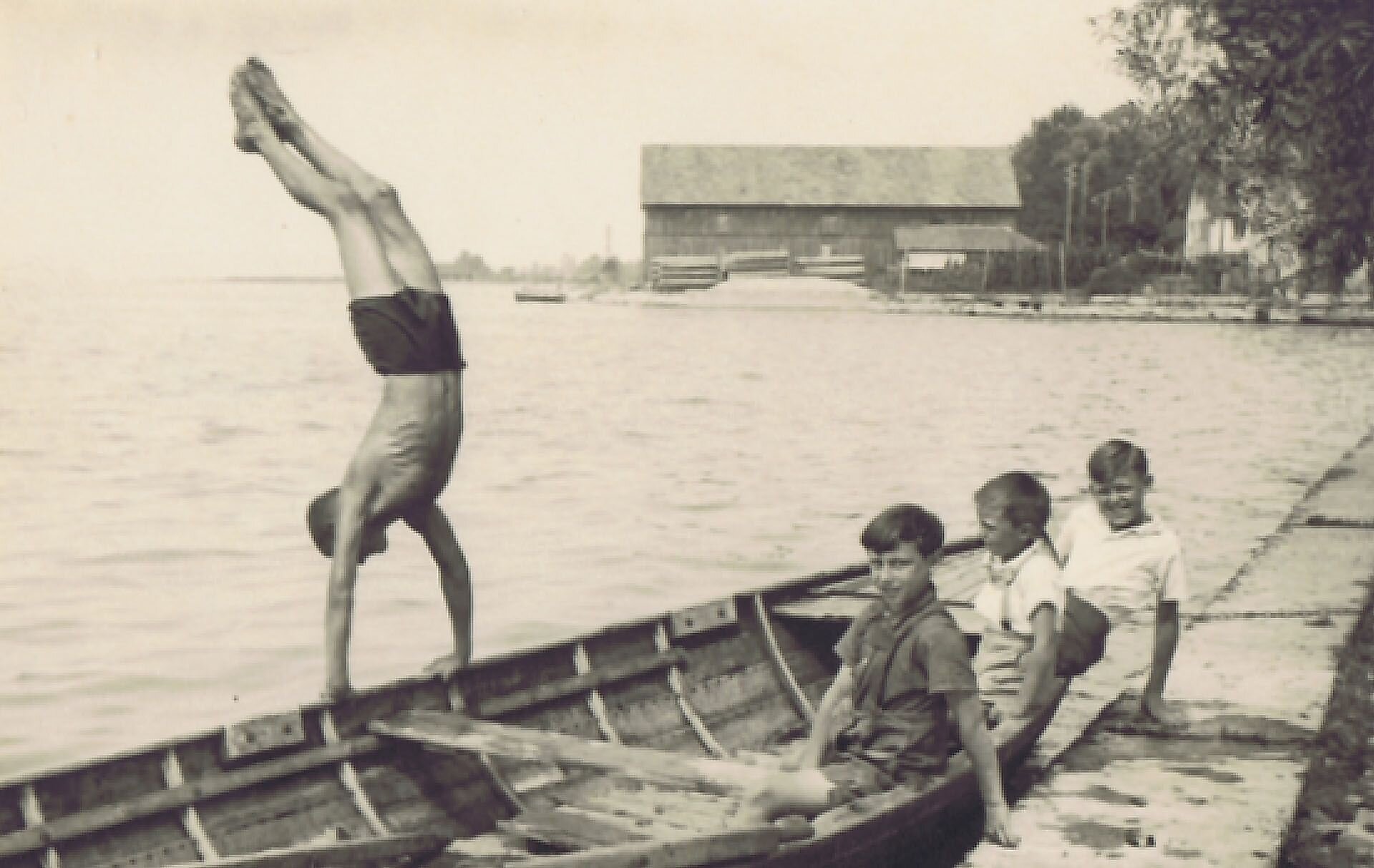
Water was once not only a source of life but also a means of transportation. Logs traveled down rivers, and ships docked at the Stede. Hard was a hub of trade and shipbuilding on the lake. But sandbars, railroads, and changing times brought this era to a halt.
This station illustrates just how much activity once took place on the water.
Almshouse—A House with Many Lives
From the magnificent residence of a lumber merchant to a poorhouse—and later to a maternity home.
This house was many things: a refuge, a workplace, a birthplace, even a drunk tank. Within its walls, hardship and compassion, community and change are reflected. Whether children, the sick, travelers, or expectant mothers—they all found a place here. A house that breathes stories. Not all of them easy, but all of them significant.
Roll the film!
Romance films, Westerns—and a stern glance from the pastor.
At the “Sonne,” a traditional inn in Hard, the cinema experienced its heyday. Starting in the 1920s, the first silent films flickered across the screen here, followed later by sound films—some censored, but all highly sought after.
For many, a trip to the movies was the highlight of their Sunday, complete with music, slides, and sold-out shows. Until television arrived and the lights at the “Lichtspieltheater Sonne” went out for good.
Adventure, Cars, and New Beginnings
“That’s how it’s done!” thought Franz Plunder as he crossed the Atlantic in a homemade boat in 1923. He made maritime history and inspired the entire town of Hard.
Cars from Hard? Almost! Ferdinand Porsche planned to manufacture cars on Lake Constance, but his venture failed. Alois Feuerstein’s charming “Knirps” also remained a one-off.
War changes everything. Hard became a military production site: assault boats, shell casings, soldier training. South Tyrolean families found refuge in new settlements—in simple, yet for many, happy circumstances.
Take a closer look at a time full of ideas, upheavals, and new beginnings!
At the End of the World
“At the End of the World”—that’s what the children called the overgrown meadows full of tall clumps of grass that made it almost impossible to get through, but which offered space for grand projects and the realization of many far-reaching ideas: from the production of a genuine Harder automobile to bobbin lace-making with its ups and downs, shaped by the war years and personal tragedies.
Long gone, too, is the picturesque harbor with fishing families casting their nets early in the morning. What remains to this day, however, are the ruins of the former workers’ settlement “Borgoland,” which, starting in 1890, provided housing for numerous Trentino families with communal courtyards and their own farms.
Immerse yourself in life at the “end of the world” and discover stories of courage, hard work, and solidarity!
Directions
Route: St. Sebastian Church – Sports Harbor near the beach – Numerical art installation on the waterfront promenade – Bridge over the Dorfbach Harbor – Stedepark/Seestraße – Kneipp facility in front of the Seezentrum on Uferstraße – back to the church via Mesnergasse and Sebastianweg
Additional stops: Hohentwiel pier on Hafenstraße and Härdleweg
Requirements
- Condition 1 detail.requirements.value
- Experience 4 detail.requirements.value
- Landscape 4 detail.requirements.value
- Technique 1 detail.requirements.value
Details
Season
- Spring
- Summer
- Fall
- Winter
Links
Additional Information
Location
- End
-
Lake Tour - Windowless Church
Kirchstraße 1
6971 Hard, Austria Read more


