


Lake Tour - Water, Ice, Trash
Description
Climate change has always had a significant impact on people’s living conditions. Particularly in the 18th and 19th centuries, Hard was repeatedly hit by devastating floods from the Bregenzer Ach and Lake Constance—attributable to the “Little Ice Age” between 1560 and 1860.
Brief Description
Climate change has always had a significant impact on people’s living conditions. Particularly in the 18th and 19th centuries, Hard was repeatedly hit by devastating floods from the Bregenzer Ach and Lake Constance—attributable to the “Little Ice Age” between 1560 and 1860.
Description
Lake Freezing
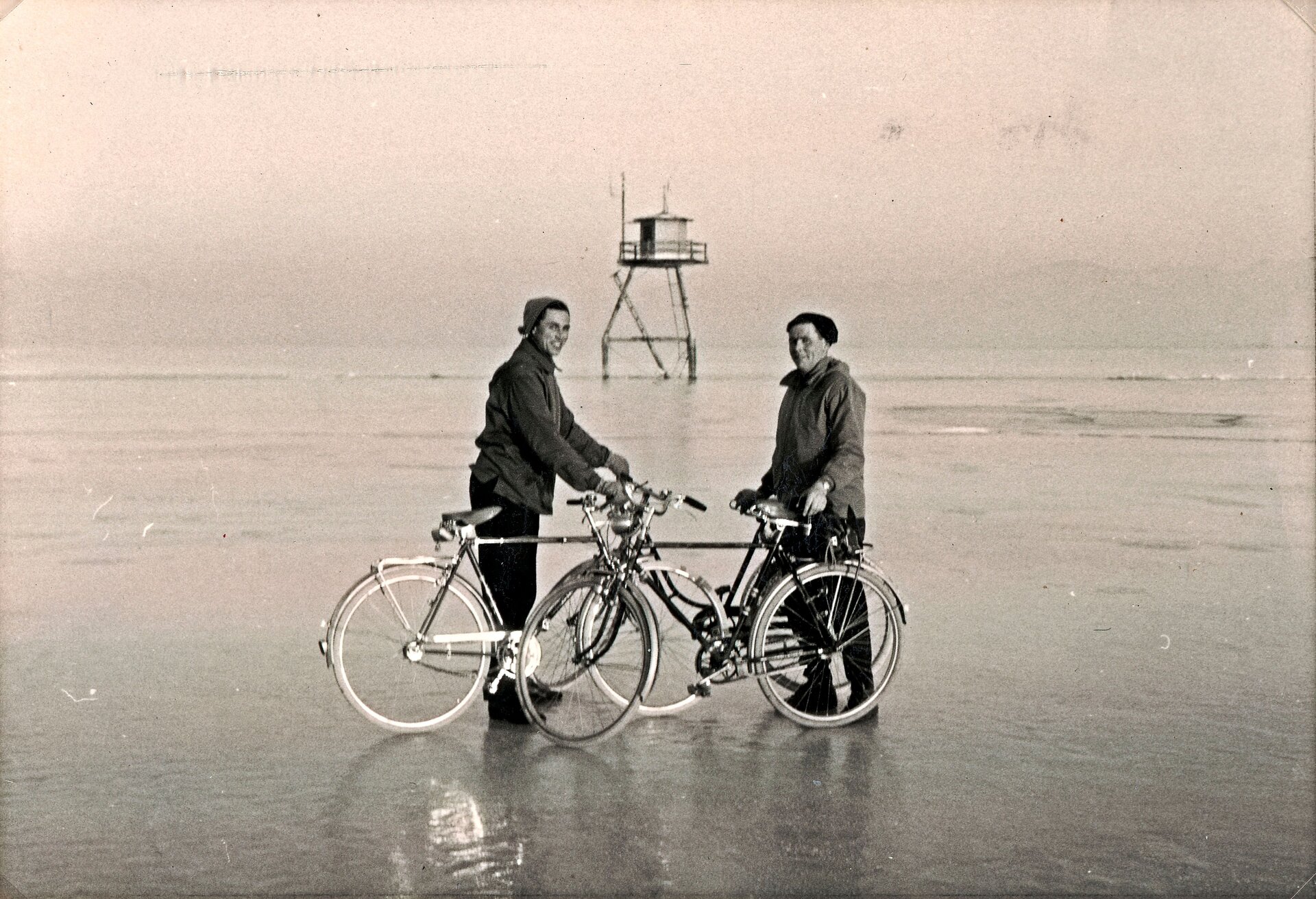
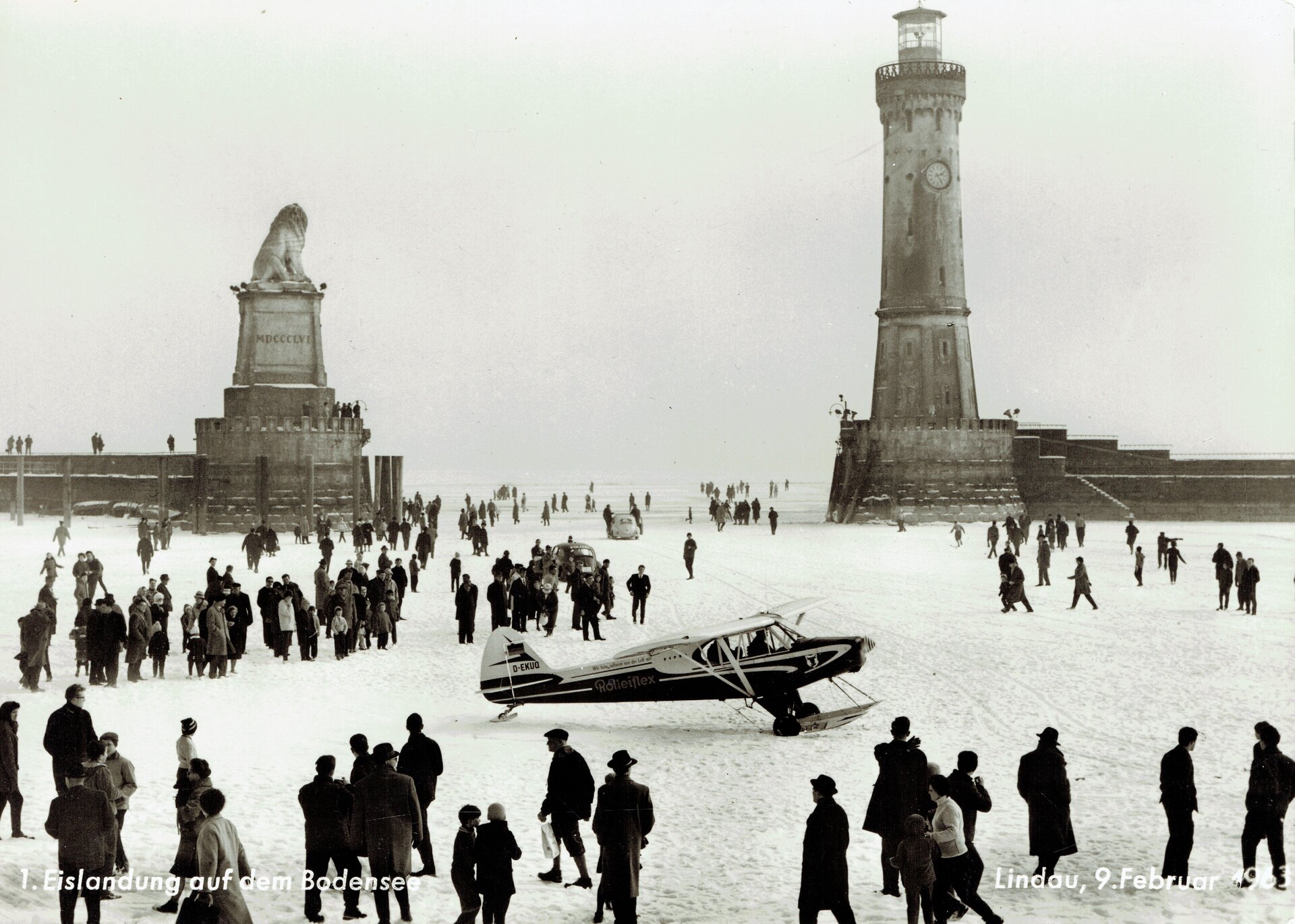
As early as the 9th century, Lake Constance froze over completely—a phenomenon known as “Seegfrörne.” This rare and impressive natural phenomenon occurs only under very specific conditions: severe, early winters, icy east winds, and very little sunshine. First, the Untersee and the Zeller See freeze over, followed by the Rheinsee. Two weeks later, the Obersee—the largest part of the lake and the area around Hard—finally freezes over.
In 1929, too, the Seegfrörne transformed the landscape into a frosty fairy-tale world for months. Many flocked to the shores, drawn by the magic of the frozen lake, which was often shrouded in thick fog. On the night of February 13–14, a tragedy occurred: Five boys followed three men who planned to walk across the ice to Lindau. An icy east wind blew, and the temperature plummeted to minus 29 degrees. As time went on, the cold grew ever more relentless; the ice began to crack, with fissures up to one meter wide in some places—impassable for the younger children. The thermometer dropped to minus 36 degrees. One of the men fell through into the freezing water but was pulled back out by the others. Beacons had been lit on the shore in the meantime, but the thick fog prevented their light from reaching the group. Trapped and surrounded by huge ice floes, the men desperately tried to keep the boys moving to prevent them from freezing to death. But time was working against them, and the children’s strength was waning. The youngest slipped into the water and disappeared into the icy depths. Two others froze to death, defenseless on the ice.
That night remained etched in the collective memory as one of the darkest in Hard’s history.
Floods
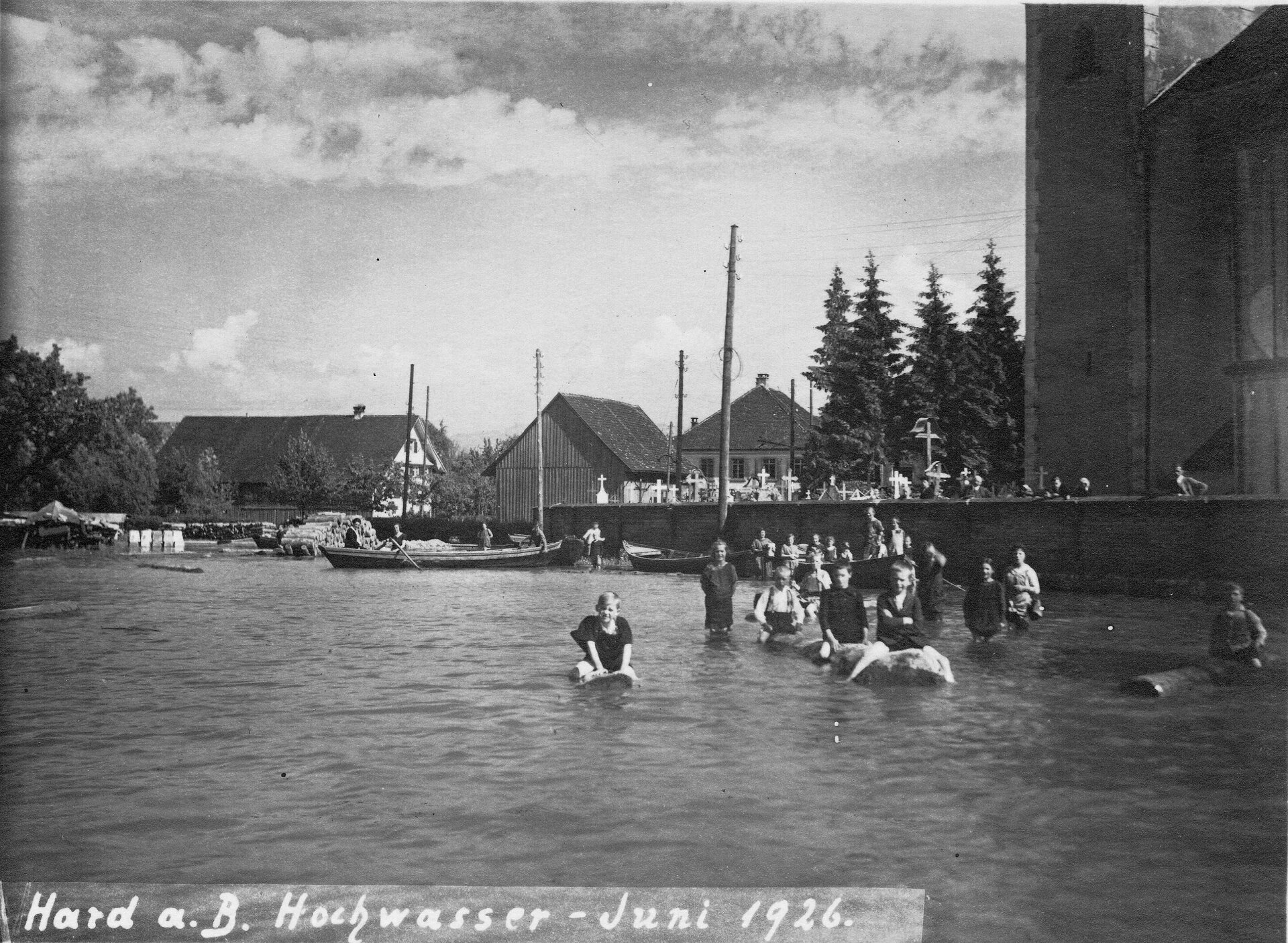
Hard has never lacked water-related hardships. More dangerous than the many lake floods—during which the waves repeatedly crashed against the walls of the old church and, in 1817, lake water even flooded the church itself—were the floods of the unregulated Bregenzer Ach. The worst was likely the one in 1542, when the raging floodwaters gnawed their way through the soldiers’ cemetery near the parish church and washed away the skeletons.
The largest flood in the Lake Constance region to date occurred in 1817, when the water level was recorded at over 6 meters. The cause was the eruption of Mount Tambora in Indonesia in 1815. Global annual temperatures dropped, and the ash spewed from the volcano continued to darken the sky for years afterward. The weather went haywire—it rained for 122 days, and snow fell for 35 days, even in the summer. Everything rotted in the flooded fields. Local food supplies were quickly exhausted, and a famine loomed. Mice and rats fled from the water, leaving cellars and storage rooms and invading living quarters. But the greater danger was something else: the floodwaters also contaminated the drinking water. The church was flooded, and Sunday Mass was held outdoors. The pastor, the sacristan, and parishioners came to the service by boat and raft. The effects of the volcanic eruption were still felt for many years.
Waste Disposal
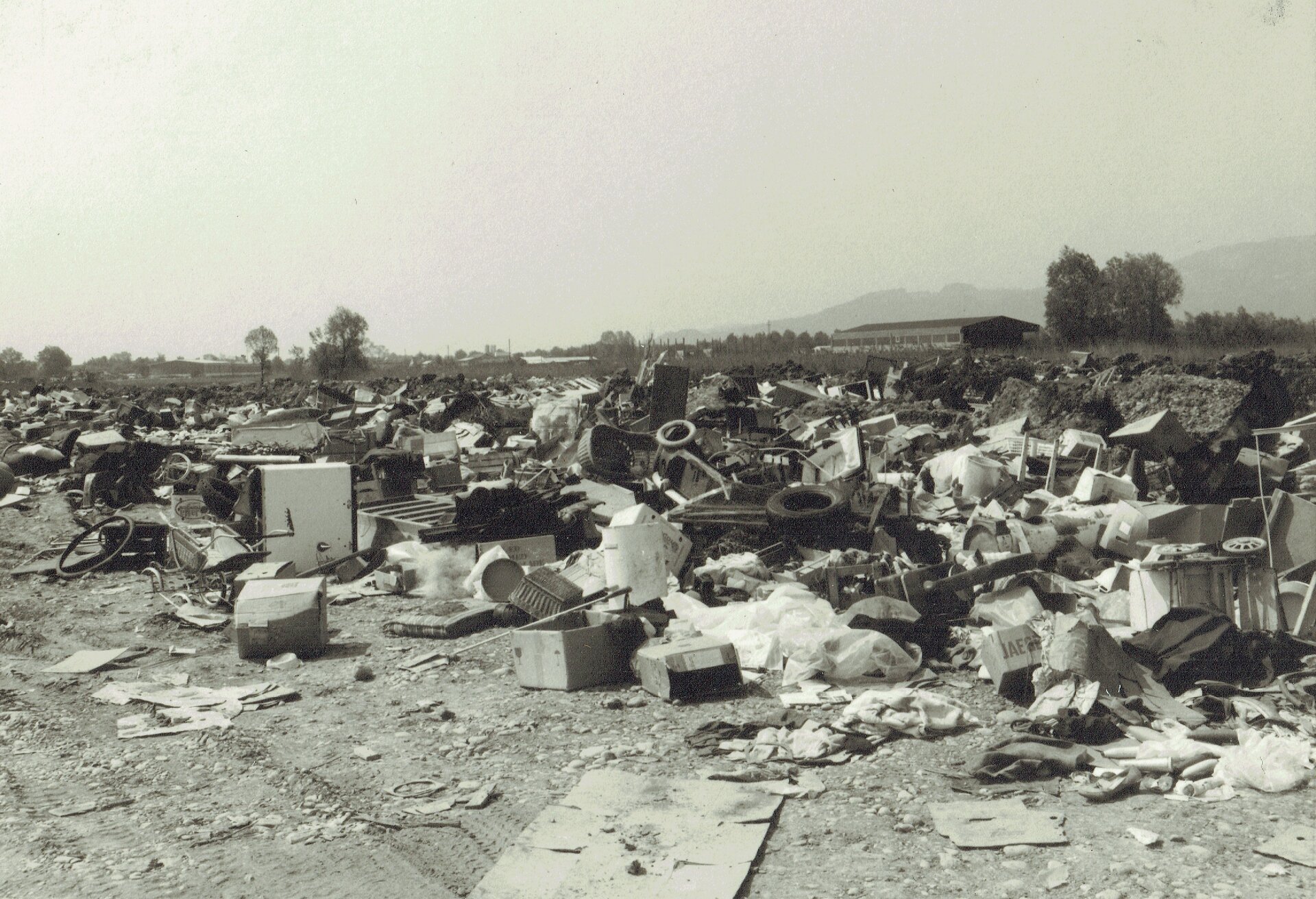
In Vorarlberg, trash is sorted—meticulously. Not too long ago, waste disposal was handled somewhat differently: organic waste went on the compost heap, paper was burned, and newspaper served as a substitute for toilet paper or was used for wall insulation. Plastic was still rare in the 1950s, and glass bottles were reused. The rest went “uff d’Schuttablag”—to the village landfill. By “the rest,” we mean furniture, car tires, washing machines, appliances, lamps, and much more.
Terms like “waste separation” and “recycling” were unknown; the only ones who sorted trash were the children, for whom the Schuttablag was a huge playground where they collected iron and copper wires and sold them to the scrap metal dealer for a little pocket money. One of these landfills was located in what is now one of the most beautiful spots in the municipality, along the lakeside of Kohlplatzstraße—from the former Chinese restaurant Phönix to the entrance of the beach resort. Another was located on the lakeside in front of the Jenny Houses (Seestraße 39–47).
It wasn’t until 1974 that the Häusle composting facility in Lustenau opened, replacing the public debris dumps.
Location
- Address
- Lake Tour - Water, Ice, Trash 6971 Hard, Austria