


Lake Tour - Poorhouse
Description
The old walls of the former poorhouse could tell quite a few stories.
Brief Description
The old walls of the former poorhouse could tell quite a few stories.
Description
A House and Its Many Lives/A House with an Eventful History
The old walls of the former poorhouse could tell quite a few stories. The building complex plays a central role in the social history of the community and has served various social functions over the years: It was a poorhouse, a kindergarten, a shelter for school groups, a maternity home, and later a retirement home. This place shaped the lives of many generations and had a significant influence on the social life of the Harder community.
From the Home of a Wealthy Lumber Merchant to a Poorhouse
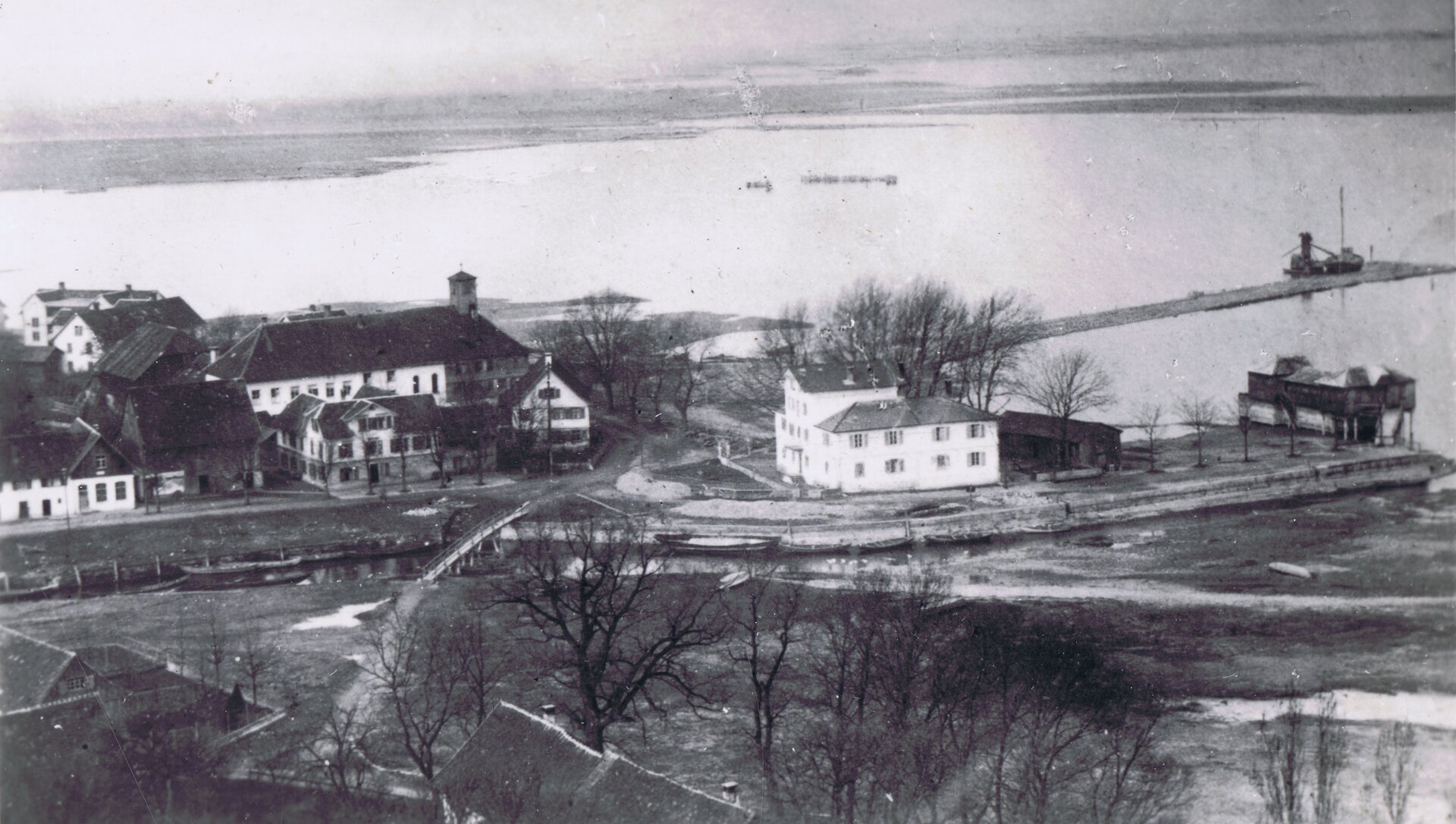
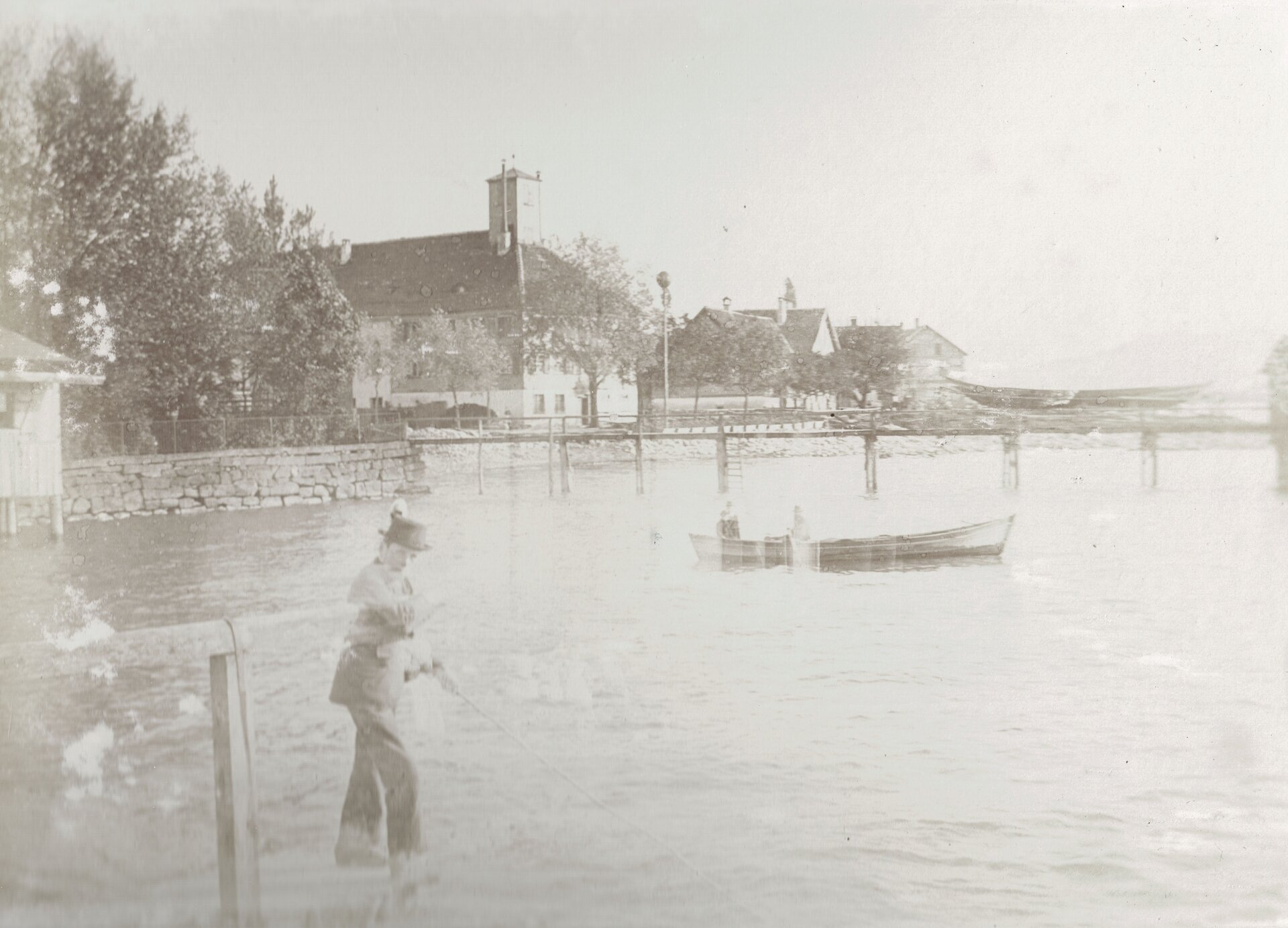
The almshouse, formerly known as the “Steurerhaus,” was built in 1838 by the lumber merchant Johann Konrad Steurer. The stately building served as a residence and servants’ quarters for him and his 24 children from four marriages. Above the front door was an ornately carved stone house mark that Steurer had specially commissioned. A particularly striking feature of the house was the watchtower, which was specifically designed to spot drifting timber from afar. As soon as the valuable cargo came into view, the team of loggers set out in rowboats to collect the logs. These were marked with Steurer’s personal house mark.
After the timber merchant’s death, his family was no longer able to maintain the house.
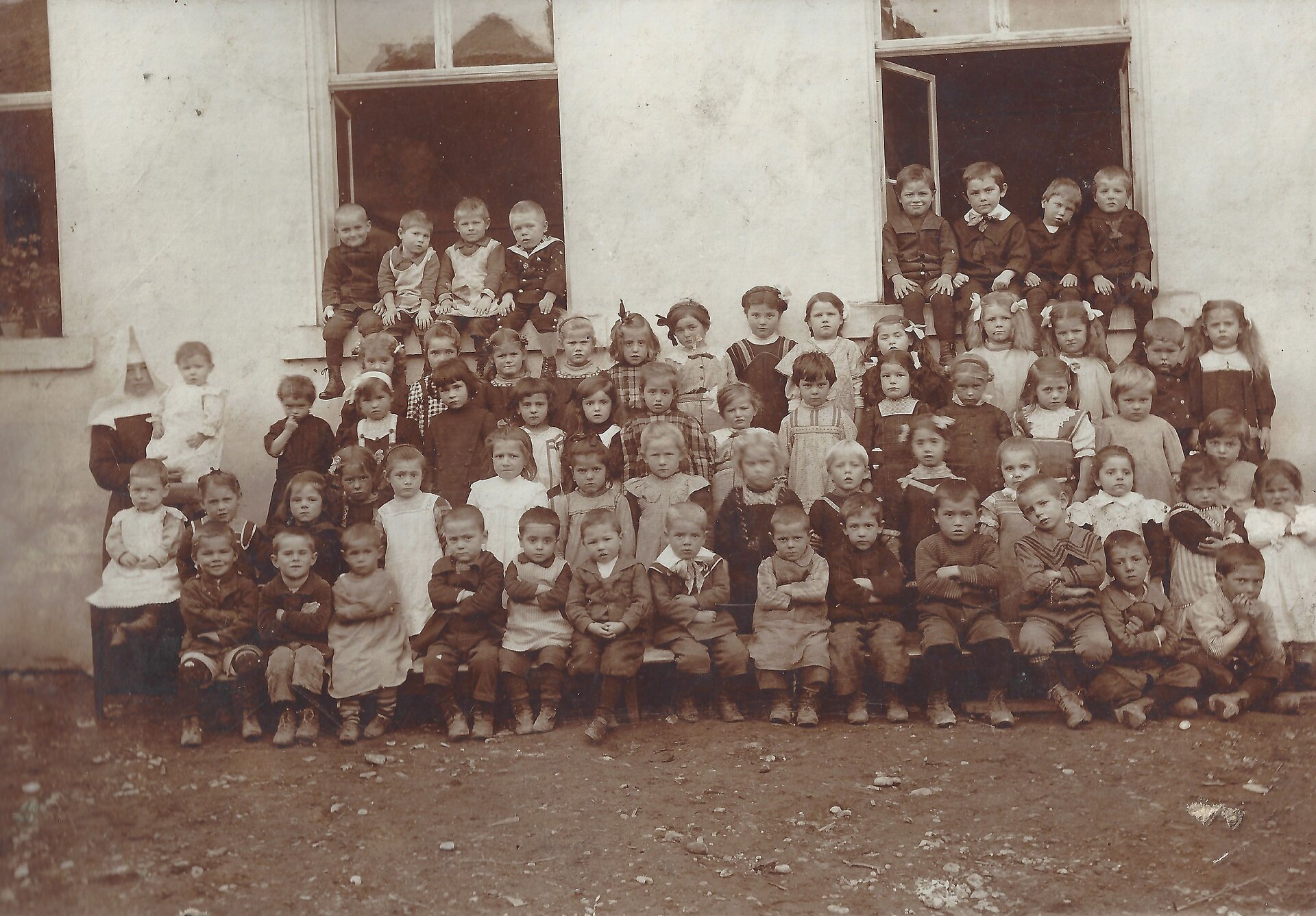
In 1874, the municipality of Hard acquired the building and established a poorhouse, two elementary school classes for girls, and a kindergarten—then referred to as a “childcare center”—within it. To manage and care for the residents, the municipality entered into a contract with the Sisters of Mercy from the Zams Convent. For the residents, staying at the poorhouse was no vacation. Those who were still able to do so had to help out on the associated farm—haymaking, mucking out the stables, and other tasks. The farm supplied the facility with milk and meat, fruit, and vegetables. They maintained a herd that was impressive for the time, consisting of up to 30 cows, young cattle, pigs, and chickens.
Almshouse Barn
On the site of today’s large parking lot across the street stood “d’Hall,” a shipbuilding hall built in 1919. Just ten years after it opened, production had to be halted, and the hall was repurposed: it served as a hay storage area, tool shed, lumber yard, and barn for young cattle.
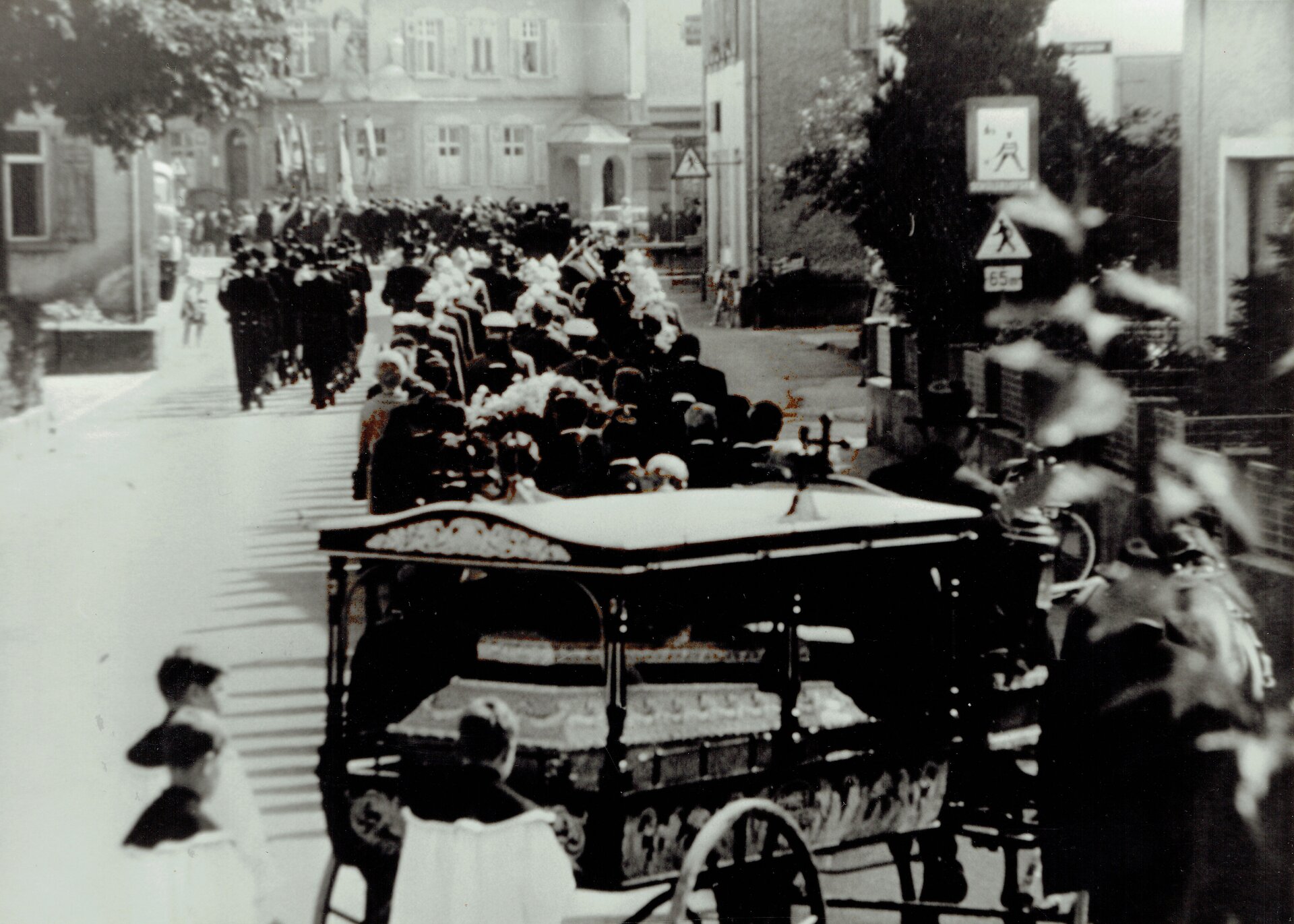
In addition, “d’Hall” served as a shelter for the hearse. Until the 1960s, it was customary to pick up the deceased directly from their home, take them to the church, and then bury them. The magnificent black hearse, drawn by two black horses, was an imposing sight. It was traditionally accompanied by altar servers, the priest, and the mourners.
Next to the hearse in the hall was the so-called “Batschure,” a simple parish jail cell and, at the same time, the only walled-in room. This cell was mainly used to sober up rowdy individuals and was sparsely furnished: with a cot, a blanket, and a bucket. Occasionally, the “Batschure” also served as lodging for day laborers.
On the opposite side of the hall was a tiled room used as a slaughterhouse for animals that had to be put down due to accidents or illness. In such cases, the village servant would walk through the village ringing a bell and call out, “Cheap meat today!” Immediately, the women would flock to the scene to snag some affordable cuts of meat.
For the Dead, the Devout, and Travelers
The poorhouse also served a rather macabre purpose: the examination of bodies found in the water. If these were pulled ashore by fishermen or lumberjacks, a medical autopsy by a public health official was required. A medical examiner from Innsbruck was specially summoned for this purpose. The bodies were first examined in the so-called “pig kitchen”—a room normally used for mixing pig feed. The autopsy was then performed on a simple wooden table to determine the exact cause of death.
The poorhouse also had its own chapel, which served as a place of worship for both the sisters and the residents of the home. The Sunday service, which began as early as six in the morning, was particularly popular. This attracted mainly women living near the poorhouse, who were able to return home early enough to prepare lunch—a practical alternative to the later services at the parish church.
In addition, the poorhouse provided lodging for traveling journeymen, who were still numerous on the road at that time. These travelers were given a simple place to sleep and a meal there before continuing their journey.
Maternity Home (1940s to 1973), Seestraße 35
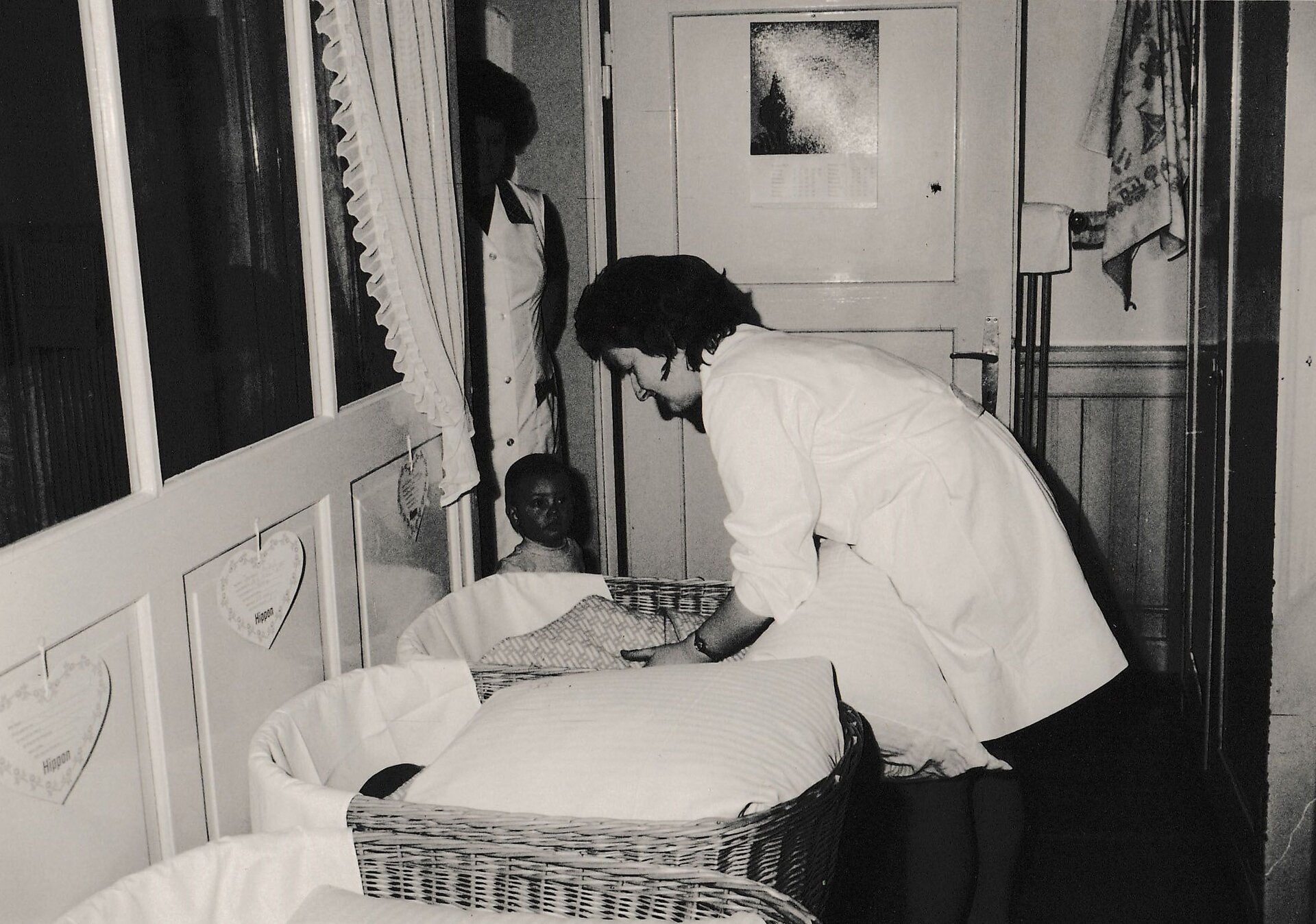
The French occupation in 1945 forced the municipality to set up a maternity home. Although the midwife had received special permission from the occupying forces to make nighttime house calls, family members were unable to contact her at night due to the curfew. To address this problem, a room for childbirth was set up in the poorhouse. What began as a temporary solution quickly developed into a permanent and functional municipal welfare facility.
The municipal maternity home was under the supervision of the town physician. The midwife was given a room there where she was on duty around the clock. A bell was installed to alert staff at night, allowing expectant mothers to signal the approaching birth.
For its time, the maternity home offered remarkably modern methods: breathing techniques, massages, and even the option to give birth in an upright position. For the first time, the presence of fathers was also expressly encouraged—sometimes with a tongue-in-cheek comment: “Let them see what they’ve gotten themselves into!” However, this occasionally led to problems, as some men fainted during the births. In such cases, the unconscious fathers were promptly shoved under the bed so that the delivery could continue undisturbed.
Location
- Address
- Lake Tour - Poorhouse 6971 Hard