


Lake Tour - Sin Island
Description
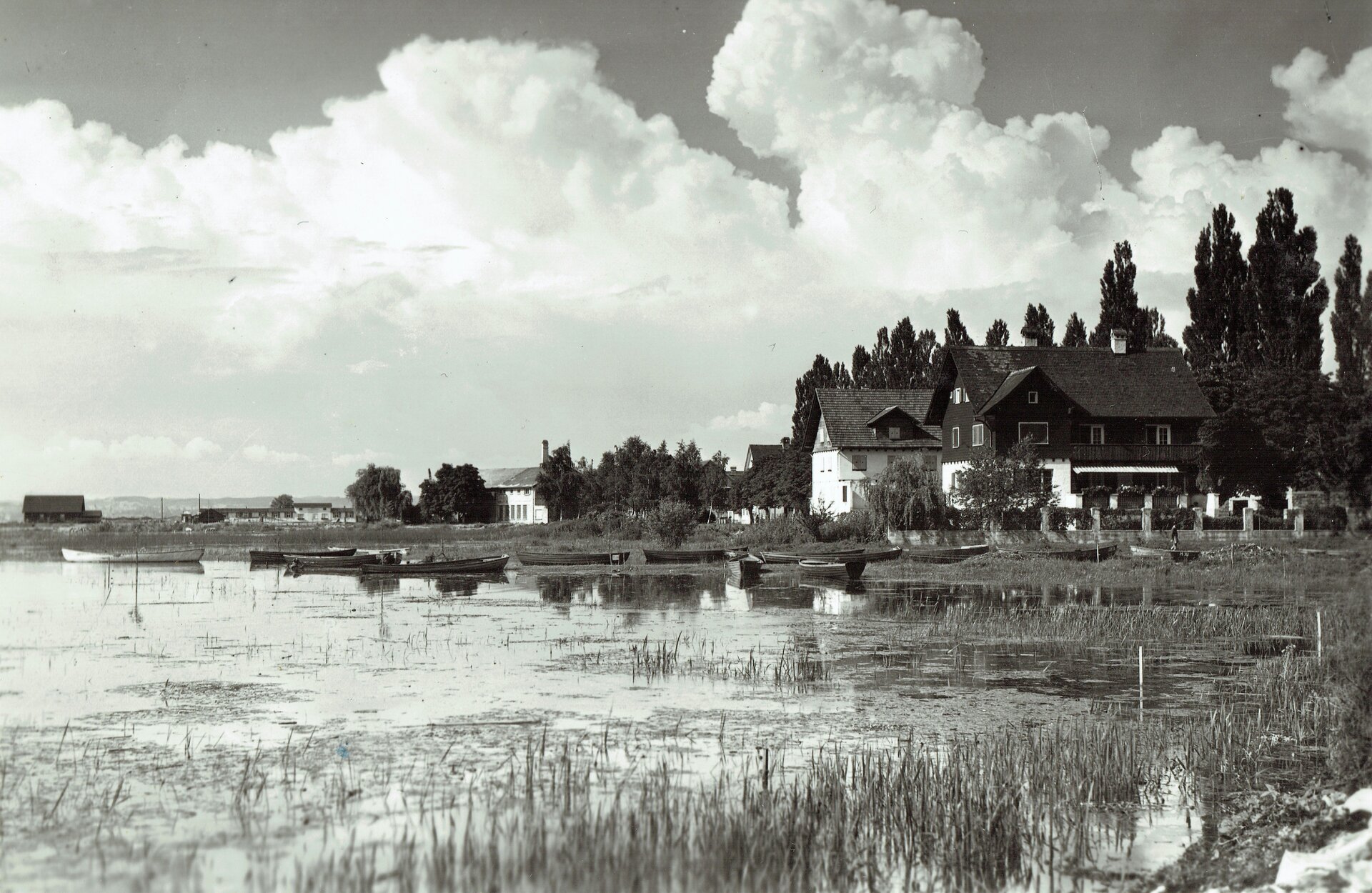
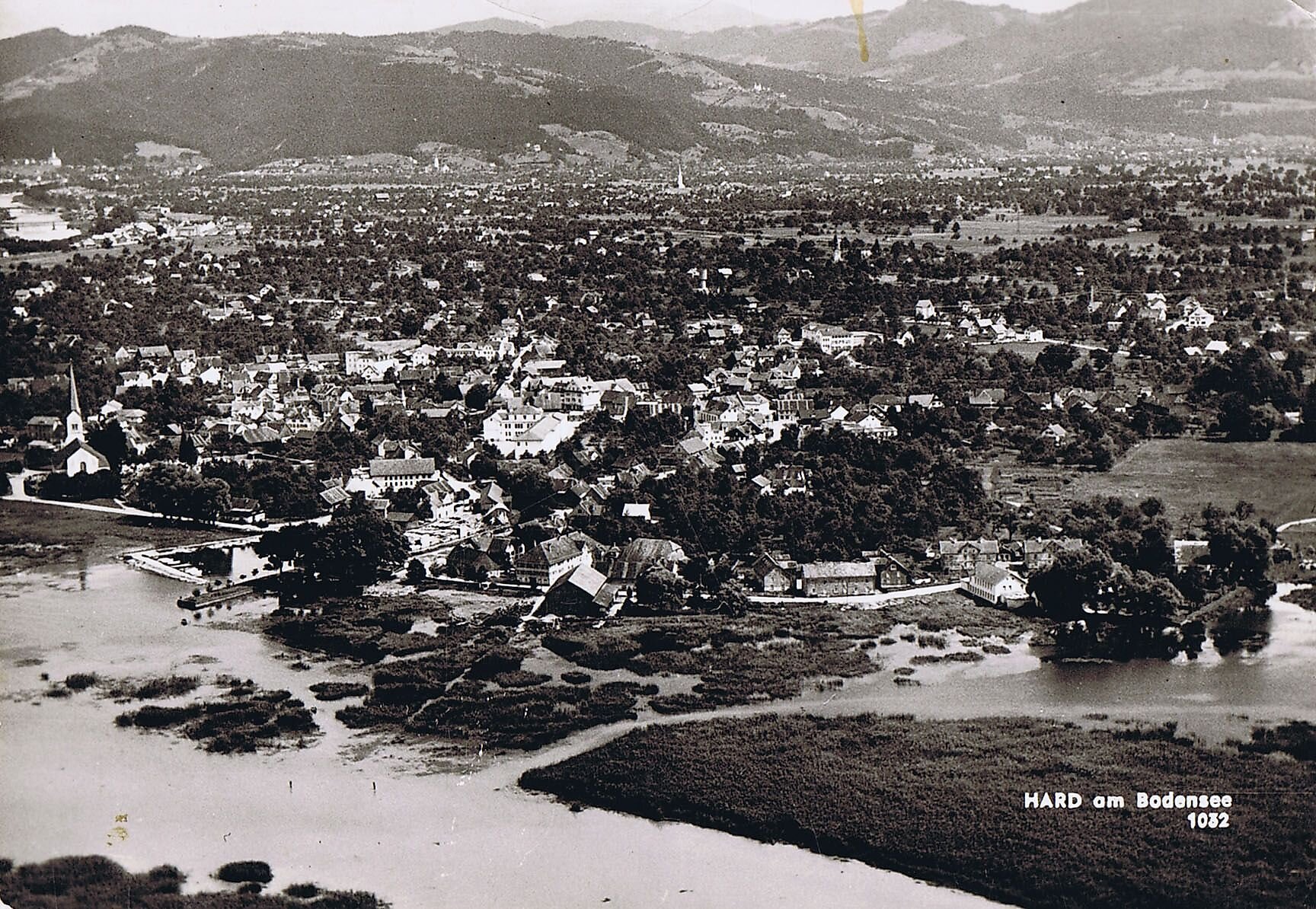
Before us lies the lakeshore, whose well-maintained appearance today gives little hint of how wild and untamed it once was. Before the restoration of Harder Bay (1959–1969), a dense belt of reeds lined the shore: frogs croaked, dragonflies buzzed, and birds nested in the thick greenery.
Brief Description
Before us lies the lakeshore, whose well-maintained appearance today gives little hint of how wild and untamed it once was. Before the restoration of Harder Bay (1959–1969), a dense belt of reeds lined the shore: frogs croaked, dragonflies buzzed, and birds nested in the thick greenery.
Station 2: From the "Island of Sin" to a Well-Maintained Lakeside
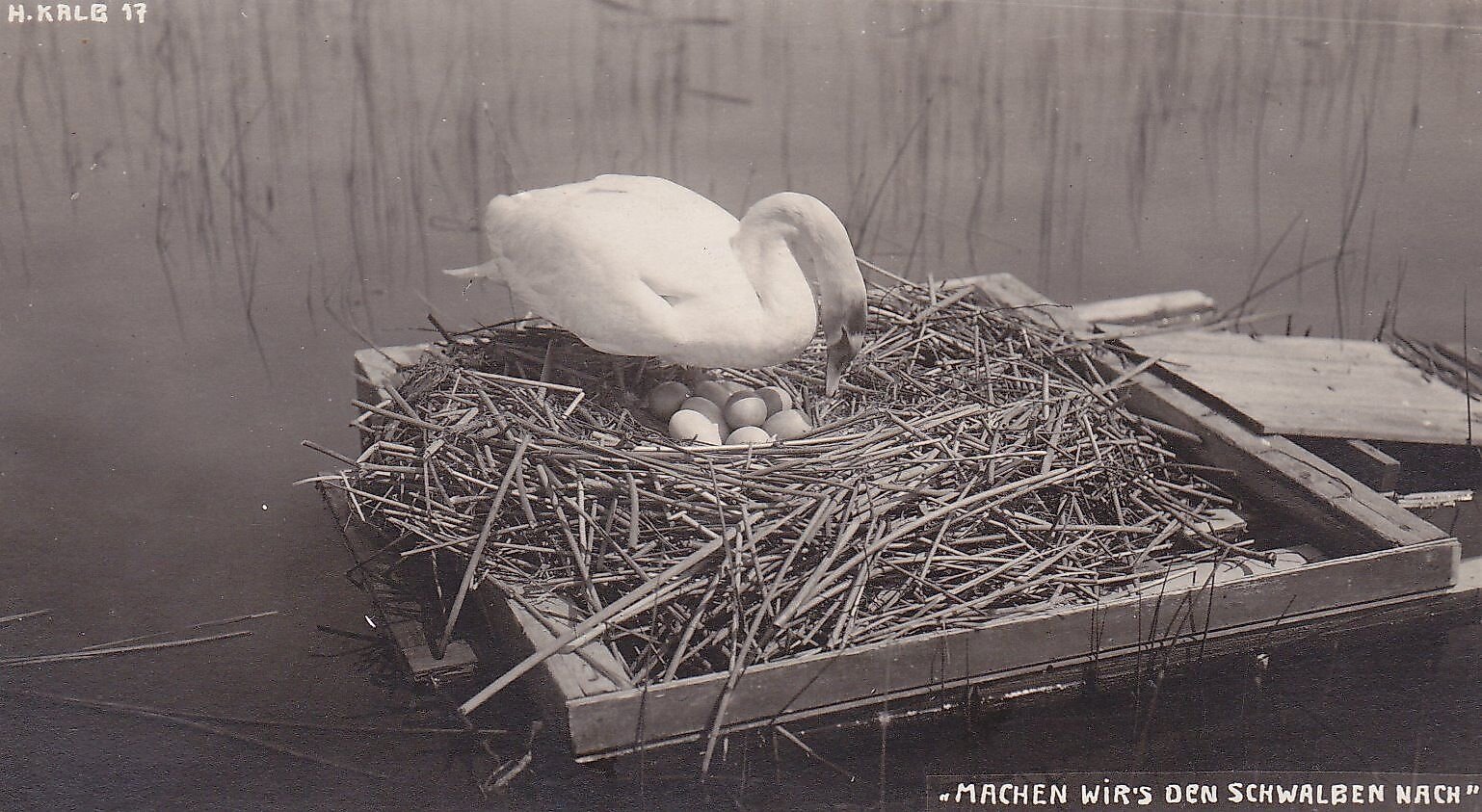
Before us lies the lakeshore, whose well-maintained appearance today gives little hint of how wild and untamed it once was. Before the restoration of Harder Bay (1959–1969), a dense belt of reeds lined the shore: frogs croaked, dragonflies buzzed, and birds nested in the thick greenery. Nature reigned supreme here—swarms of mosquitoes over marshy areas, majestic swans as occasional visitors. But humans also left their mark: fishermen hung their nets out to dry, wood was gathered, and commercial businesses stood right on the water’s edge. Parts of the shore served as dumping grounds for trash and debris. Due to the regulation of the Rhine in 1900, the shore became increasingly silted up and filled in. Larger ships could no longer access the bay. The only remaining “attractions” were the sandbars.
Swimming
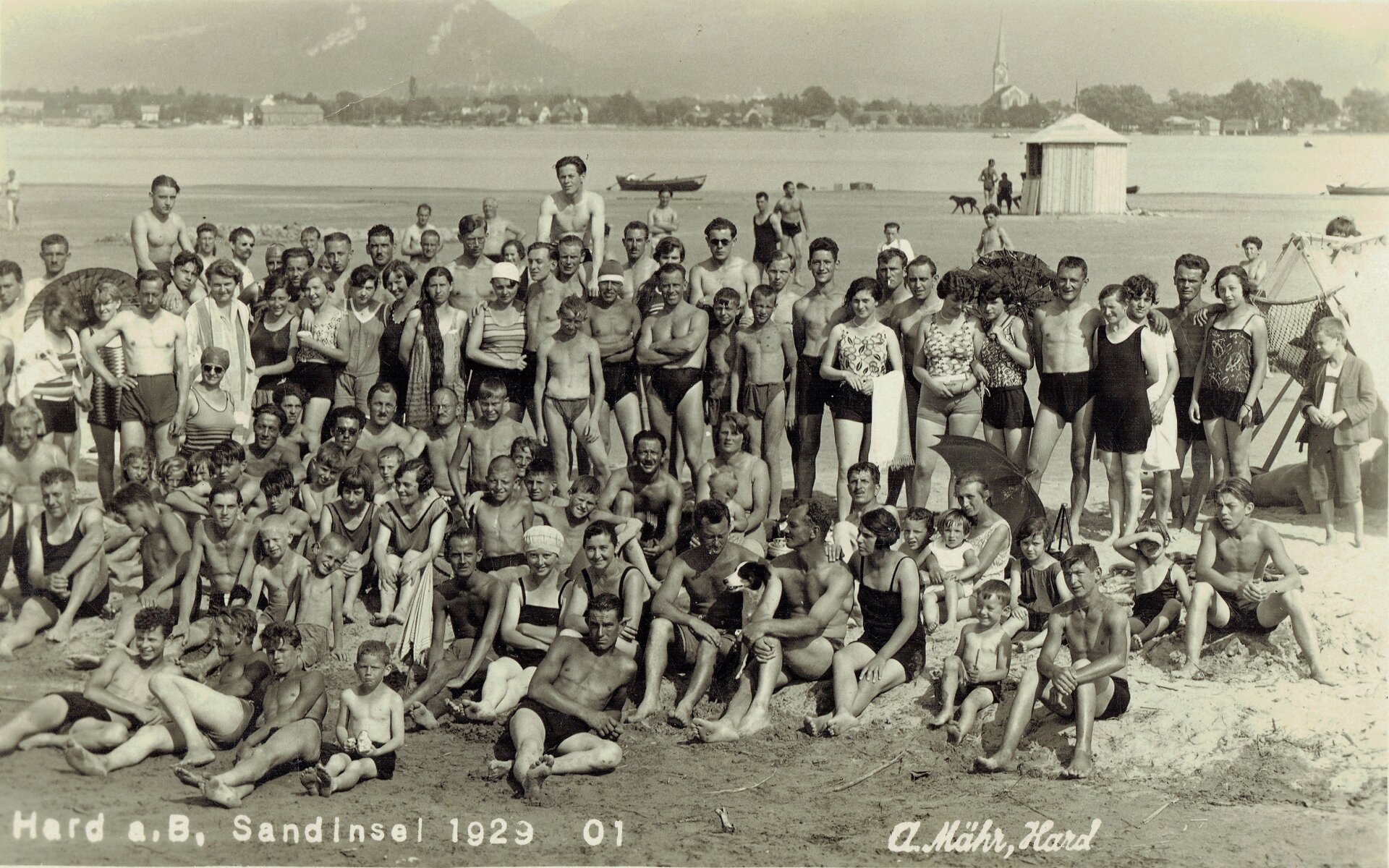
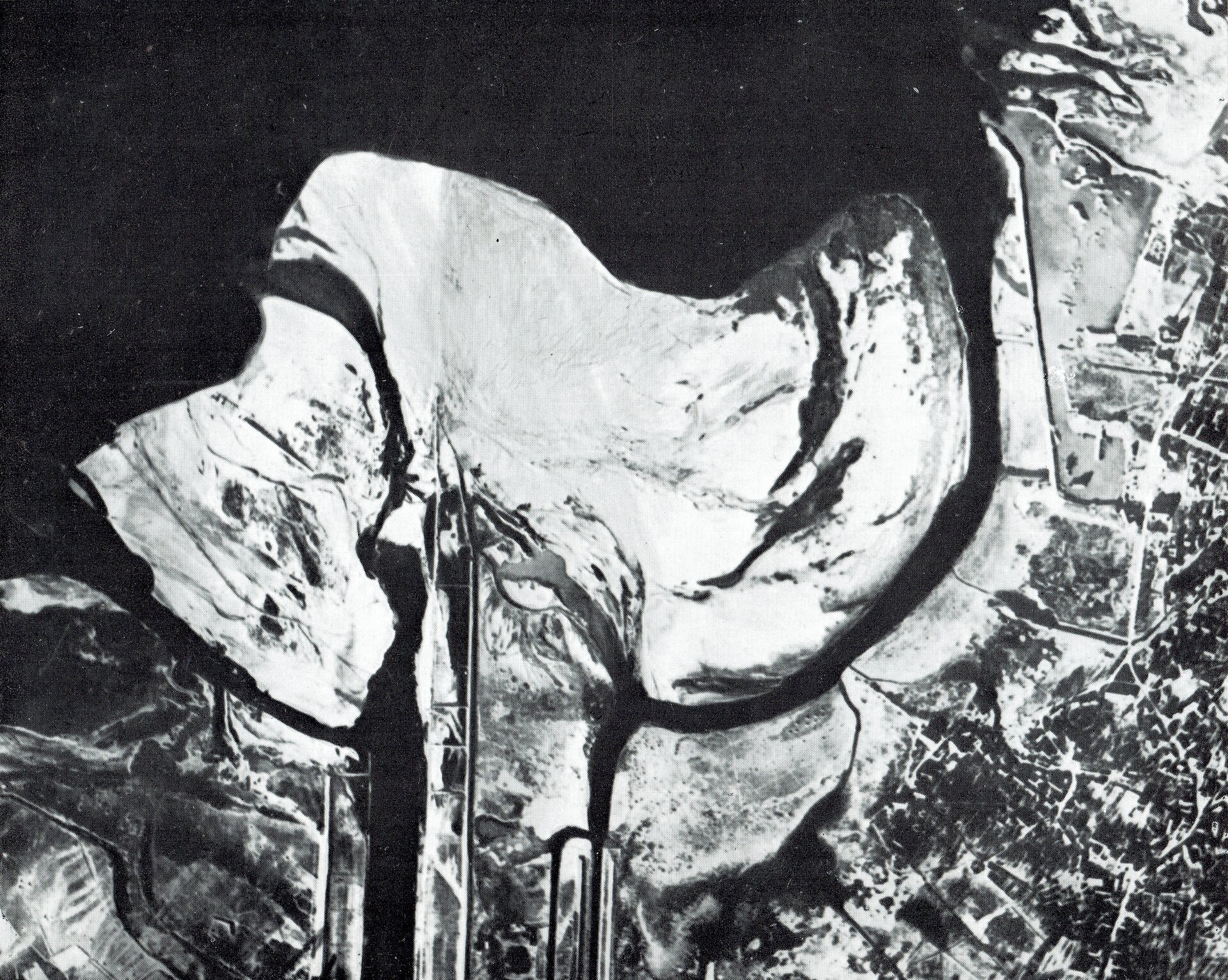
Fun Following a flood in the mid-1920s, the first instance of land accretion was noticed: At low water, a shallow island of fine sand emerged, which quickly became a popular swimming spot—initially barely larger than a soccer field. The sandbar formed in the area of what is now known as the Schleienloch and steadily expanded toward the Stede River in the following years. The island was already 400 meters from the shore and could now be easily reached by small boats (gundeln). The number of swimmers grew, and by 1923 the island was known among the residents of Hard as the “Lido,” covering an area roughly the size of 30 soccer fields, depending on the water level.
The newfound freedom enjoyed at the “Lido” did not fit at all with the moral standards of some conservatives. They spoke of an “island of sin” and of “Sodom and Gomorrah.” In the early 1930s, the “Association for Charitable Purposes” built a beach resort near what is now the sports harbor. When, a few years after World War II, the sandbars in Harder Bay became overgrown with reeds and rushes, the alarming extent of the silting became clear: sandbanks were now everywhere around the mouth of the Rhine.
Restoration of Harder Bay
To counteract the risk of flooding, a state treaty was signed in 1892 between Austria-Hungary and Switzerland that provided for the diversion of the Rhine. Until 1900, the Rhine flowed into Lake Constance between Gaißau and Rheineck. A central part of this project was the Rhine canal at Fußach and the diversion of the river into Harder Bay. Local officials tried to prevent this in light of the expected damage from siltation. History shows us, however, that the Fußach canal option prevailed.
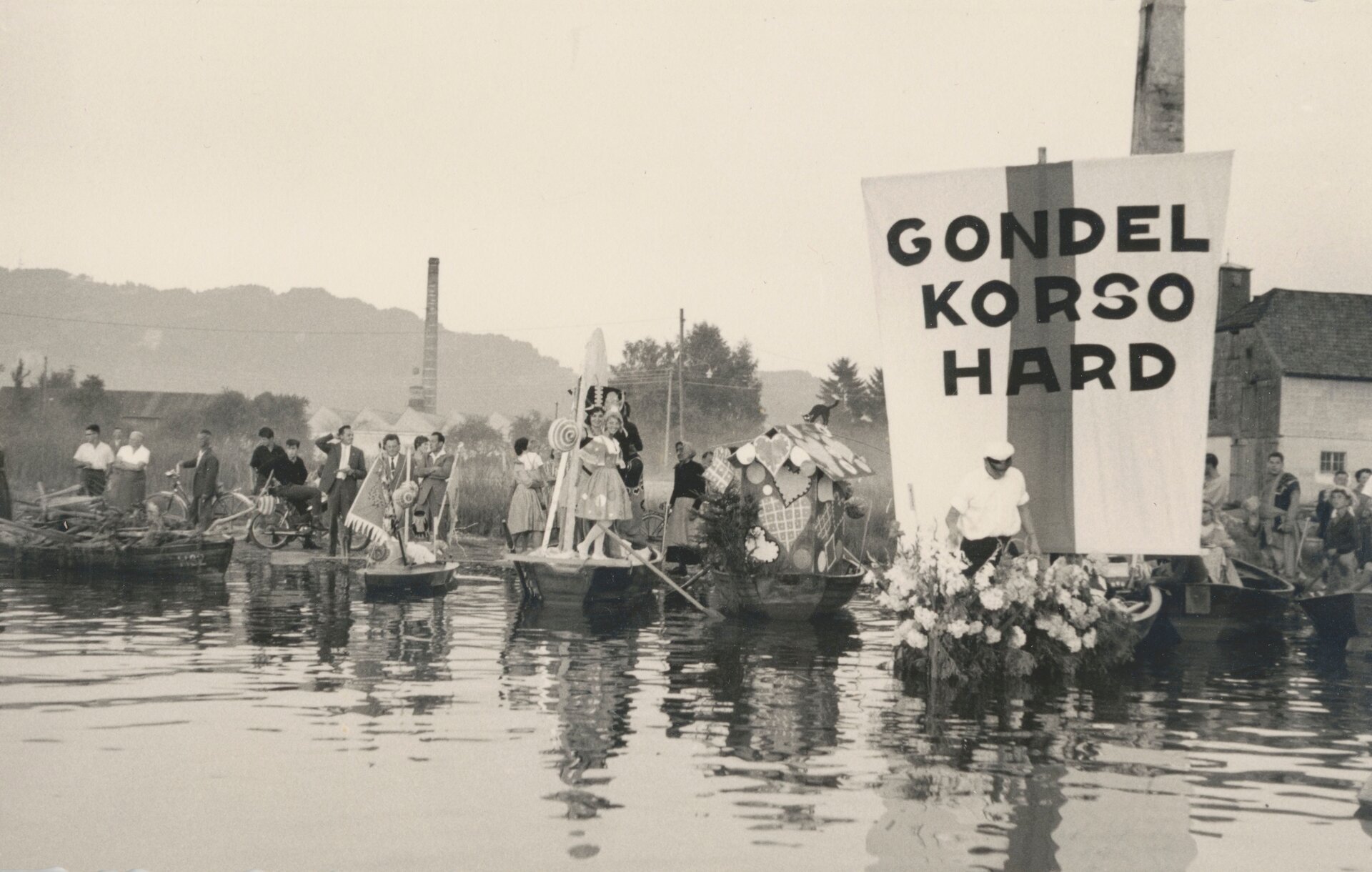
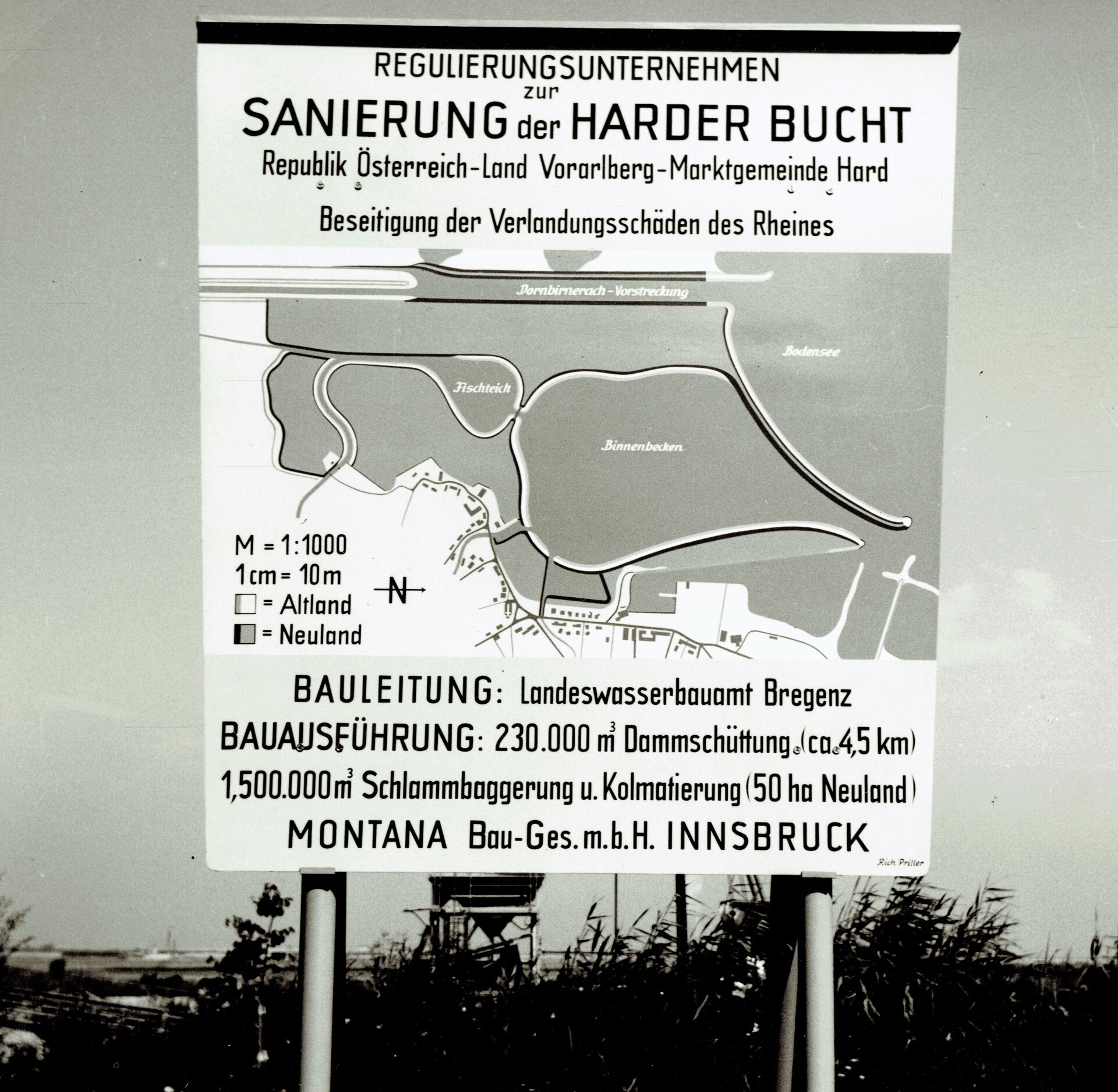
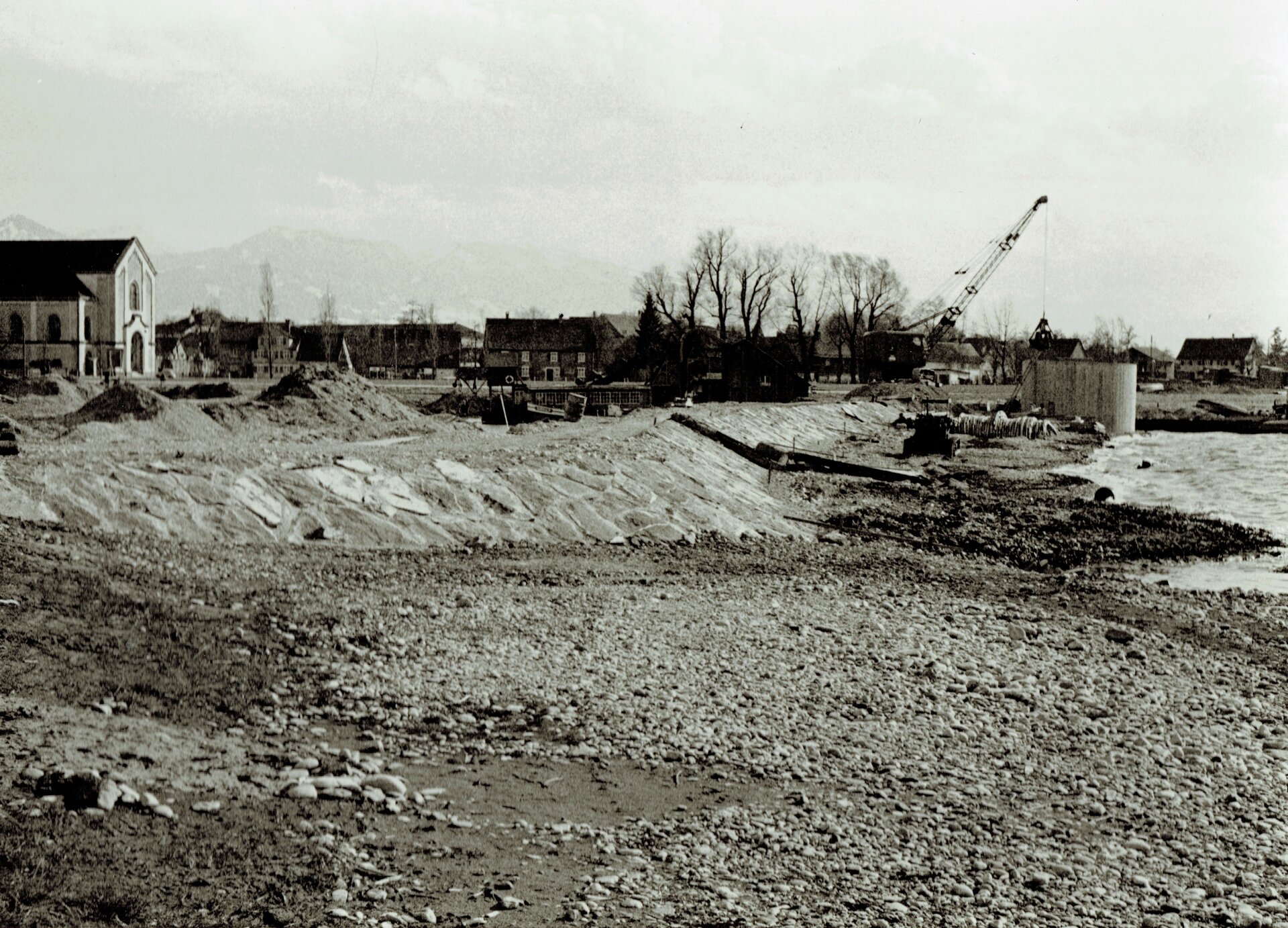
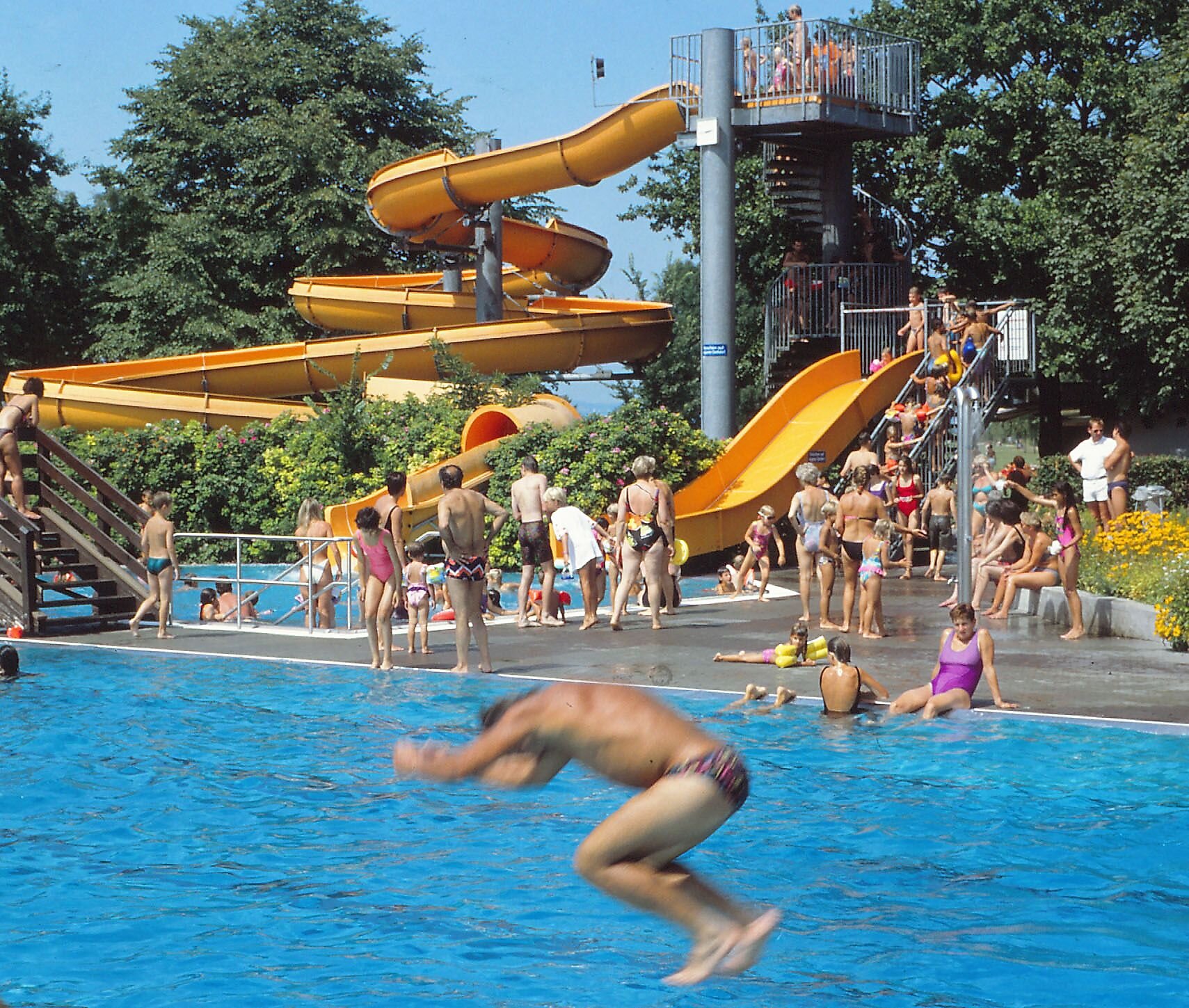
This apparent triumph of man over nature reached an unexpected climax: To mark the completion of the years-long project, a celebration was planned during which the dam separating the old and new riverbeds was to be blown up with a loud bang. But things turned out differently than expected: On the night of May 5–6, 1900, the Rhine broke through this barrier with a final surge of power and shifted into its new channel of its own accord. This marked the beginning of the silting up of the bay, which had been 58 meters deep until then. Hard became increasingly cut off from the lake. It soon became clear that only a restoration project could help. The work included rerouting the Dornbirner Ache, building dams, and dredging basins. In 1969, the restored bay—featuring 54 hectares of reclaimed land—was officially opened. The large inland basin and the small fish pond were born. A beach, a sailing and gondola harbor, a mini-golf course, a soccer field, and parking lots were built.
Location
- Address
- Lake Tour - Sin Island 6971 Hard, Austria