


Verrucano Stone
Description
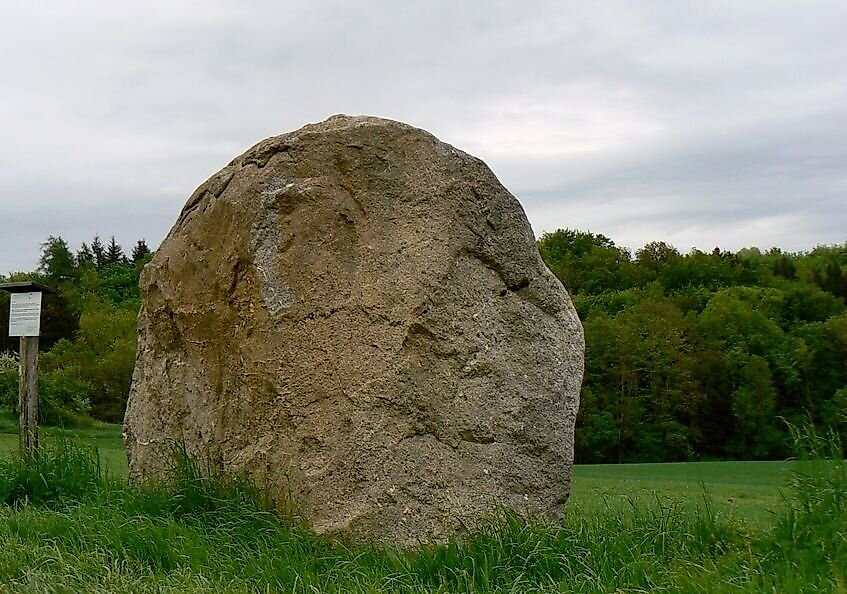
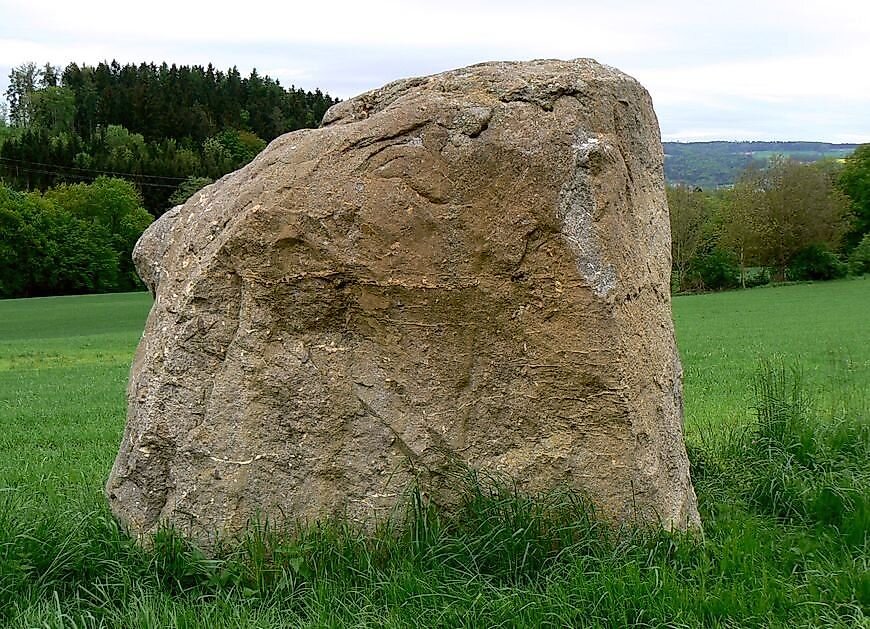
The Verrucano Boulder near Öhningen
Summary
The Verrucano Boulder near Öhningen
Description
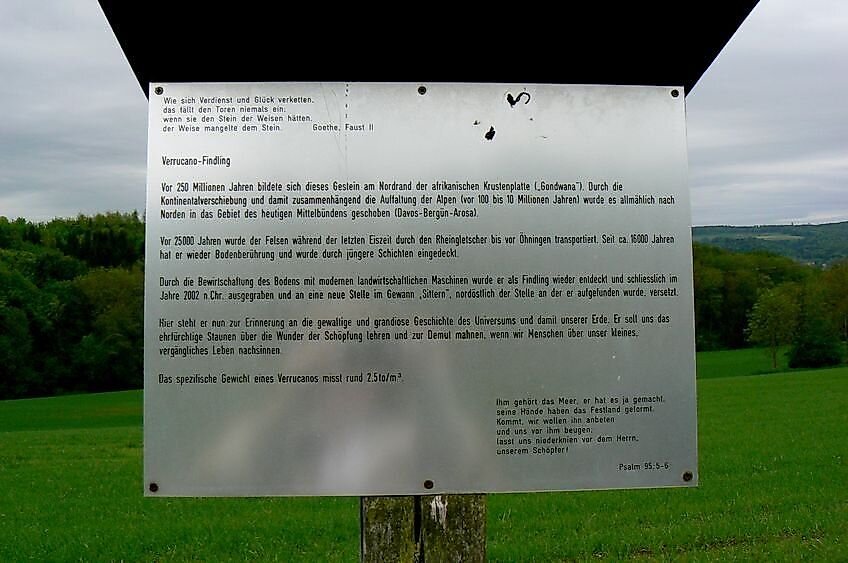
This rock formed 250 million years ago on the northern edge of the African tectonic plate (“Gondwana”). As a result of continental drift and the associated uplift of the Alps (100 to 10 million years ago), the rock was gradually pushed northward into the region that is now Central Grisons (Davos–Bergün–Arosa).
25,000 years ago, during the last Ice Age, the boulder was pushed all the way to Öhningen by the Rhine Glacier. For approximately 16,000 years, it had neither touched the ground nor been covered by more recent layers.
As the land was cultivated using modern agricultural machinery, it was rediscovered as a boulder and was finally excavated in 2002 and relocated to a new site in the Sittern field, northeast of where it was originally found.
Now it stands there as a reminder of the immense and magnificent history of the universe—and thus of our Earth.
The specific gravity of a Verrucano is approximately 2.5 metric tons per cubic meter
Links
Location
- Address
- Verrucano Stone Germany
Publisher / Copyright: api user toubiz – CC BY-SA 4.0 api user toubiz