


Überlingen City Park
Description
Thanks to its biodiversity and the harmonious blend of natural and landscaped elements, the Überlingen City Garden is one of the most significant botanical gardens in the Lake Constance Four-Country Region.
Summary
Thanks to its biodiversity and the harmonious blend of natural and landscaped elements, the Überlingen City Garden is one of the most significant botanical gardens in the Lake Constance Four-Country Region.
Description
Its climatically favorable location at the foot of the molasse cliffs allows Mediterranean and exotic plants to thrive in a relatively small area. The City Garden owes its creation to the city’s desire to offer an attractive park to the growing number of spa and bathing guests who visited throughout the 19th century. In 1875, the castle gardener of Heiligenberg was commissioned to lay out a garden on the vineyard and vegetable fields located west of the city. The first plants came from Mainau Island, where a grand ducal park had existed since 1855.
Between the West Parking Garage and the towering Gallerturm (1502/03), the Fuchsia Path winds its way along the base of the imposing city wall. Lined with various species of fuchsia in the form of shrubs and small trees, the path leads visitors into the city garden.
In the eastern part of the park, visitors are surprised by imposing giant trees and botanical rarities such as the giant arborvitae, river cedar, Japanese umbrella pine, false cypress, swamp cypress, and the true fig tree. A few steps further on, benches at the rotunda surrounding the picturesque fountain invite visitors to take a break. To the sound of the fountain’s splashing water, you can admire bright-green magnolias and banana trees set against the backdrop of spreading beech trees.
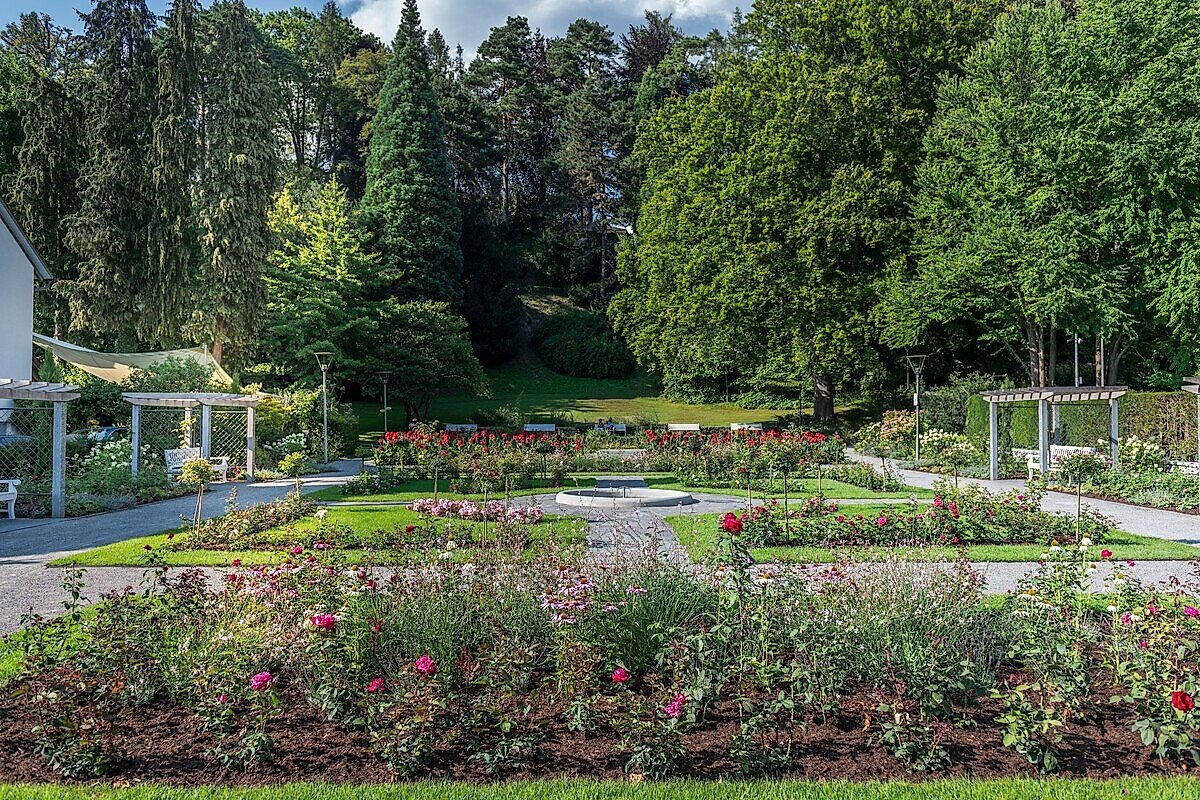
Passing overgrown arbor benches and colorful flower beds, you reach the rose garden, located in the newer part of the city garden. It was laid out in 1939 in the French style, featuring geometric beds and paths as well as two ponds. During blooming season, hybrid tea roses such as “Gloria Dei,” “Duftwolke,” and “Sutter’s Gold” enchant the senses with their fragrance. Cozy nooks around the rose beds invite you to linger and enjoy the moment. In addition to the roses, you’ll also find rare flowering shrubs here, such as spirea and Chinese lilac, as well as numerous climbing plants. In the spring, when it’s teeming with frogs and newts, the rectangular pond is a special attraction for young and old alike. At that time, countless daffodils also bloom on the grassy slope above the rose garden.
The design of the western part of the city garden dates back to the 1950s. Just past the rose garden, you can admire a beautifully grown ginkgo tree—a gift from the Saxon town of Bad Schandau to mark the tenth anniversary of its sister-city partnership with Überlingen. In the arboretum, you’ll find a number of unique specimens, such as the Atlas cedar, araucaria, giant sequoia, Judas tree, and handkerchief tree.
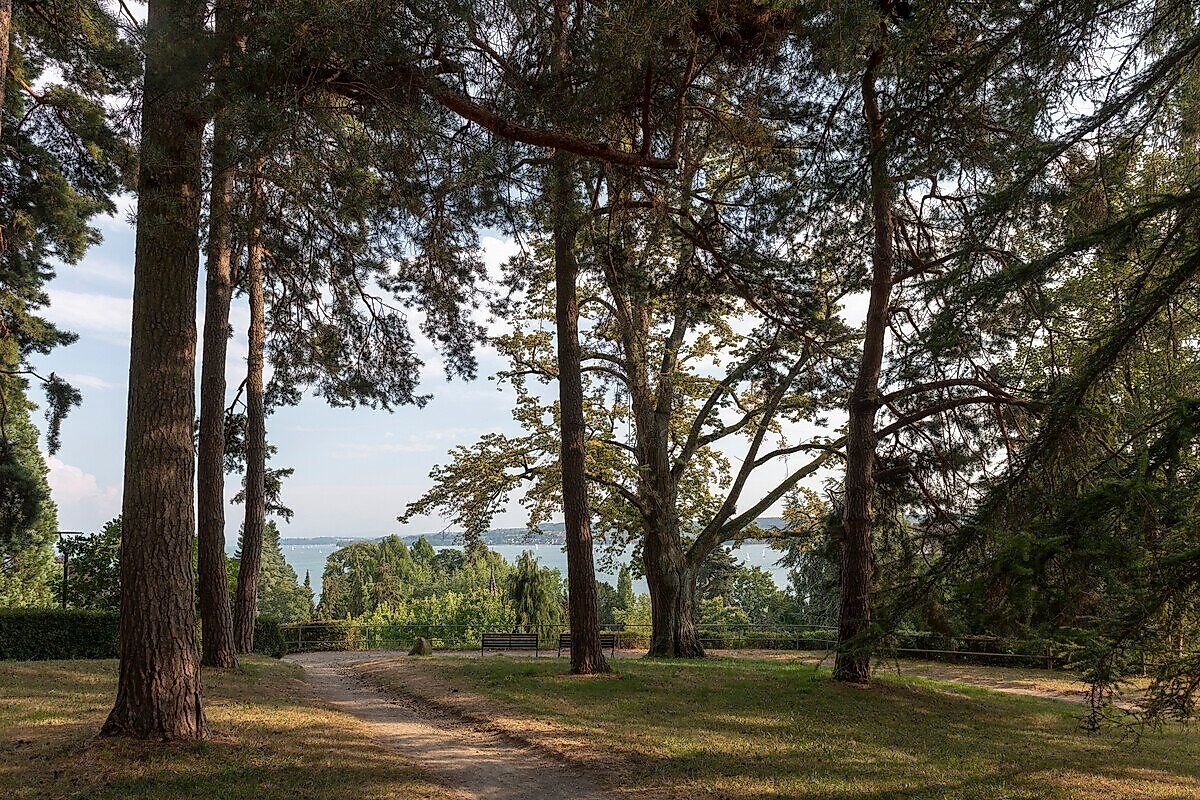
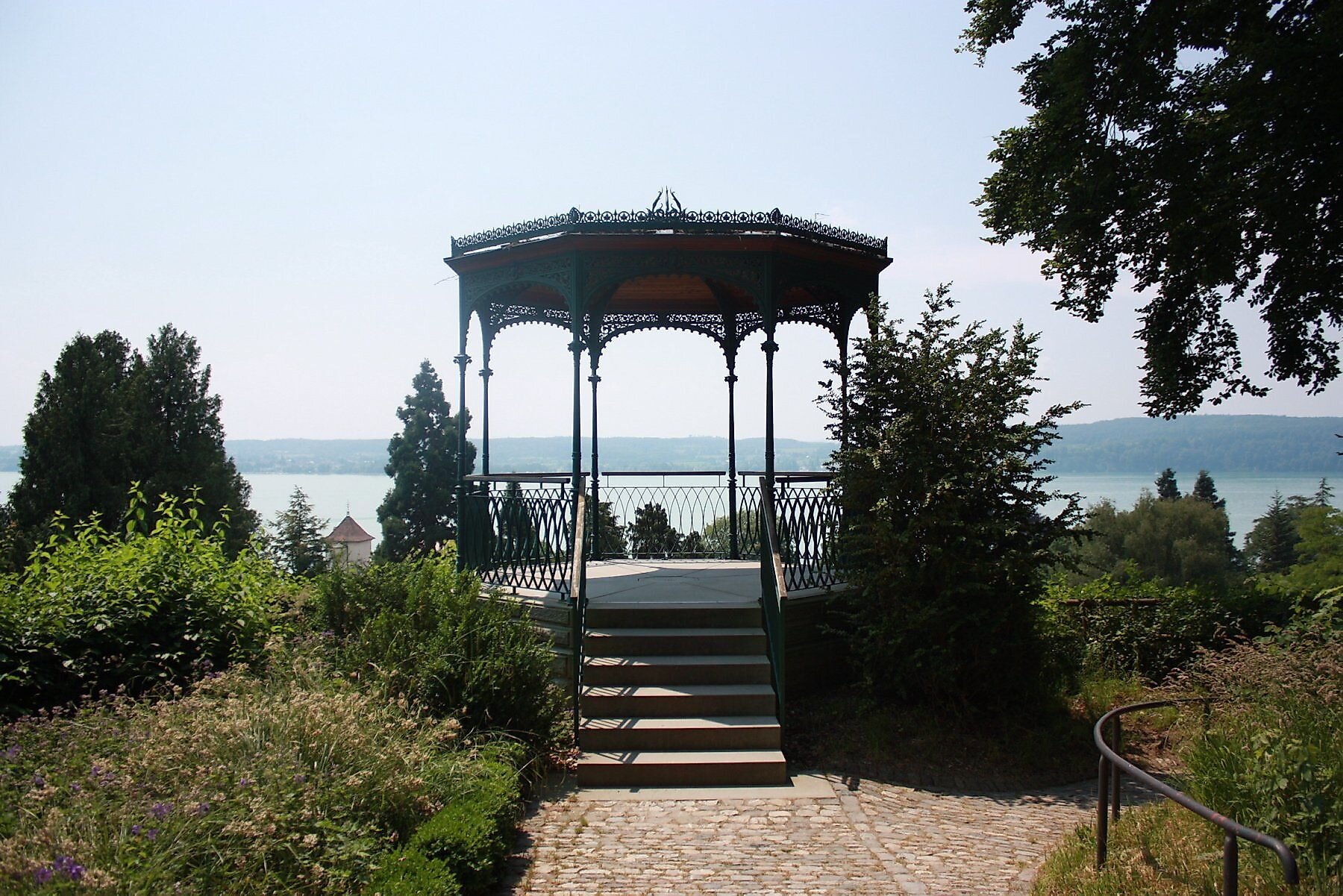
Those who are not daunted by the climb to the upper part of the city garden—either via the steep “Devil’s Stairs” in the west or along the winding paths at the back of the park—will be rewarded with a magnificent view of the old town and Lake Constance. In the immediate vicinity of the more than 120-year-old cast-iron pavilion, the so-called “Hexenhäusle” —a Norwegian-style hermitage dating from 1905—and the wildlife enclosure located further into the woods are sure to delight visitors of all ages.
Links
Location
- Address
-
Überlingen City Park
Bahnhofstr.
88662 Überlingen, Germany
Contact
- Telephone
- +49 7551 9471522
- info@ueberlingen-bodensee.de
Publisher / Copyright: Überlingen am Bodensee – CC BY-SA 4.0 Überlingen am Bodensee