


Train Station
Description
Train Station/Longing/Arrival
Trabzon/Istanbul/Dornbirn
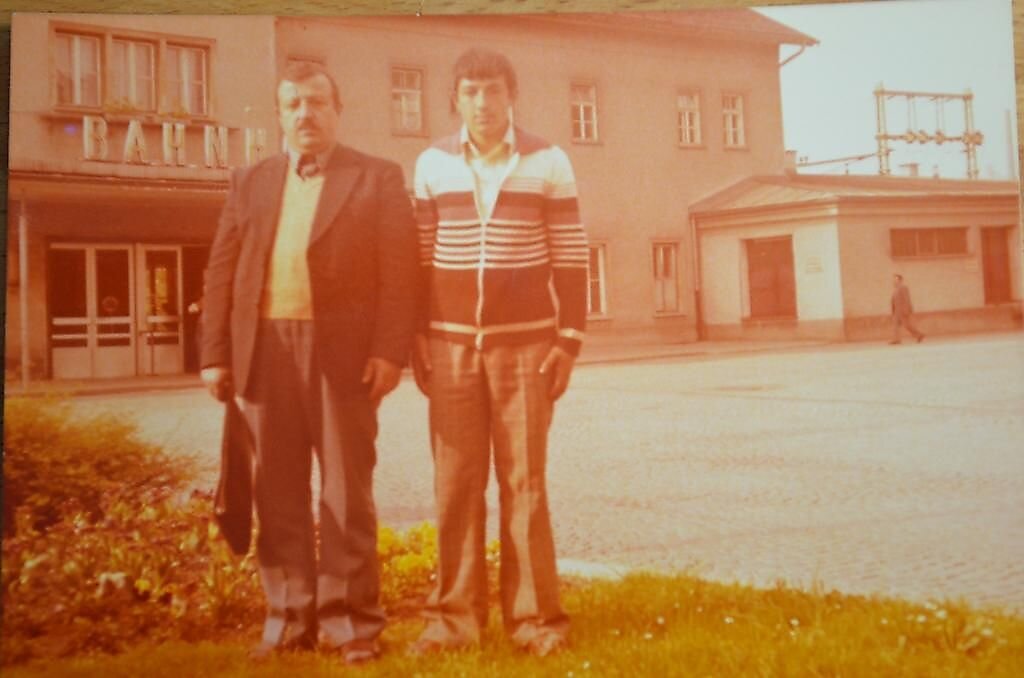
I always had to cry when I left my family behind in Turkey to go work in Vorarlberg. At the time, while I was away, my wife lived safely with my parents. They took care of the whole family, and they weren’t happy that, so soon after our wedding and at such a young age, I packed my bags and went to a country whose language and culture were foreign to me and my fellow travelers.
From my home village, I took a so-called “dolmus” to the nearest major city, Trabzon, where the other travelers from the surrounding villages also arrived. From the “otogar,” the bus station there, we took a local bus to Istanbul. Tears rolled down my cheeks when I thought about the previous evening. Together, we had performed the farewell ritual “HELALLEŞMEK,” in which the traveler asks for forgiveness for wrongs committed in the past so that they can set out for foreign lands with a clear conscience. Half the village had gathered to see me one last time.
Once we arrived in Istanbul, we went to the bazaar to buy travel provisions and Turkish delicacies (such as veal sausage, cheese, bread, and spices) for our time in Vorarlberg. These were essential, since such items were hard to come by—or impossible to find—in Vorarlberg. Turkish literature, a little piece of home to read, was also in my luggage, along with photos and a small Turkish flag, which would always remind me of my family and my village.
At Sirkeci (Sirkeschi) Station in Istanbul, the next leg of my journey began—this time by train. “This is going to be a long trip,” I thought to myself, and looked around for people from my region, my “Hemseri” (Hemscheri). When we reached the border, I sent a final glance back toward home. As we arrived at the train station in the Greek city of Thessaloniki, the trains were surrounded by soldiers. We weren’t allowed to look out the window, because Turkey and Greece were enemies at the time. My excitement turned to fear. It was my first time crossing the border, and already I was afraid—afraid of the unknown, afraid of the threat—a feeling I would encounter time and again while living abroad. In the years that followed, we lived in fear of the police, in fear of losing our jobs, our apartment, and our visas. This fear was also passed on to our children, so that the next generation, too, carries this fear within them.
www.vielfaltenarchiv.at/menschenspuren
stadtarchiv.dornbirn.at/menschenspuren
Location
- Address
-
Train Station
Eisenbahnlinie 7
6850 Dornbirn, Austria
Contact
- Telephone
- +43 (0)512 930000
- Website
- www.vielfaltenarchiv.at/menschenspuren New Window