


The History of the Harder Shore of Lake Constance
Description
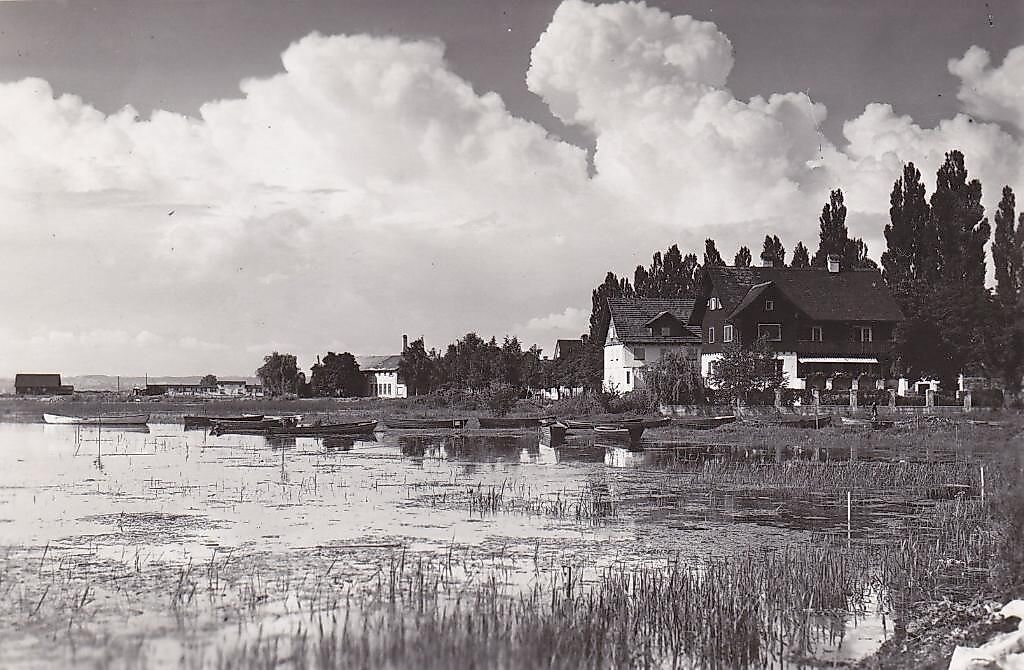
Following the regulation of the Rhine at the beginning of the 20th century—which was primarily intended to reduce the risk of flooding—siltation began in Harder Bay, which was 58 meters deep at the time. Despite fierce opposition from the municipality of Hard and objections based on concerns about expected siltation (calculated by “experts” to take 50,000 years), the project was carried out. By 1930, the bay had already silted up. Hard became increasingly cut off from the lake. Extensive restoration efforts, supported by the federal and state governments from 1958 to 1969, made it possible to shape the shoreline as it appears today. The timber trade has always been an important industry in Hard. The historical photo shows Hartmann’s steam sawmill with its timber storage yards. Limestone from the Bregenzerache was also processed there. The old tax collector’s house was demolished as part of the Lake Park’s redesign in 2005.
Location
- Address
-
The History of the Harder Shore of Lake Constance
Uferstraße
6971 Hard, Austria