


Pirates of the Untersee Carnival Guild, Inc.
Description
Until the early 1950s, there wasn’t really an Alemannic Carnival tradition in Öhningen. A few people from the village would dress up and have fun around town.
However, even back then, the municipality and the forest workers would erect a carnival tree on “Schmutzige Dunschtig” (Fat Thursday). At that time, a few young men from the village got together and formed a group of witches. They were Ernst Massler, Herbert Massler, Otto Massler, Otto Bilger, and Otto Leutze.
Their costume consisted of the following: a long black skirt, long white lace underwear underneath, a blue blouse with white polka dots, a green apron, and a red headscarf, as well as straw shoes and a straw braid or tail. A rubber mask—preferably with a hooked nose and a wart—was absolutely essential; it was also fitted with two wooden sticks to create small horns.
Of course, a witch’s wagon was a must, so a real little witch’s cottage was built on a wagon, complete with a smoking chimney and a cat on the roof.
That’s how the actual Alemannic Carnival began in Öhningen. Over the years, people searched for a venue where they could celebrate Alemannic Carnival. They soon found one. There were vacant basement rooms under the town hall, equipped with earthen floors and slatted wooden floors. This marked the birth of what is now known as the “Hexenkeller.”
Summary
Until the early 1950s, there wasn’t really an Alemannic Carnival tradition in Öhningen. A few people from the village would dress up and have fun around town.
However, even back then, the municipality and the forest workers would erect a carnival tree on “Schmutzige Dunschtig” (Fat Thursday). At that time, a few young men from the village got together and formed a group of witches. They were Ernst Massler, Herbert Massler, Otto Massler, Otto Bilger, and Otto Leutze.
Their costume consisted of the following: a long black skirt, long white lace underwear underneath, a blue blouse with white polka dots, a green apron, and a red headscarf, as well as straw shoes and a straw braid or tail. A rubber mask—preferably with a hooked nose and a wart—was absolutely essential; it was also fitted with two wooden sticks to create small horns.
Of course, a witch’s wagon was a must, so a real little witch’s cottage was built on a wagon, complete with a smoking chimney and a cat on the roof.
That’s how the actual Alemannic Carnival began in Öhningen. Over the years, people searched for a venue where they could celebrate Alemannic Carnival. They soon found one. There were vacant basement rooms under the town hall, equipped with earthen floors and slatted wooden floors. This marked the birth of what is now known as the “Hexenkeller.”
Description
In the years that followed, the Alemannic Carnival continued to take root in the village. People wanted to emulate the Rhineland Carnival, complete with a “Funkengarde” (fireworks guard), a princess, and a “fools’ police.” However, it soon became clear that this type of Alemannic Carnival didn’t fit our region, so people began searching for an idea that would suit the village. So, in 1959, the carnival guild “Pirates of the Untersee” was founded.
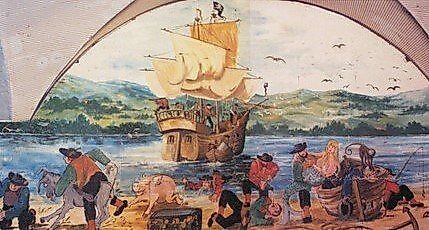
Werner von Schrotzburg in Schienen used Oberstaad Castle as a base from which to launch his raids and attack ships traveling down the lake and the Rhine. The tower of Oberstaad Castle can still be seen on several emblems today. That is why Oberstaad Castle (the tower) was the guild’s first symbol. The tower was recreated and paraded as a float during processions.
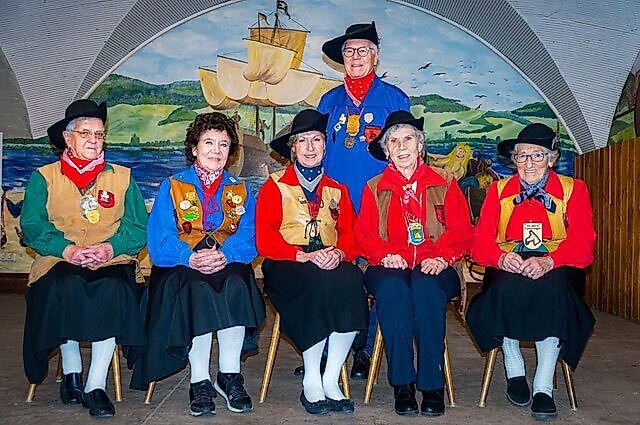
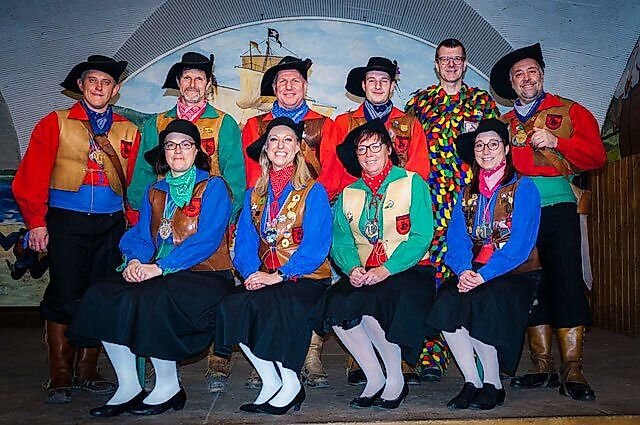
The Pirates’ first “Fool President” was master mason Eugen Sieber, and the first costumes were borrowed from St. Gallen.
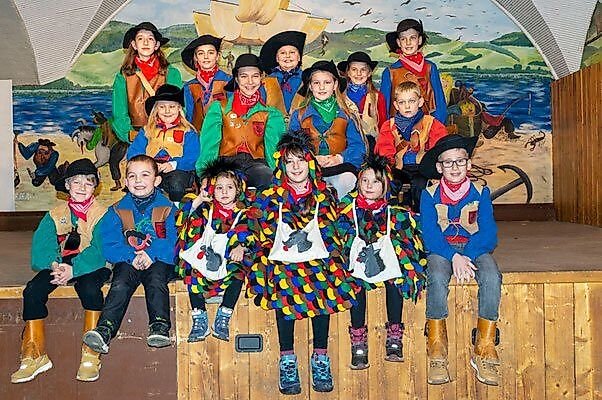
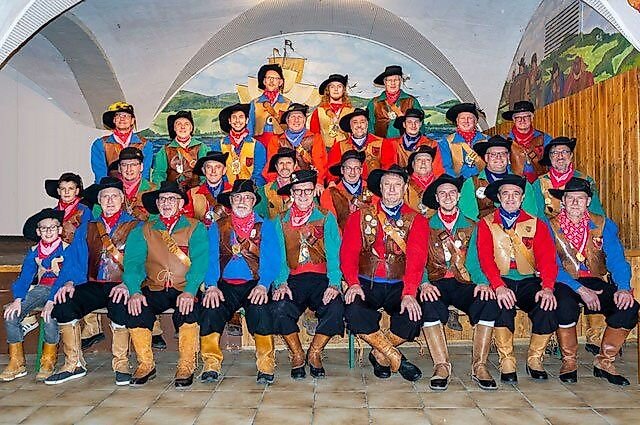
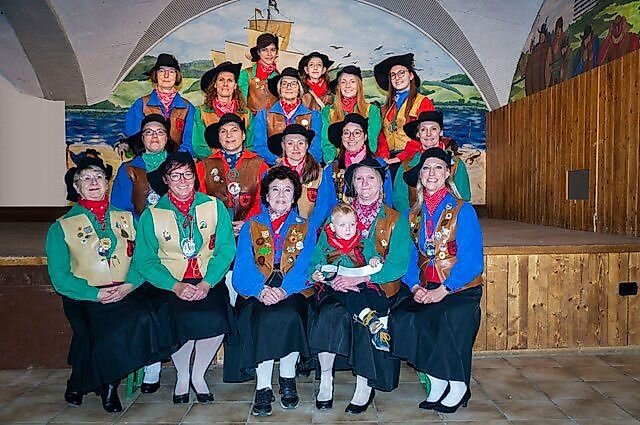
Over time, a unique Pirate costume was created, which we still wear today in this form.
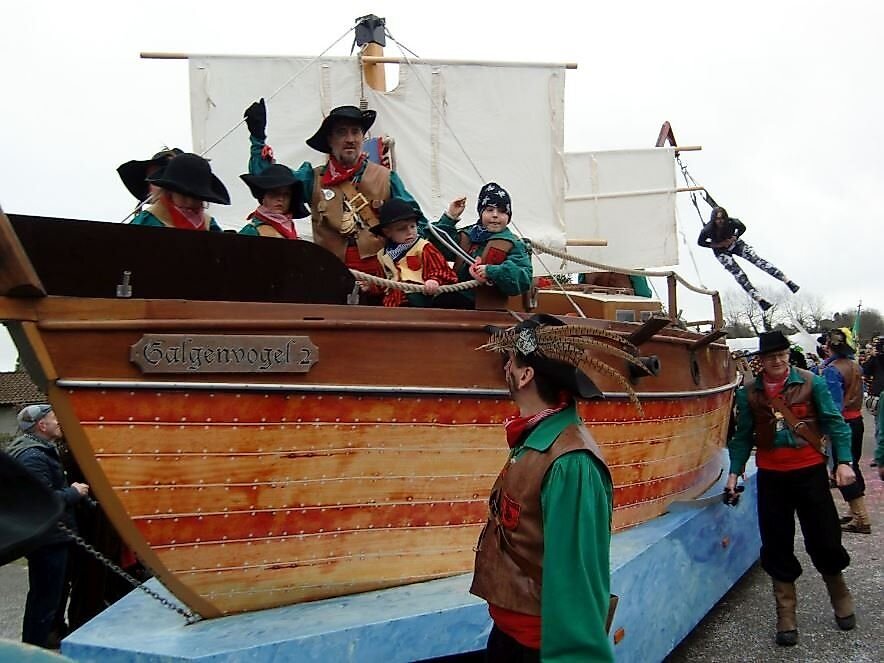
Soon, a carnival ship was needed to be paraded in processions. That is why the first “Galgenvogel” was built in 1979. This tradition is an important part of our identity, and to ensure we can continue to uphold it, a new “Galgenvogel” was built in 2016.
The biggest challenge for the club was the gradual expansion of the “Hexenkeller.” It took a total of nearly 15 years for it to become what it is today. Countless hours of work were spent digging, breaking through thick masonry, and installing a bar—but the restroom facilities, in particular, posed a huge challenge.
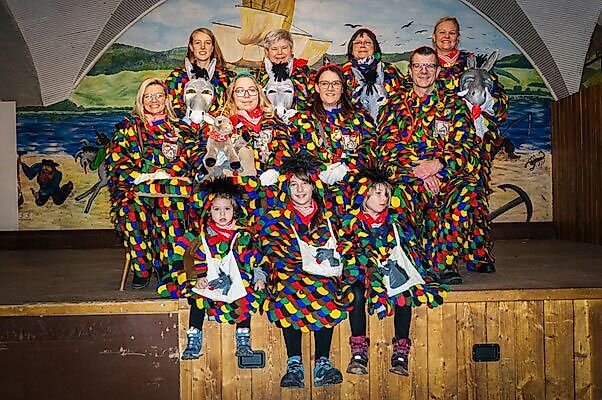
In 1969, a new carnival character suddenly appeared during Alemannic Carnival—a “Plätzle-Häs.” Ursel and Josef Zimmermann came up with the idea and brought it to life. At the time, the guild didn’t know how to handle the new carnival character. So, they first announced a contest to find a suitable name for the Plätzle.
The name “Eselszungen” was the solution and the winner.
Today, the “Eselszungen Group” has become a very active and large group within the guild. A few years ago, a donkey mask was also created for the Eselszungen, which makes for a fantastic performance by the group.
The name “Eselszungen” comes from the nickname given to the people of Öhningen—namely, “Öhninger Esel” (Öhningen Donkeys).
The carnival guild “Piraten v. Untersee” has developed remarkably well over the years.
The first “Colorful Evenings” in the Hexenkeller were staged in 1963 by Otto Massler and Otto Leutze; before that, there were only so-called carnival balls or “Kappenabende” in what was then known as the “Engelsaal.” For many years, Otto and Otto were household names, putting on countless performances that were highly entertaining.
Today, these “Colorful Evenings”—which are generally of high quality and very popular—take place every two years. The traditional customs and street carnival are also upheld annually and carried out with great joy and dedication.
Location
- Address
-
Pirates of the Untersee Carnival Guild, Inc.
Klosterplatz unterm Rathaus
78337 Öhningen, Germany
Contact
- Telephone
- +49 7735 81960
Publisher / Copyright: Petra Willig – CC BY-SA 4.0 Petra Willig