


Pile-Dwelling Trail Information Stop: Gaienhofen-Horn
Description
Alps” and the pile-dwelling period in the form of texts, images, videos, audio recordings, documents, and virtual presentations.
Summary
Alps” and the pile-dwelling period in the form of texts, images, videos, audio recordings, documents, and virtual presentations.
Description
The site was discovered by M. Koch between 1856 and 1857 and gave its name to the “Hornstaad Group.” It was surveyed by the Baden-Württemberg State Office for the Preservation of Historical Monuments as early as 1973, and then intensively researched from 1982 to 1993 as part of a priority program of the German Research Foundation. This makes it one of the longest-studied and best-documented pile-dwelling settlements on Lake Constance. A total of five settlement areas have been identified, including those associated with the Pfyner and Horgen cultures.
Special Features & Highlights
The site contains excellently preserved textiles and organic materials, and the finds point to extensive barter and trade relationships with Bavaria, Italy, and Northwestern Europe.
Pile-Dwelling Structures Up
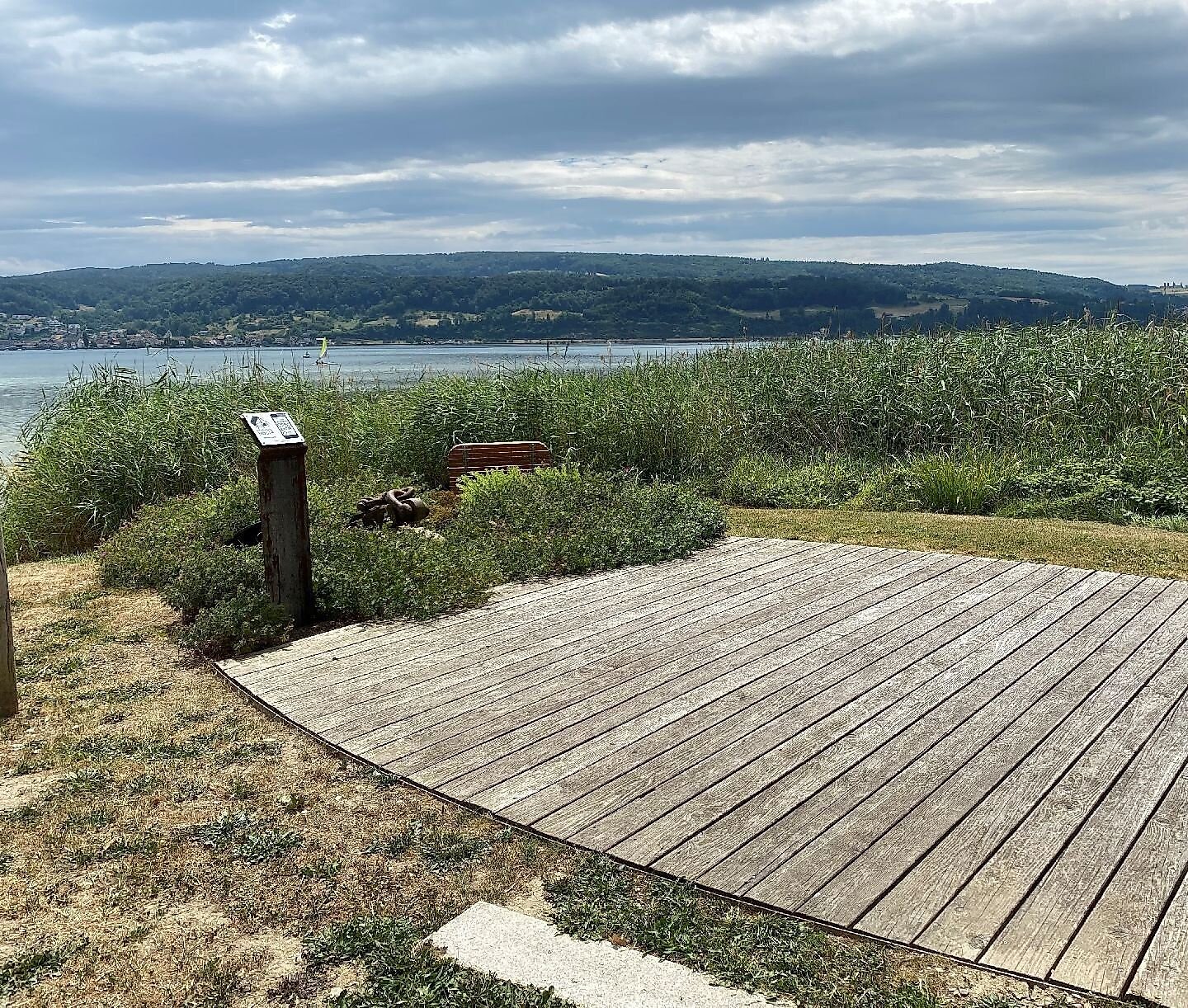
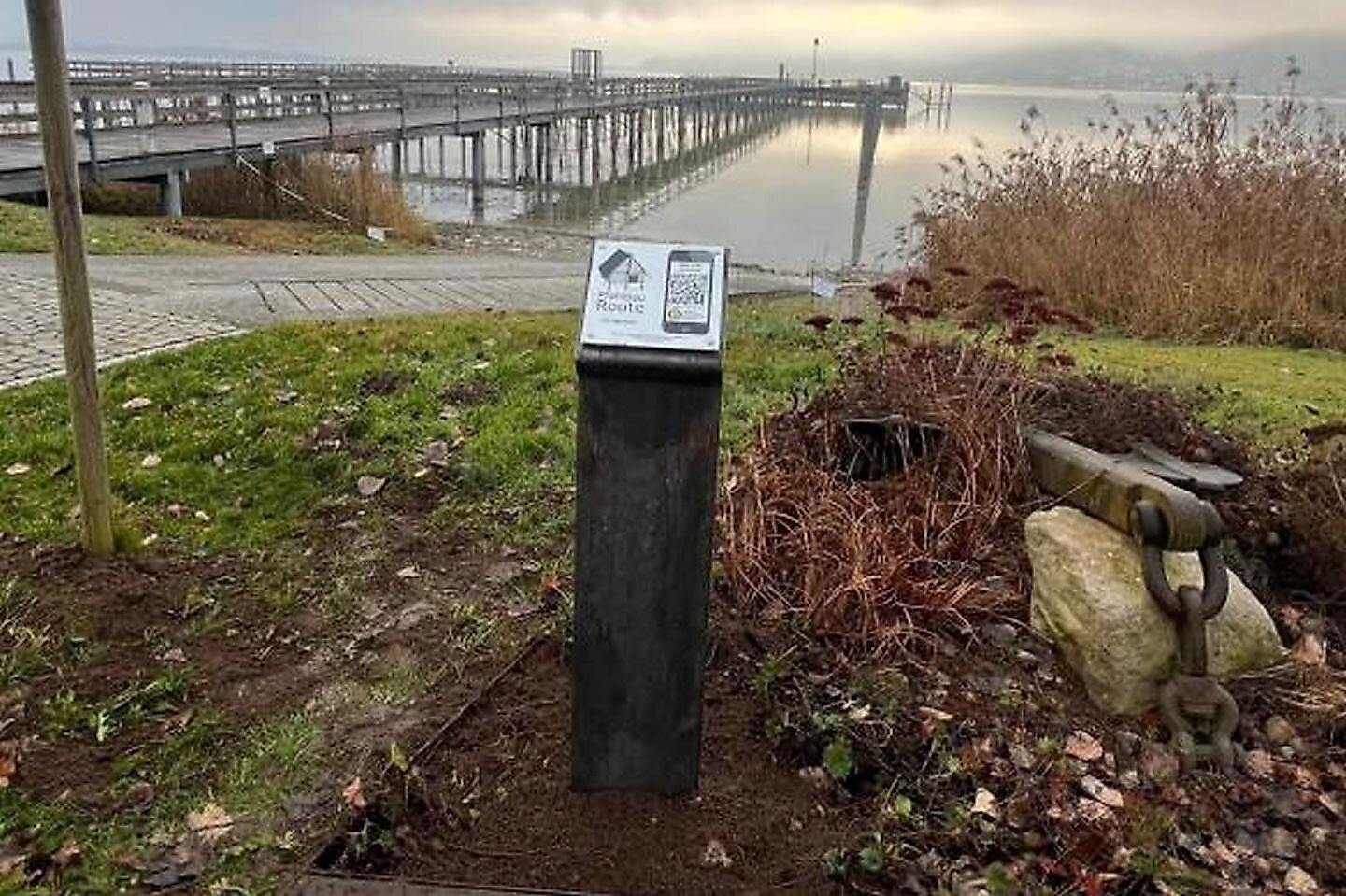
Close An information point has been set up on Hornstaader Straße in 78343 Gaienhofen-Horn. Further information is available here
Location
- Address
-
Pile-Dwelling Trail Information Stop: Gaienhofen-Horn
Hornstaaderstrasse
78343 Gaienhofen-Horn, Germany
Contact
- Telephone
- +4977359999123
- touristinfo@gaienhofen.de
Publisher / Copyright: Tourist-Information Gaienhofen – CC BY-SA 4.0 Tourist-Information Gaienhofen