


Parish Church of Our Lady of the Visitation, Rankweil Basilica
Description
Pilgrimage church on a prominent hill
Brief Description
Pilgrimage church on a prominent hill
Description
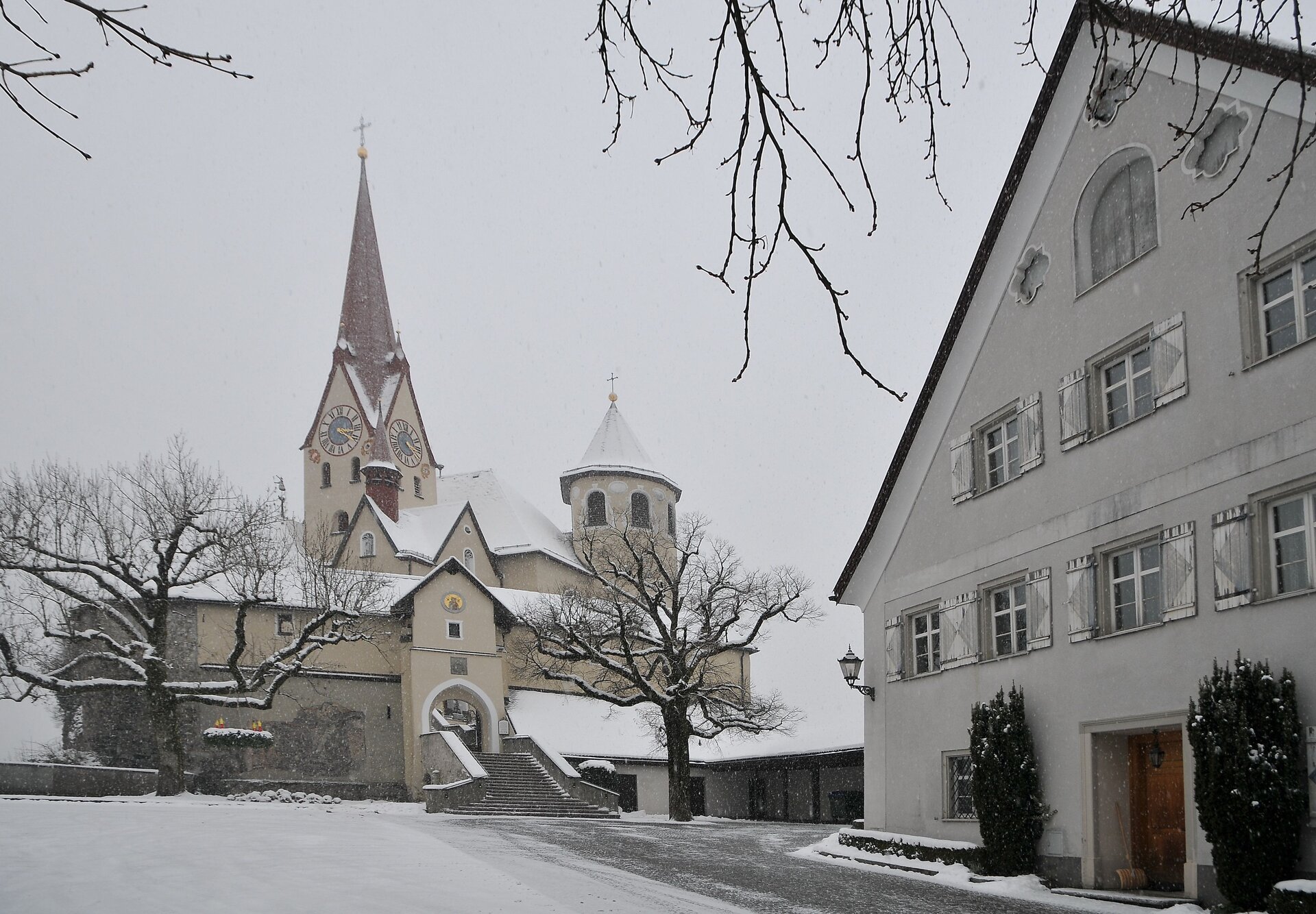
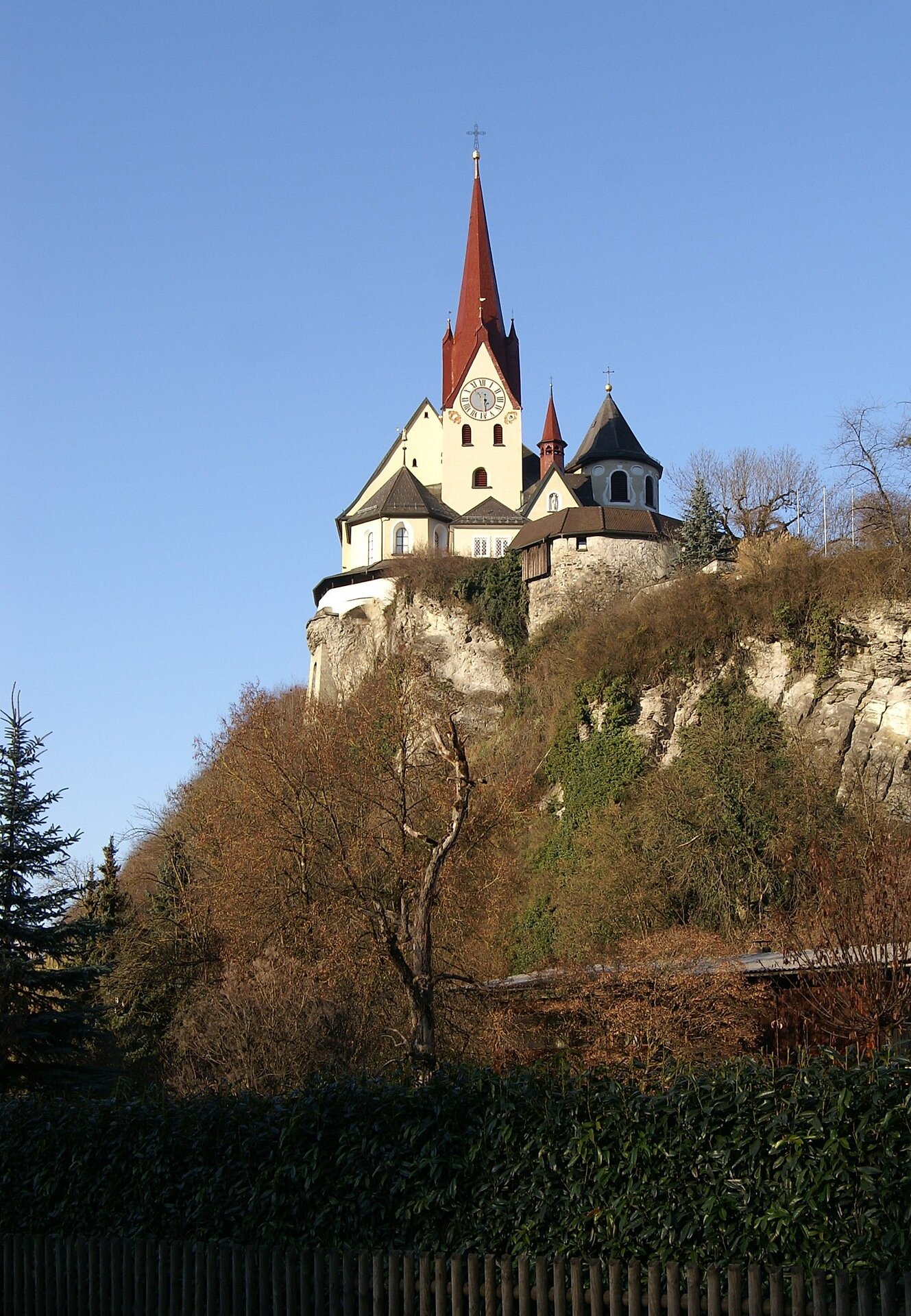
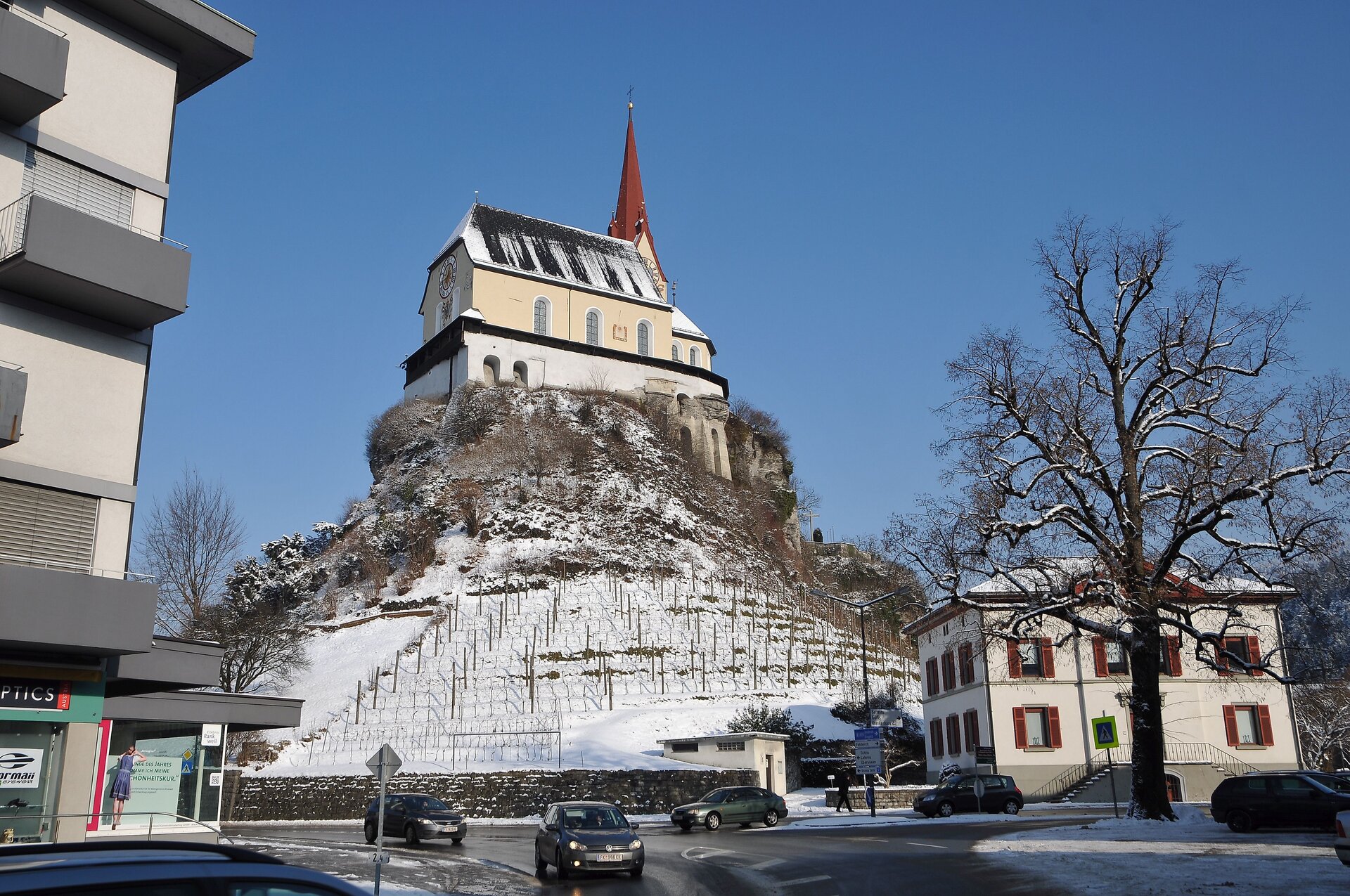
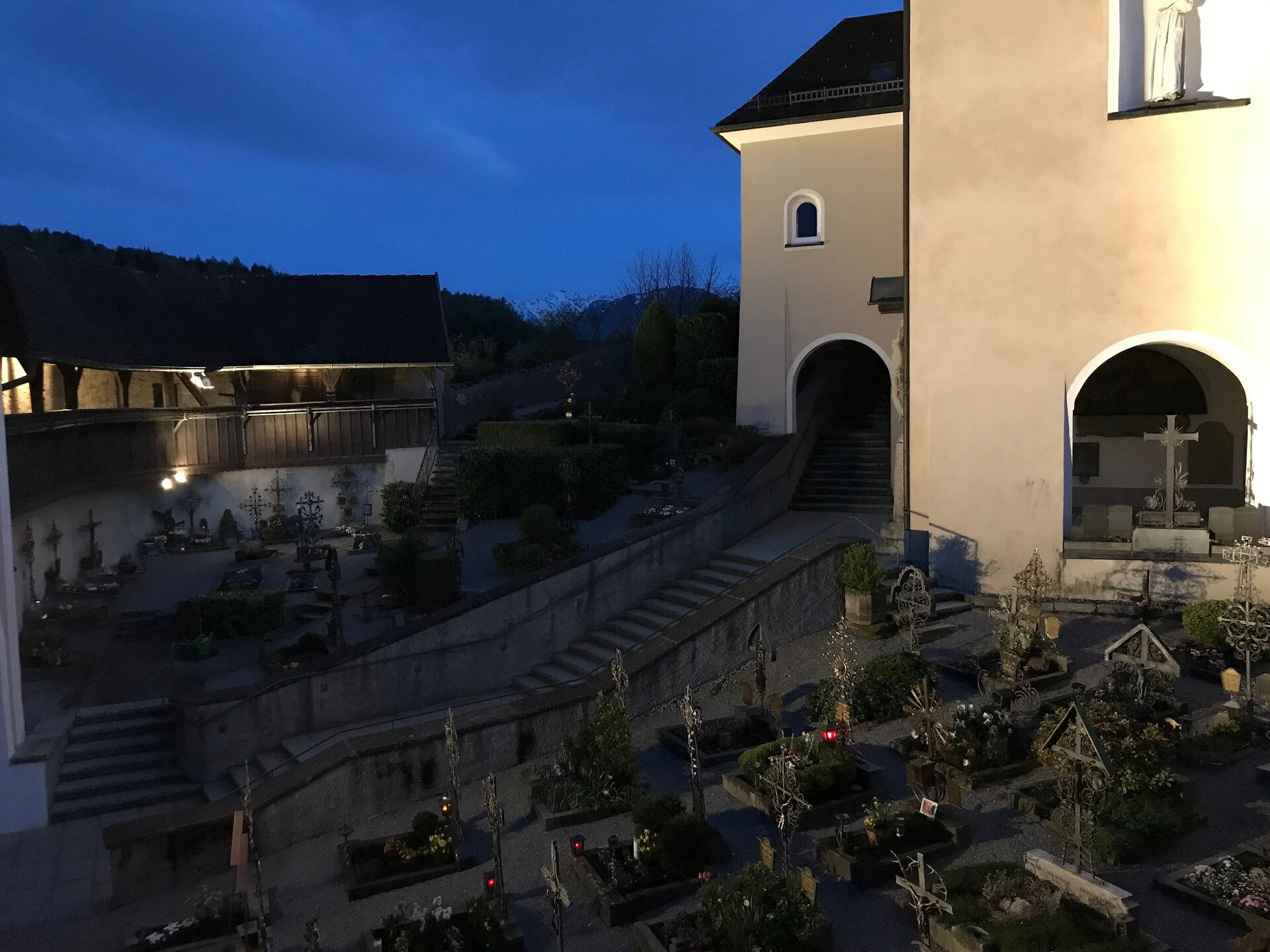
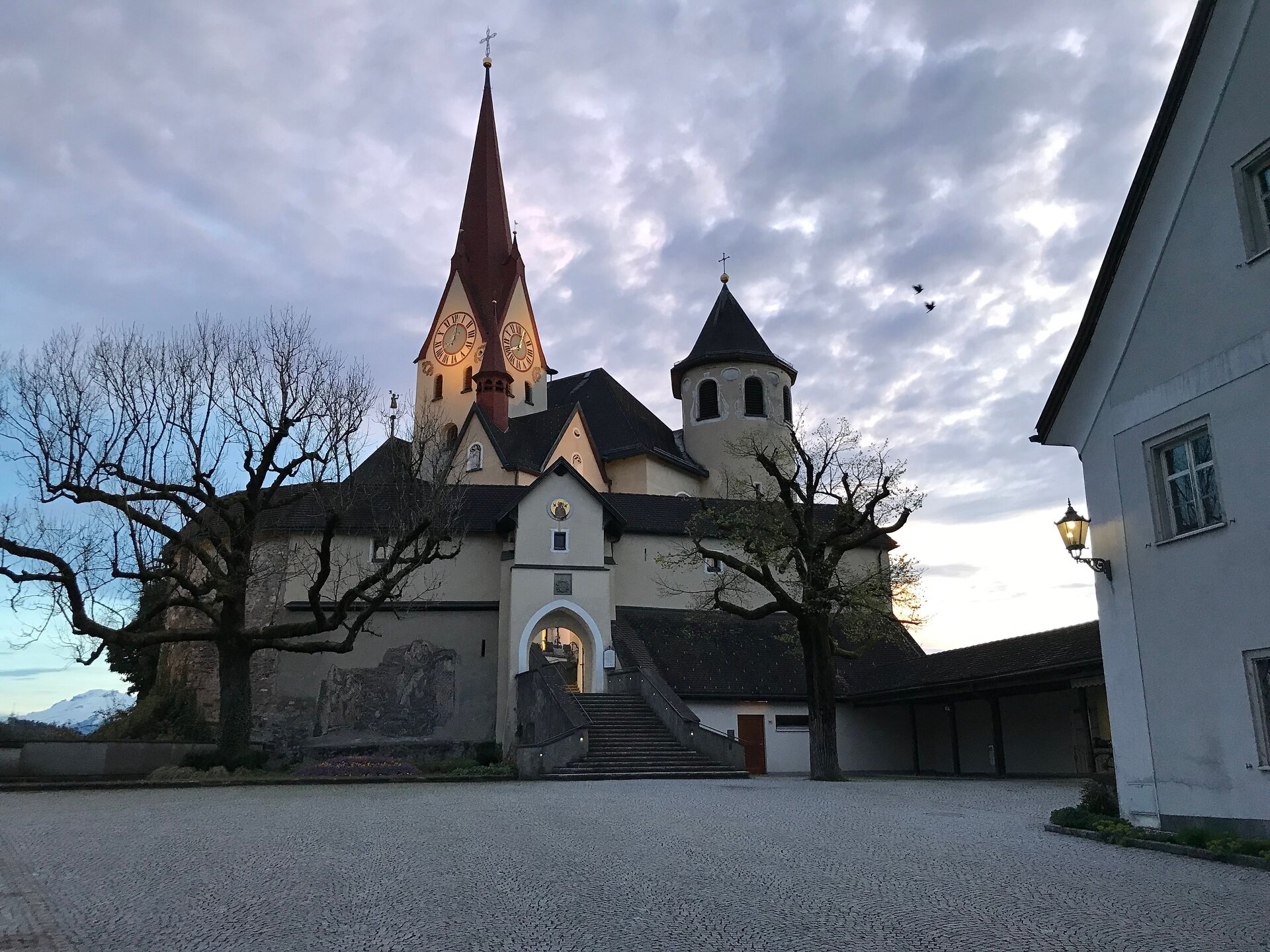
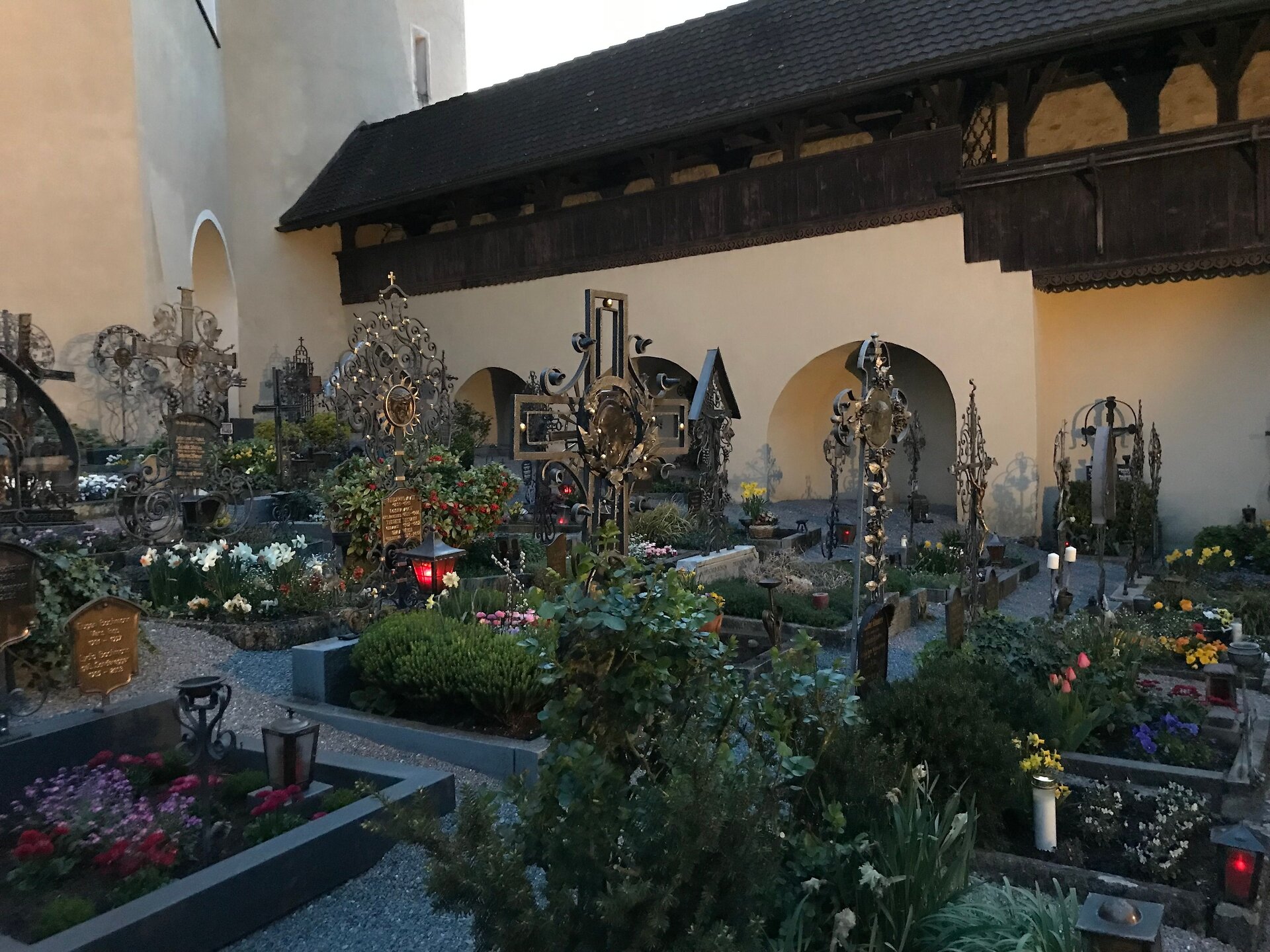
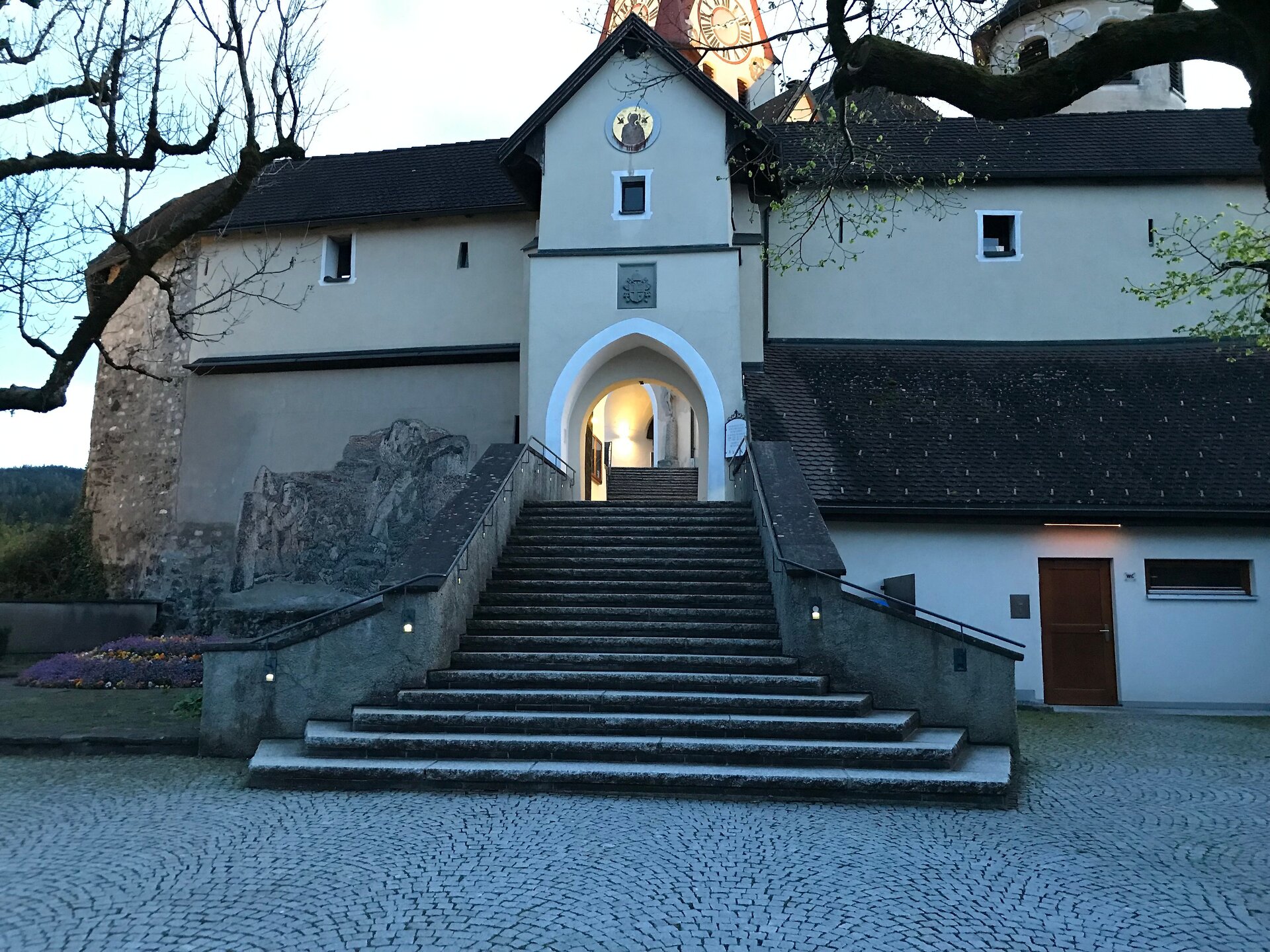
Fortified—this first impression is not misleading: The Rankweil Basilica on Liebfrauenberg was built as a fortified church, a unique type of early Christian religious building. The church’s roots date back to the 8th century. Protected on the outside by an impressive defensive wall with a battlement walk and arrowslits, visitors enter the churchyard through a massive gate tower. The bell tower, too, is a former defensive tower.
The basilica houses three religious objects that make it a popular place of pilgrimage: a wooden image of grace from 1460, the “Silver or Miraculous Cross,” and the Fridolin Stone, which is said to alleviate pain. The former St. Fridolin Chapel below the church was converted into a state memorial chapel in 2012. In this contemplative space, wild natural rocks meet minimalist architecture, light meets dark, and water meets metal.
Description
Fortified—this first impression is not misleading: The Rankweil Basilica on Liebfrauenberg was built as a fortified church, a unique type of early Christian religious building. The church’s roots date back to the 8th century. Protected on the outside by an impressive defensive wall with a battlement walk and loopholes, visitors enter the churchyard through a massive gate tower. The bell tower, too, is a former defensive tower.
The basilica houses three religious objects that make it a popular place of pilgrimage: a wooden image of grace from 1460, the “Silver or Miraculous Cross,” and the Fridolin Stone, which is said to alleviate pain. The former St. Fridolin Chapel below the church was converted into a state memorial chapel in 2012. In this contemplative space, wild natural rocks meet minimalist architecture, light meets dark, and water meets metal.
Location
- Address
-
Parish Church of Our Lady of the Visitation, Rankweil Basilica
Liebfrauenberg 12
6830 Rankweil, Austria
(c) Amt der Vorarlberger Landesregierung - Abteilung Kultur