


MiM - Museum in the Malhaus
Description
The Malhaus is part of the historic complex on the Wasserburg Peninsula. Built in 1597 as a courthouse, it tells fascinating stories today.
Small, charming, surprising—and always worth a visit.
Summary
The Malhaus is part of the historic complex on the Wasserburg Peninsula. Built in 1597 as a courthouse, it tells fascinating stories today.
Small, charming, surprising—and always worth a visit.
Description
Museum im Malhaus
Small, charming, surprising—and always worth a visit...
Small—The Former Courthouse
Well, “small” is always relative… but for Wasserburg, this building is quite large! It’s a historical treasure, a gem of the Wasserburg Peninsula, which has played a significant role in shaping the town’s character on Lake Constance for centuries.
After the Fuggers acquired the Wasserburg domain in 1592, they had a two-story town hall and courthouse—the Malhaus—built on the peninsula in 1596–97 under Georg Fugger. With the construction of this building, they established a distinct architectural framework for the jurisdiction over capital crimes, a power previously held by the Counts of Montfort-Tettnang.
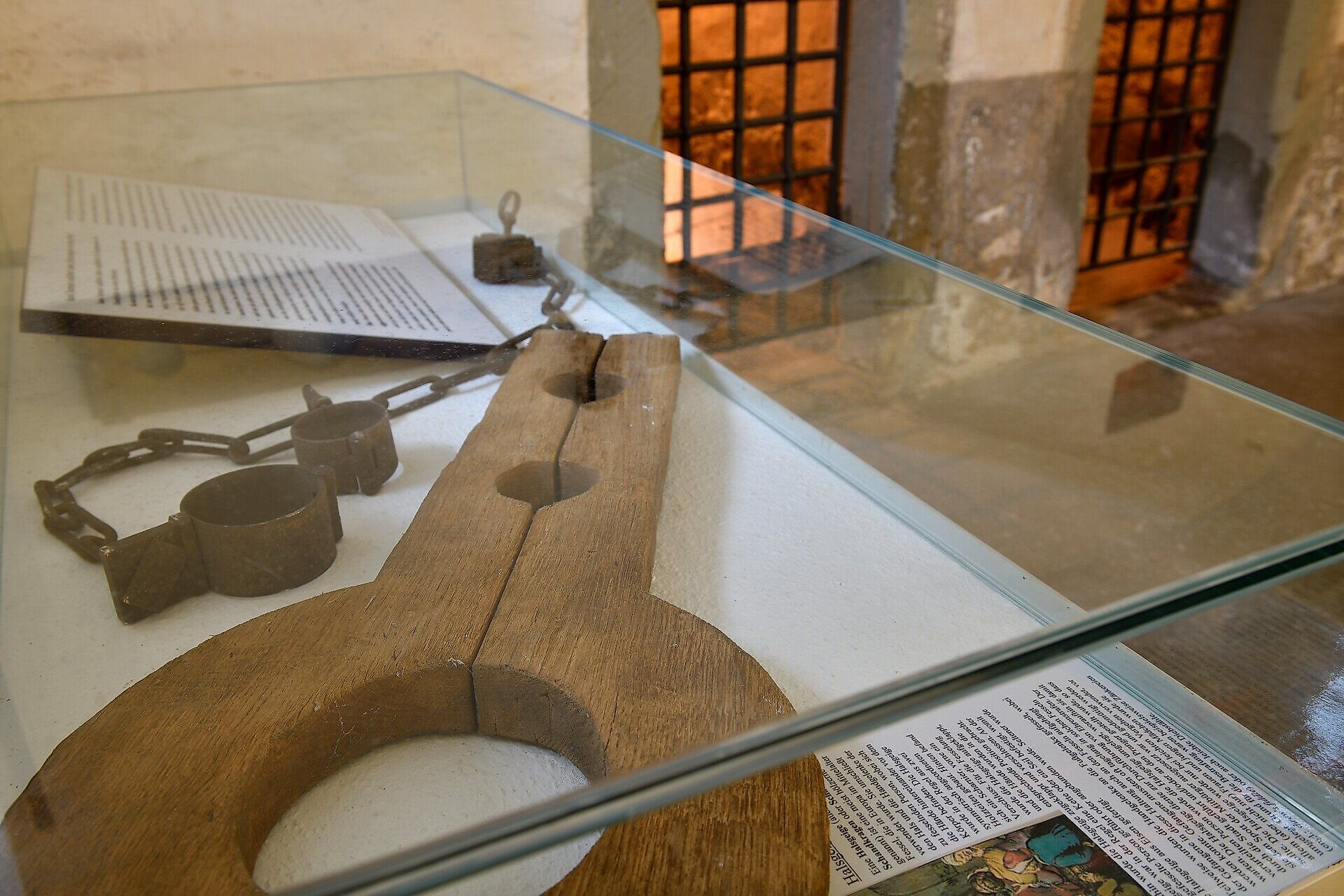
The Malhaus, into which massive sections of the old fortress wall were incorporated during its construction, housed not only prison cells and a room for torture on the ground floor but also a courtroom with a “Lindau wooden ceiling” on the upper floor. The courtroom, with its historic wooden ceiling, and some of the prison cells can still be visited today.
At the latest since the introduction of compulsory education in 1781 in Wasserburg—which had been under Austrian rule since 1755—the Malhaus was used as a school and a residence for teachers. However, it is not unlikely that the courtroom was used as a classroom prior to this time. The nearby Vogtshaus was also used as a school. When the municipality of Wasserburg received the Vogtshaus as a gift in 1815 from the Bavarian King Maximilian I Joseph—to whose kingdom Wasserburg had belonged since 1805—it was completely converted into a school building, and school operations were moved out of the Malhaus. The teacher’s apartment remained in use until the 1960s.
Until the remodeling and renovation work in 1978, the building housed not only living quarters but also the municipal library. Afterward, the building was gradually converted into a small, charming museum, which has been run on a volunteer basis by an association since 1979 and presents exhibitions on art, culture, and history.
Highlights—The Permanent Exhibits
The ground floor offers an insight into the history of fishing, which became an important industry in Wasserburg at the beginning of the 20th century and continues to this day to supply fresh Lake Constance fish to local restaurants.
In addition—and this is not solely due to the building’s history—the prison cells are displayed alongside an exhibition on the witchcraft trials. The criminal trials, which were held in the Malhaus from 1597 to 1668, ultimately led to the conviction and execution of the defendants in nearly all cases.
On the upper floor, visitors can admire the coats of arms of Wasserburg’s former owners, as well as historical costumes and exhibits on the history of Wasserburg.
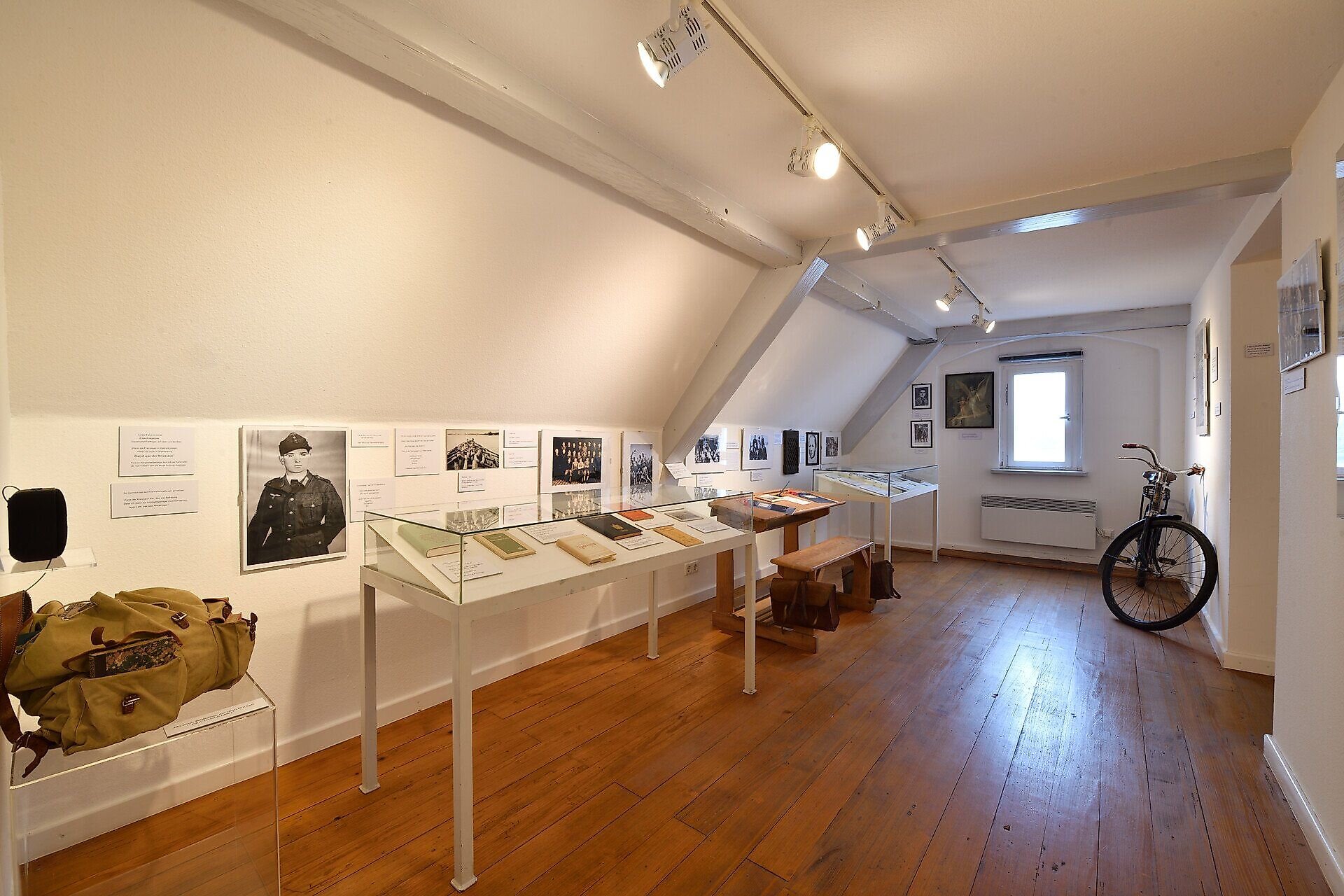
The attic is dedicated to the two writers and honorary citizens of Wasserburg, Dr. Martin Walser and Dr. Horst Wolfram Geißler, with a focus on the childhood and youth of Martin Walser, who was born in Wasserburg.
A Surprise: The Rotating and Special Exhibitions
Temporary exhibitions are held in the former courtroom on the upper floor. These feature rotating displays on art, culture, and history. In the past, visitors have been able to admire art and photography exhibitions, historical toys and models, as well as fascinating historical exhibits on local fruit growing, crafts, and tourism.
The museum’s website lists the current themes on display, ranging from the visual arts to the rich local history of the former Wasserburg imperial domain and everyday life.
Pricing Information
Adults
-
Adults
€4.5 -
EBC Discount
€4
Hours of Operation
- Wednesday-Friday
- 10:30-12 o'clock
- Sunday
- 10:30-12 o'clock
- Wednesday-Friday
- 10:30-12 o'clock
- Sunday
- 10:30-12 o'clock
- Wednesday-Friday
- 10:30-12 o'clock
- Sunday
- 10:30-12 o'clock
- Wednesday-Friday
- 10:30-12 o'clock
- Sunday
- 10:30-12 o'clock
- Wednesday-Friday
- 10:30-12 o'clock
- Sunday
- 10:30-12 o'clock
Details
- Spring
- Summer
- Fall
Location
- Address
-
MiM - Museum in the Malhaus
Halbinselstrasse 77
88142 Wasserburg (Bodensee), Germany
Contact
- Telephone
- +49 8382 750457
- info@museum-im-malhaus.de