


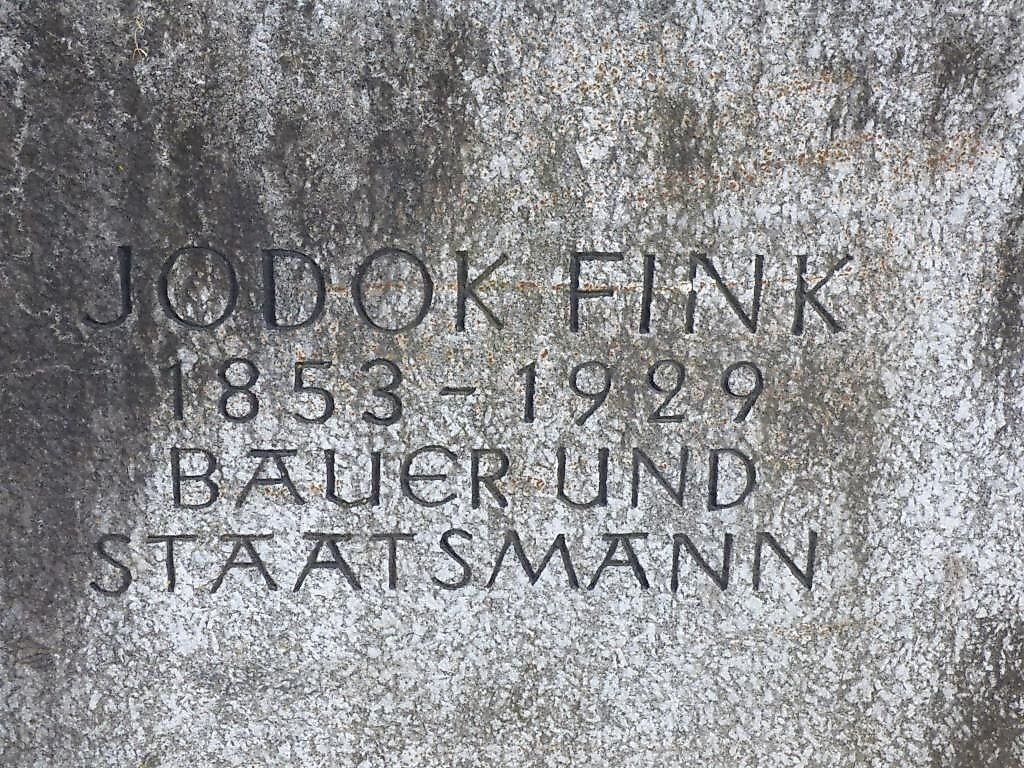
Jodok-Fink Monument
Brief Description
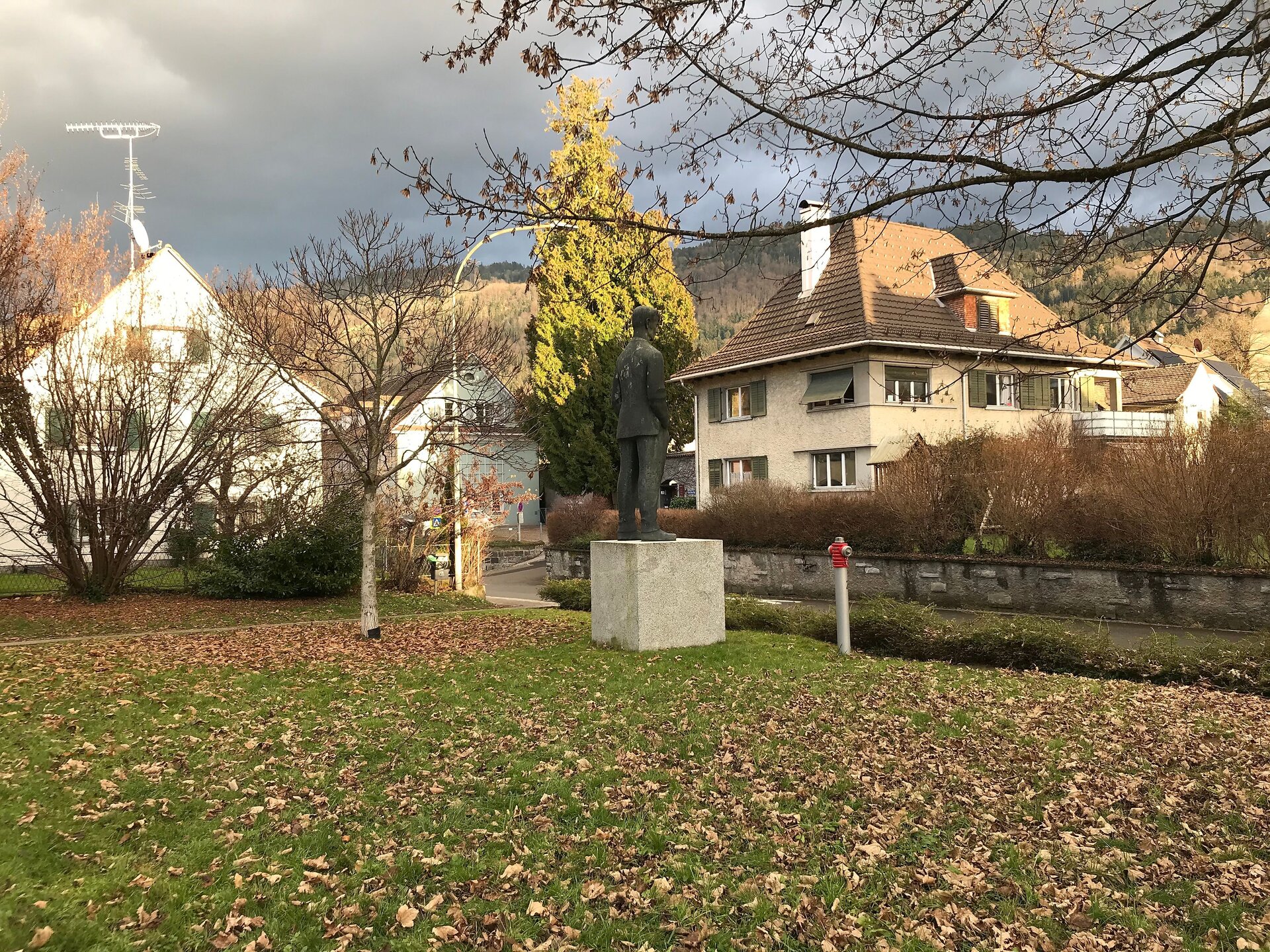
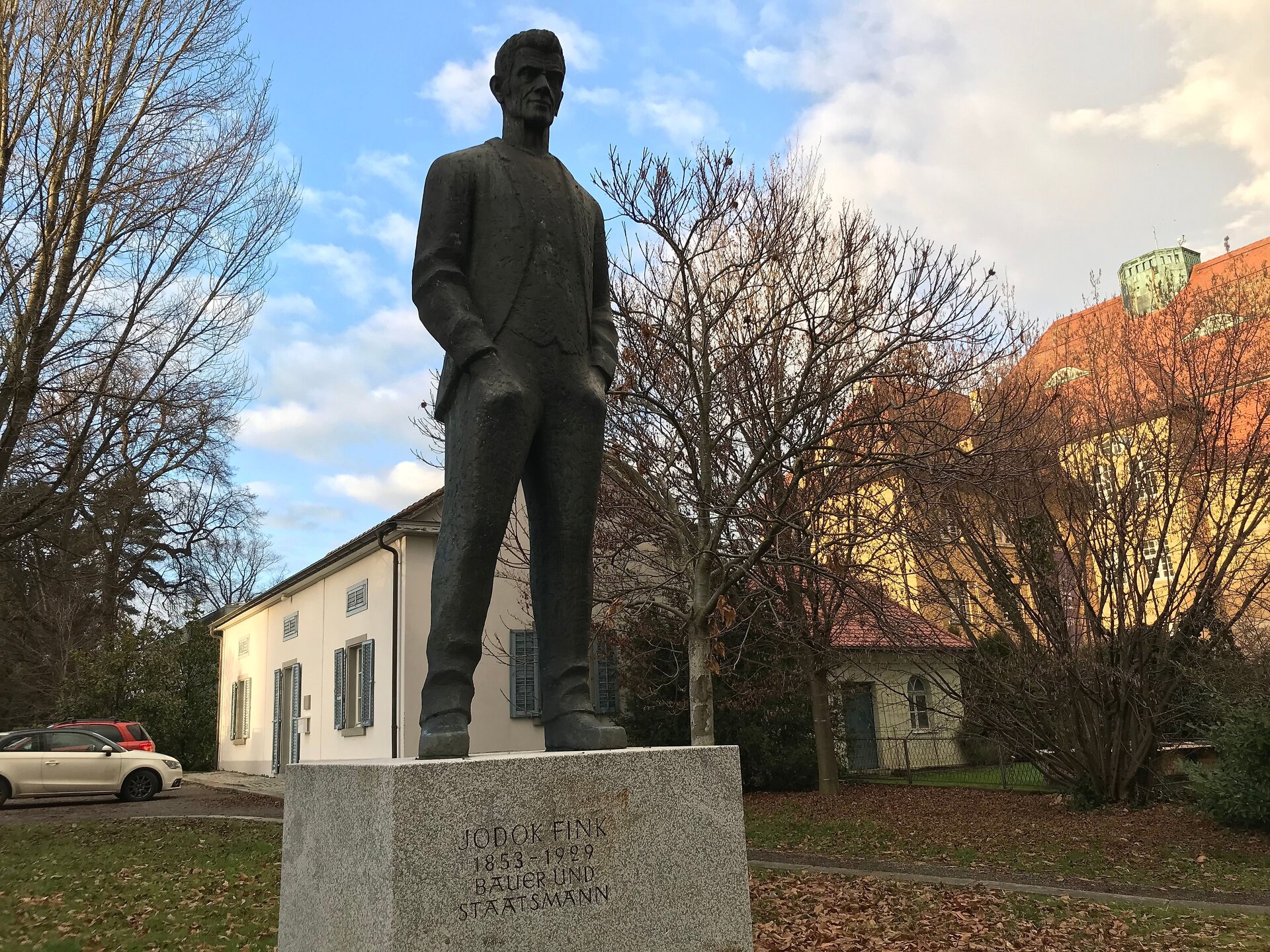
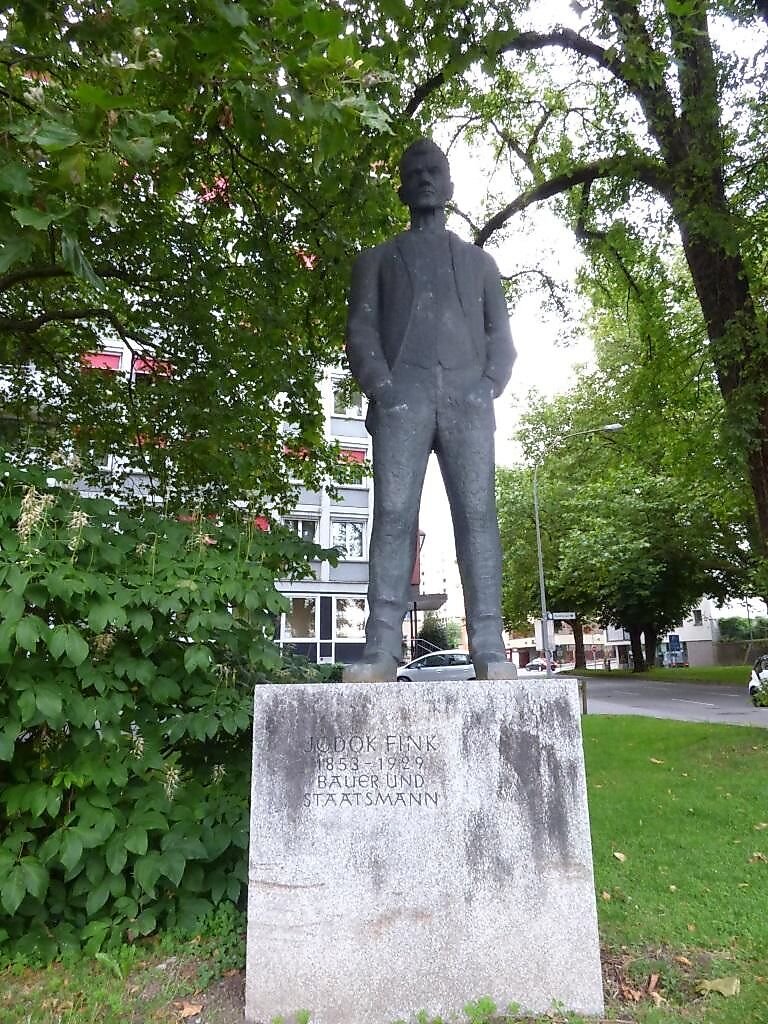
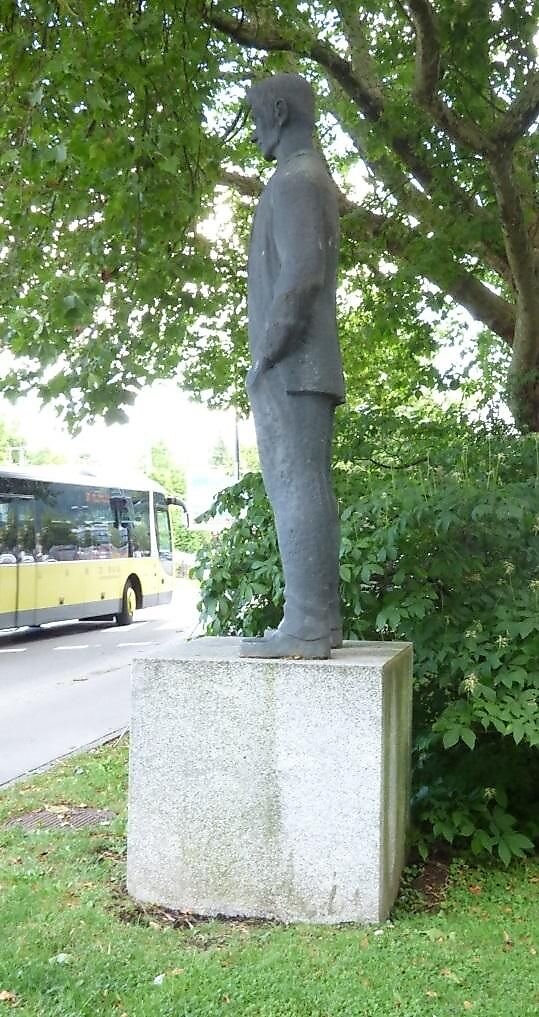
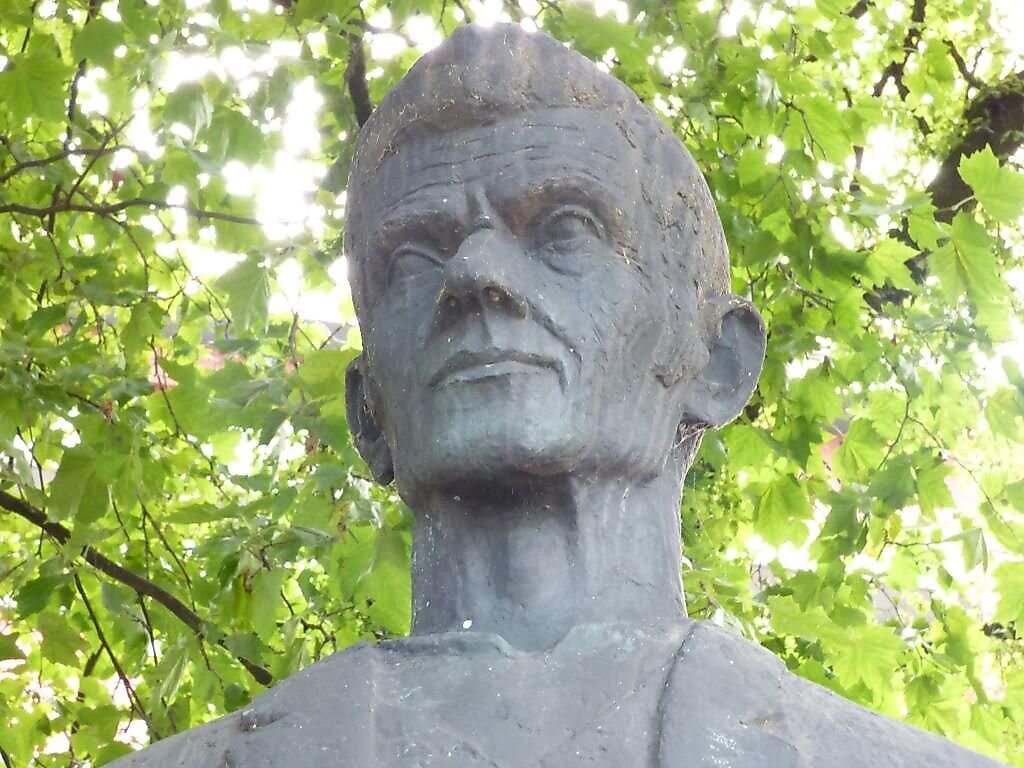
Monument to Jodok Fink, created by sculptor Emil Gehrer
Brief Description
Monument to Jodok Fink, created by Emil Gehrer
Description
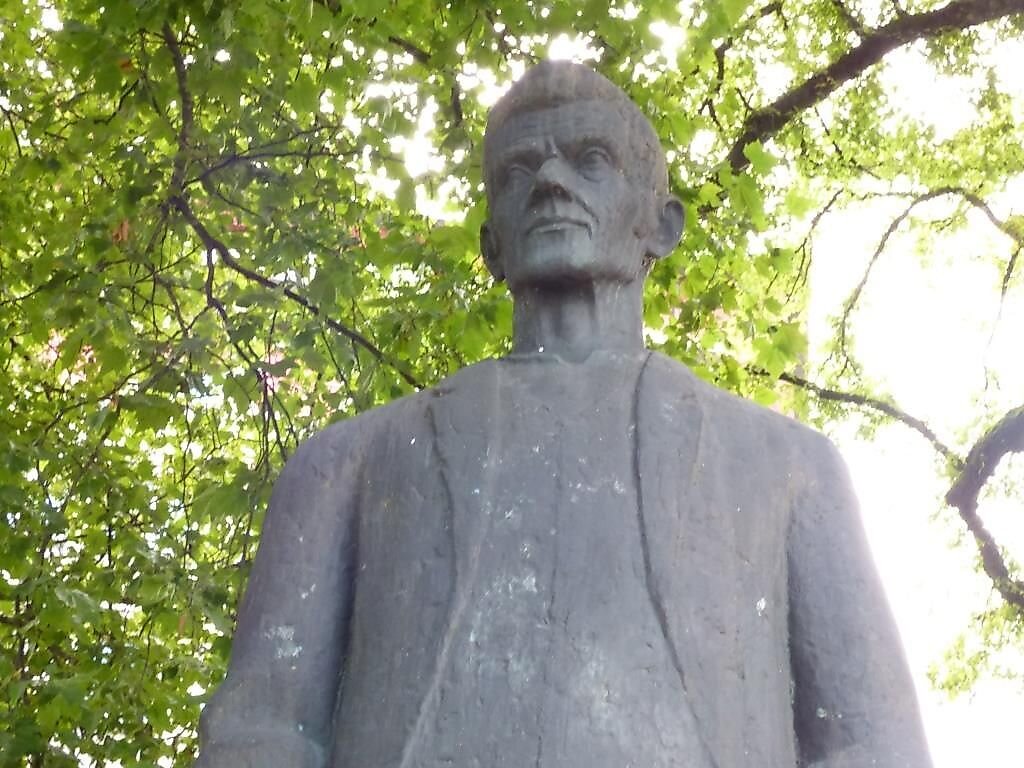
Jodok Fink, a native of the Bregenzerwald, was a farmer and served as Vice Chancellor alongside State Chancellor Karl Renner from 1919 to 1920. He played a key role in the establishment of an independent Vorarlberg. In this sculpture, the artist Emil Gehrer captured Jodok Fink’s self-confidence, his democratic convictions, and his determination. The depiction of Fink with his hands in his pockets was highly controversial at the time of the sculpture’s installation.
Emil Gehrer was born in Bregenz in 1913 and died in 1992. He completed an apprenticeship as a stonemason, later attended the School of Applied Arts in Vienna, and studied sculpture at the Academy of Fine Arts in Munich.
Description
Jodok Fink, a farmer and statesman born in the Bregenzerwald, was born in 1853 and served as Vice Chancellor of the First Republic of Austria in 1919–1920. He played a key role in the establishment of an independent Vorarlberg. In this sculpture, the artist Emil Gehrer captured Jodok Fink’s self-confidence, his democratic convictions, and his determination. The depiction of Fink with his hands in his pockets was highly controversial at the time of the sculpture’s installation.
The sculptor Emil Gehrer was born in Bregenz in 1913 and died in 1992. He completed an apprenticeship as a stonemason, later attended the School of Applied Arts in Vienna, and studied sculpture at the Academy of Fine Arts in Munich. Emil Gehrer created the bronze sculpture, which was erected across from the train station in 1957 and relocated to the Palais Thurn und Taxis Park in the summer of 2020. The Bregenz-based artist is also responsible for the depiction of the minstrel Hugo von Montfort on the fountain at Ehregutaplatz.
Location
- Address
-
Jodok-Fink Monument
Bahnhofstraße 39
6900 Bregenz, Austria
(c) Amt der Vorarlberger Landesregierung - Abteilung Kultur