


Hochbucher Drumlin (“Entenberg”)
Brief Description
Detailed Description
And it was all created by ice: The beautiful, majestic, and eternally radiant landscapes that delight us so much in this region today were not always there. With tremendous force, unimaginable masses of ice once slowly but surely and inexorably pushed their way down from the Alps into the region. The ice ages came and went—leaving behind a reshaped landscape.
Humans have long shaped the landscape
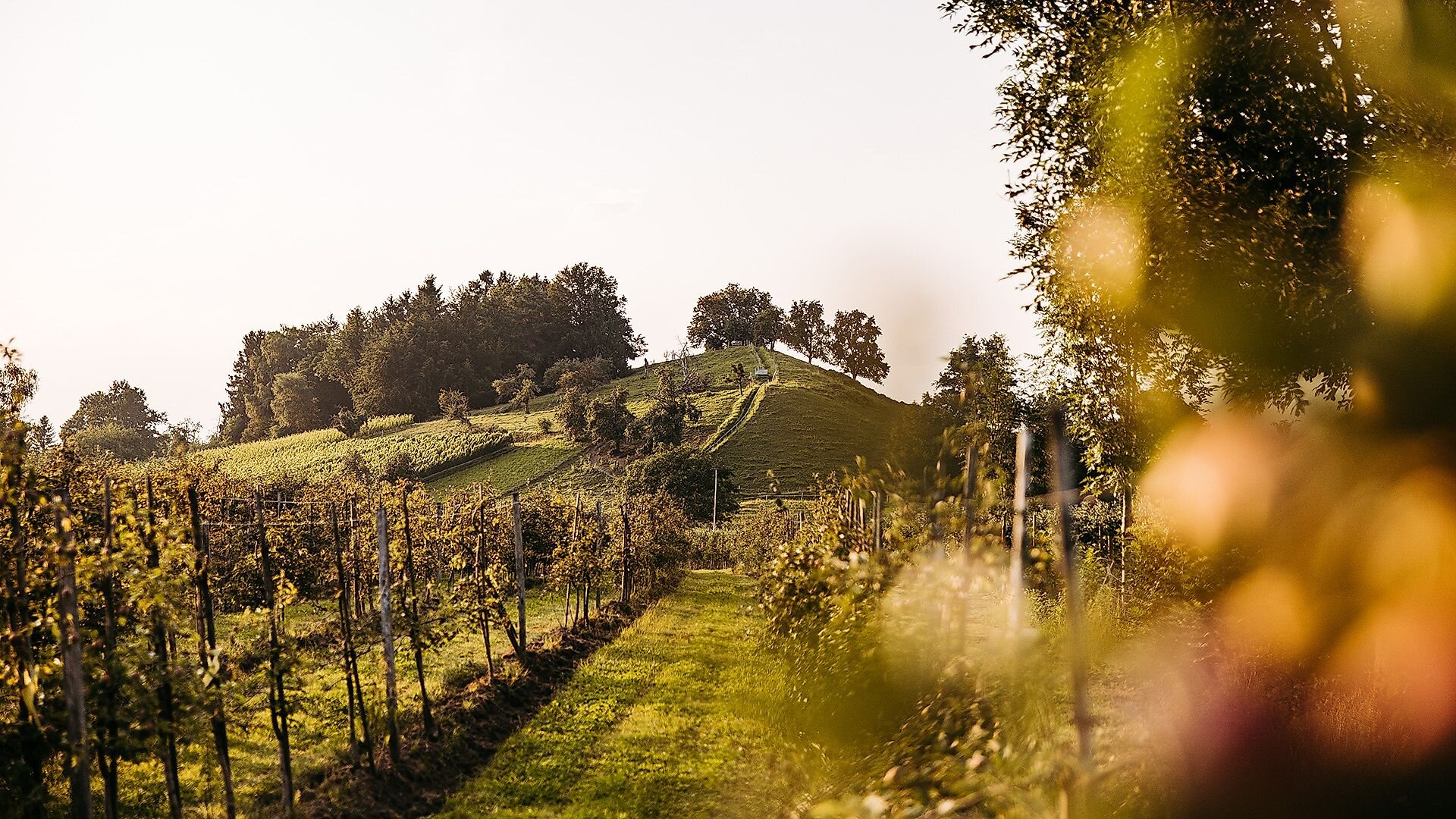
A clearly recognizable sign of glacial forces are the so-called drumlins (see info box). These elongated hills characterize the area around Lindau and often serve as perfect vantage points from which to survey the surrounding countryside. The Hochbucher Drumlin is a particularly beautiful example. While hiking or walking, you can see that today’s landscape is shaped just as much by humans as by the forces of ice.
It is a picturesque part of the city whose small, fragmented plots trace back to the fruit and vegetable cultivation so typical of the region: orchard meadows worthy of protection, vineyards, vegetable gardens, and here and there perhaps some livestock farming are the common forms of agricultural management.
A Look Back at History—and Far Out Across the Countryside
On the path up to the drumlin stands a vineyard keeper’s cottage that has been lovingly restored and has stood here for more than 300 years. This, too, is a well-preserved reminder of the agricultural culture of that era: the vineyard keeper’s primary “job” was to scare birds away from the vines. Only upstanding citizens were considered for this role, and the position commanded great respect.
So the hike up the drumlin is worthwhile not only for the view but also because you can discover a piece of Lindau’s history here. That said, the view of the vast countryside alone is worth every step, especially on a clear day. But everyone is welcome to see that for themselves up there.
What exactly is a drumlin?
It’s not known why the Irish word for “small ridge” or “ridge” has come to be used for these elongated, teardrop-shaped hills. Drumlins are usually no more than a few hundred meters long and about ten meters high, though they can sometimes reach up to 40 meters. Glacial ice is responsible for their formation. The orientation of a drumlin’s longitudinal axis always reveals the direction in which the ice moved. Drumlins are often found in groups, as here in Lindau.
Location
- Address
-
Hochbucher Drumlin (“Entenberg”)
Eulenloch
88131 Lindau