


AT · Frastanz
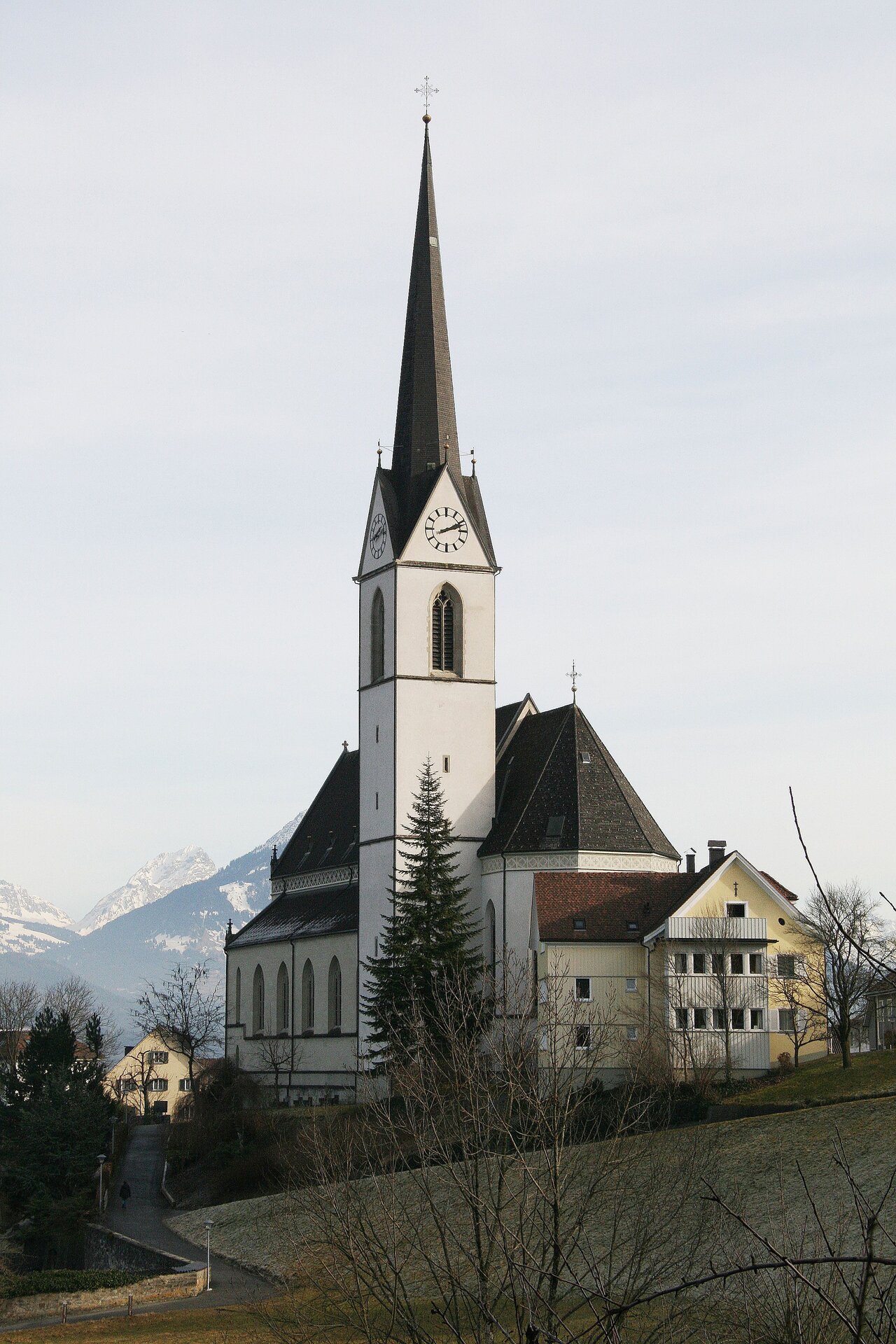
Frastanz, Catholic Parish Church of St. Sulpitius
Description
Records indicate that an altar was consecrated in Franstanz as early as 1413. Evidence points to a new building around 1480, followed 200 years later by a Baroque church. The Sulpitius Church owes its current appearance to the plans of Friedrich von Schmidt, which were carried out in 1885. Three years later, the parish church was consecrated. Fidelis Rudhart played a key role in the interior design from the turn of the century. For the altars, he chose the Rosary theme, from left to right: the Joyful, Sorrowful, and Glorious Mysteries. One stained-glass window from 1890 was created by the Tyrolean Stained-Glass Workshop, while another, from the 1960s, was made by Martin Häusle. The bell by Lazarus Berger was cast in 1512.
Hours of Operation
freely accessible
Price
freely accessible
Location
- Address
-
Frastanz, Catholic Parish Church of St. Sulpitius
Schlossweg 2
6820 Frastanz, Austria
