


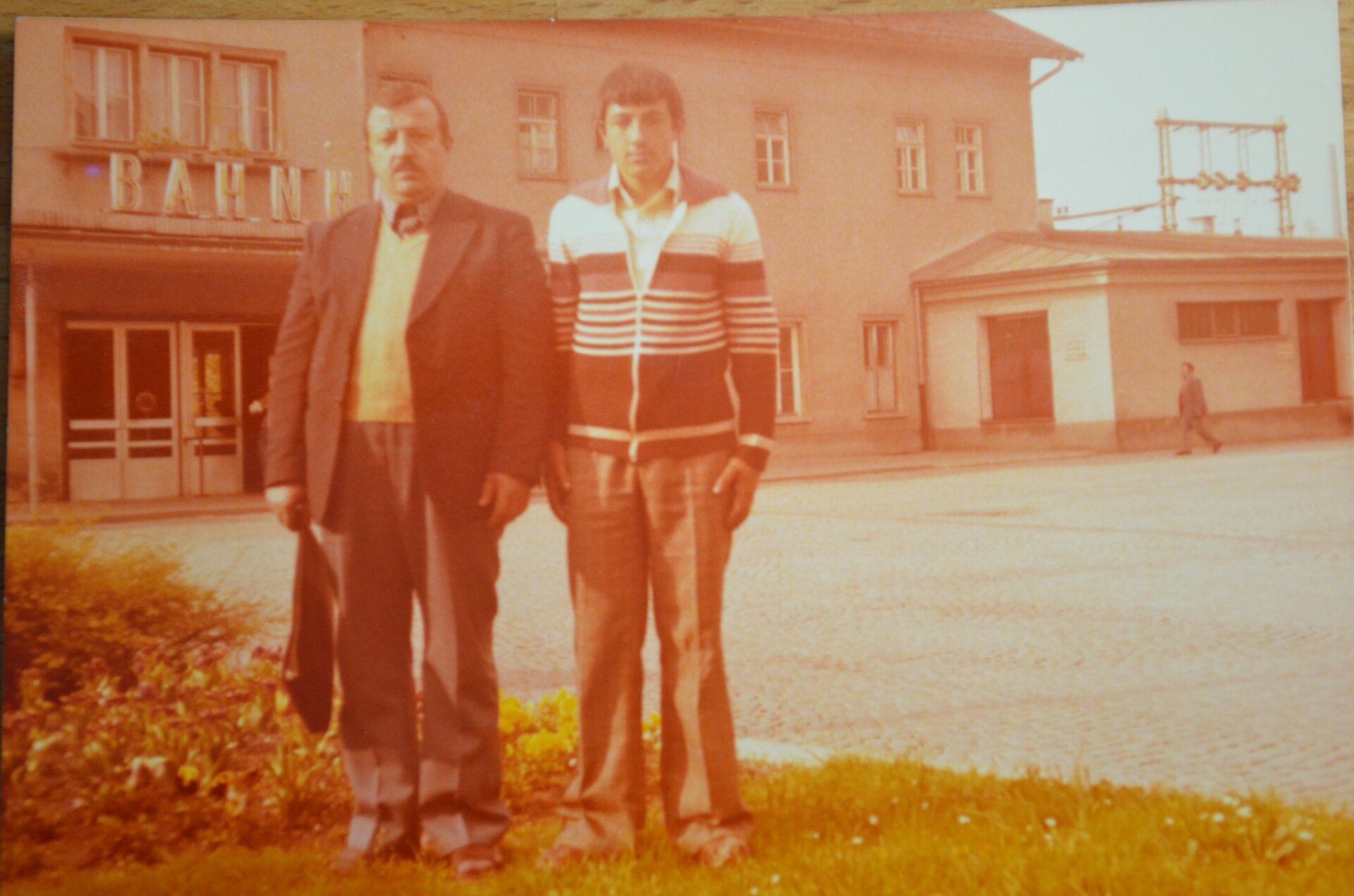
Dornbirn TR Train Station
Description
Train Station / Longing / Arrival
Trabzon/Istanbul/Dornbirn. Every time I think about how I had to leave my family behind, I’m overcome with tears. My wife was living with my parents at the time. Our parents were responsible for looking after our spouses and children, whom we had to leave behind at that time. Now, all of this—packing our suitcases right after our wedding in our youth to go to another country whose language and culture were foreign to us—may not seem right. I took a “dolmuş” from the village to Trabzon, and from there I took a bus to Istanbul. Whenever I think about that last day, tears stream down my cheeks. We have a tradition of saying goodbye to those who are setting out on a long journey. Nearly half the village had gathered to see me one last time and to carry out the tradition we call “Helalleşmek.” Another of our farewell traditions is to pour a bucket of water behind the person who is leaving. (This tradition comes from the shamans and is still practiced today.) As soon as we arrived in Istanbul, we went to the market, because provisions for the journey and Turkish delicacies were a must. You’d be hard-pressed to find these in Vorarlberg. Sucuk, cheese, bread, and spices—and more—could all be packed together. Of course, the books we picked up on Turkish literature—to read about our homeland—were also among the items in our suitcase. Photos and a small Turkish flag also constantly reminded me of why I had come to Austria.
www.stadtarchiv.dornbirn.at/menschenspuren
www.vielfaltenarchiv.at/menschenspuren
Location
- Address
-
Dornbirn TR Train Station
Eisenbahnlinie 7
6850 Dornbirn, Austria
Contact
(c) Stadtmuseum Dornbirn