


Castle Section Gate
Description
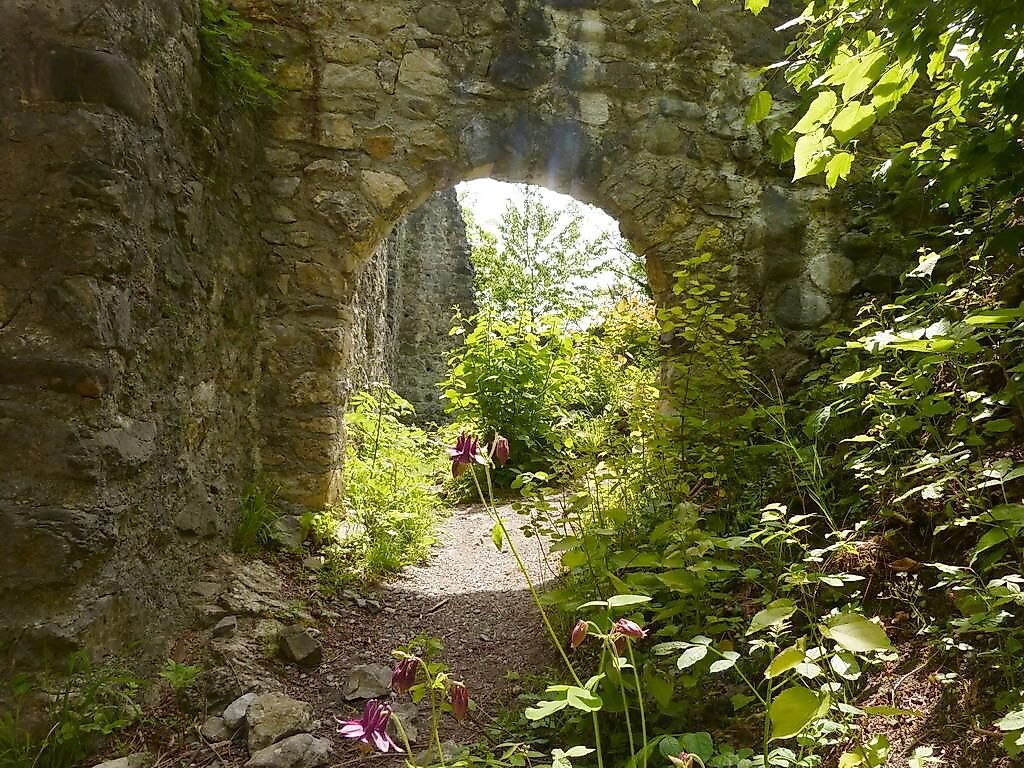
Ahead of them is a gateway, at the top of which stalactites—or, more precisely, stalactites—are forming. These are created by dripping water, which unfortunately indicates that water is seeping through the wall above, a condition that isn’t particularly good for their durability.
Note: There is a particularly notable formation of dripstones very close to Neuburg, in the Kalkofen Cave. These were discovered during the construction of the highway and, unfortunately, were largely destroyed by irresponsible people.
To your left is the entrance to the cellar of the great hall. An entrance carved into the rock was found here. On the right, you can see the oldest part of the castle, the so-called keep. It was likely built in the second third of the 12th century and served primarily as a fortified residence, a tower house.
To reach it, we’ll now take the narrow path ahead of us.
Location
- Address
- Castle Section Gate 6842 Koblach, Austria