


Bavarian Riviera
Brief Description
Detailed Description
Trends are a funny thing: someone just starts one. And if it’s not just anyone, imitators will soon follow—especially if there’s something to the trend. This is more or less how one can interpret the brisk construction and design activity that began in Lindau in the mid-19th century and gave rise to an entire “villa district” on the waterfront. That said, historians might rightly take issue with dismissing decades of developments in Lindau’s city history as a mere “trend.” But first things first:
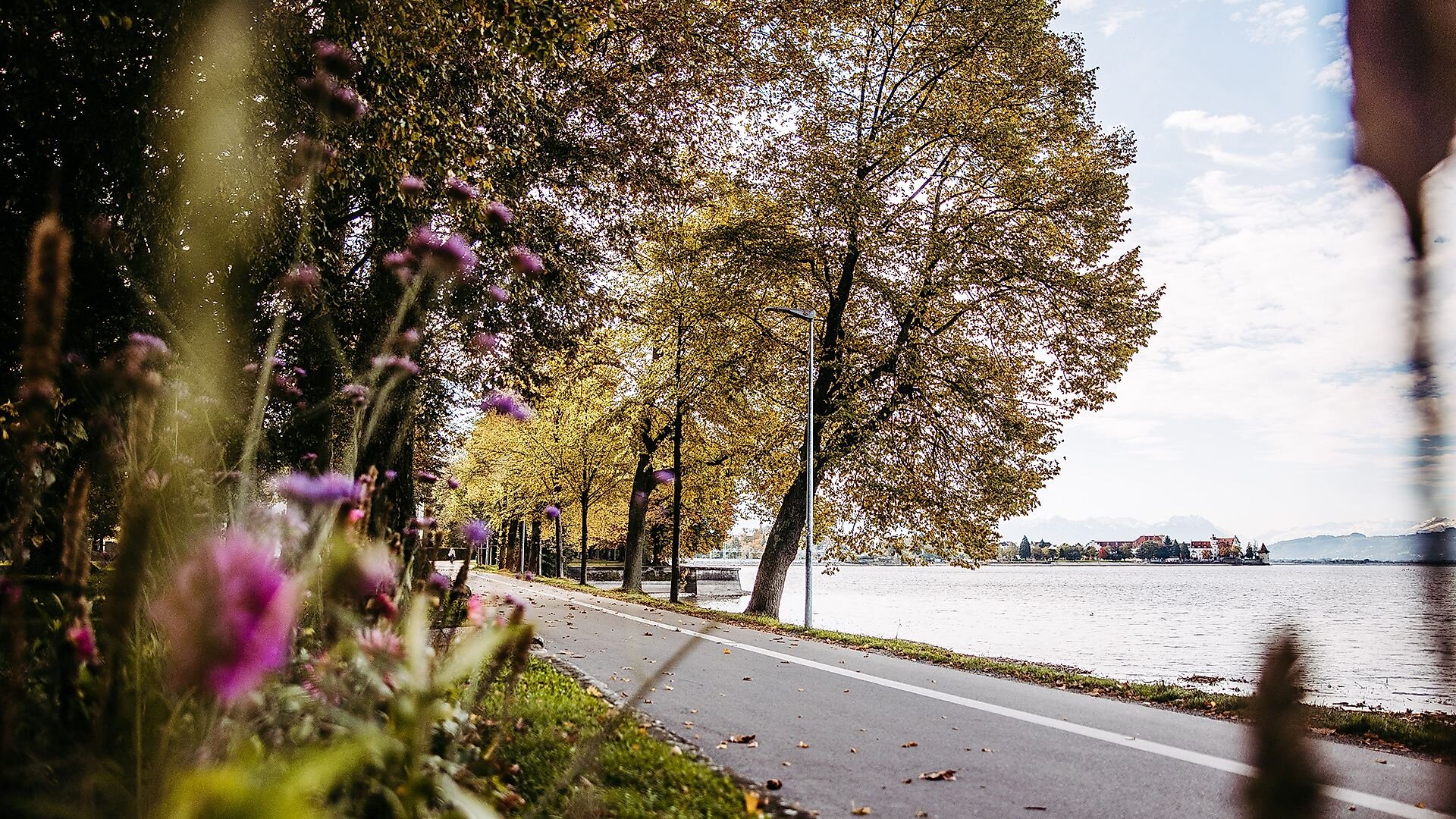
The fact that the “Bavarian Riviera”—that roughly six-kilometer stretch of Lindau’s waterfront, which remains one of the most beautiful destinations in the entire region—is still called that today should probably be described as enduring. Thirty elegant villas and mansions have survived to this day, and their parks and green spaces—some of which are truly spectacular—are even open to the public in some cases.
It all began royally
A certain Friedrich Gruber, a successful banker and merchant from Genoa, was the first to have a summer residence built here. He was soon followed by the nobility in the form of Prince Luitpold, who purchased Villa Amsee here in 1848 as his summer residence. The royal purchase, if nothing else, triggered a veritable boom—or perhaps a trend. Numerous nobles and those citizens who could otherwise afford it moved here over the years and decades. They either purchased estates and had them redesigned or had the villas built from the ground up according to their own visions.
The model for them all was, of course, the Italian Riviera, which Prince Luitpold—and others—felt reminded of when gazing upon the Lindau shore of Lake Constance. The aristocrats and wealthy residents of Lindau adopted the lifestyle of the Italian nobility—as well as their self-presentation—in a variety of ways, such as in the design of their family tombs or in the layout of their parks and villa gardens.
If exile it must be—then here!
Seen in this light, the term “trend”—used somewhat tongue-in-cheek above—simply falls far short of capturing such a significant chapter in the city’s history as Lindau’s Bavarian Riviera. The buildings constructed up until the early 20th century allow visitors to marvel at the diverse architectural styles of the era against a picturesque backdrop—ranging from Neoclassicism to the Italian-influenced Neo-Renaissance and Art Nouveau.
By no means did all the noble gentlemen and ladies find happiness on the Bavarian Riviera. Some had only a few years to enjoy their mansions and grounds, while others came not entirely of their own free will—such as the Grand Duke of Tuscany, Ferdinand IV (1835–1908). He would certainly not have denied the beauty of Lindau’s shores on Lake Constance. However, he settled here in the mid-19th century likely only because he was forced into exile.
Location
- Address
- Bavarian Riviera 88131 Lindau