


Art: Gisalz 98
Description
A “Great Gate” and a house emblem commemorate the Walser migration in Übersaxen
Brief Description
A “Great Gate” and a house emblem commemorate the Walser migration in Übersaxen
Description
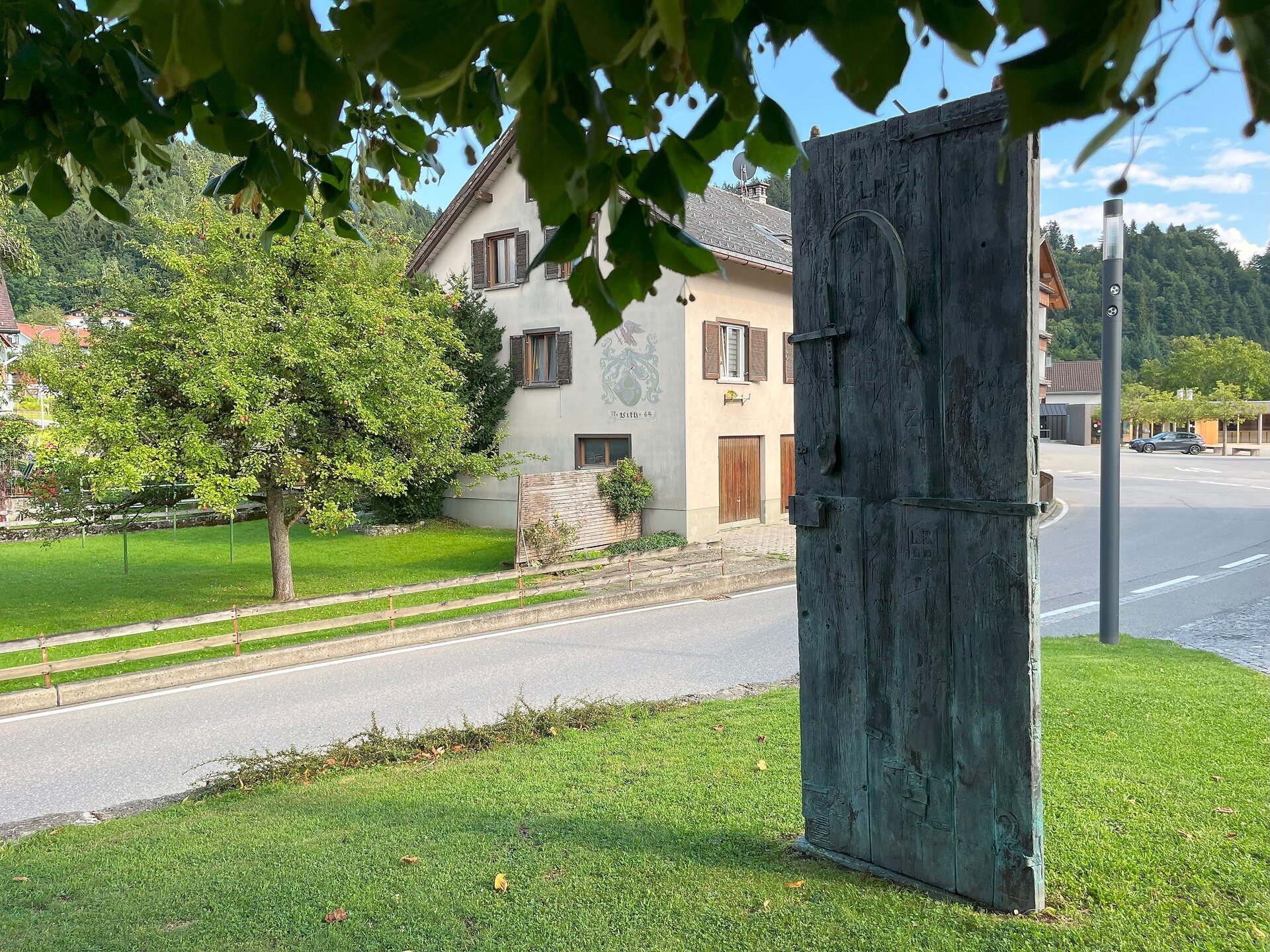
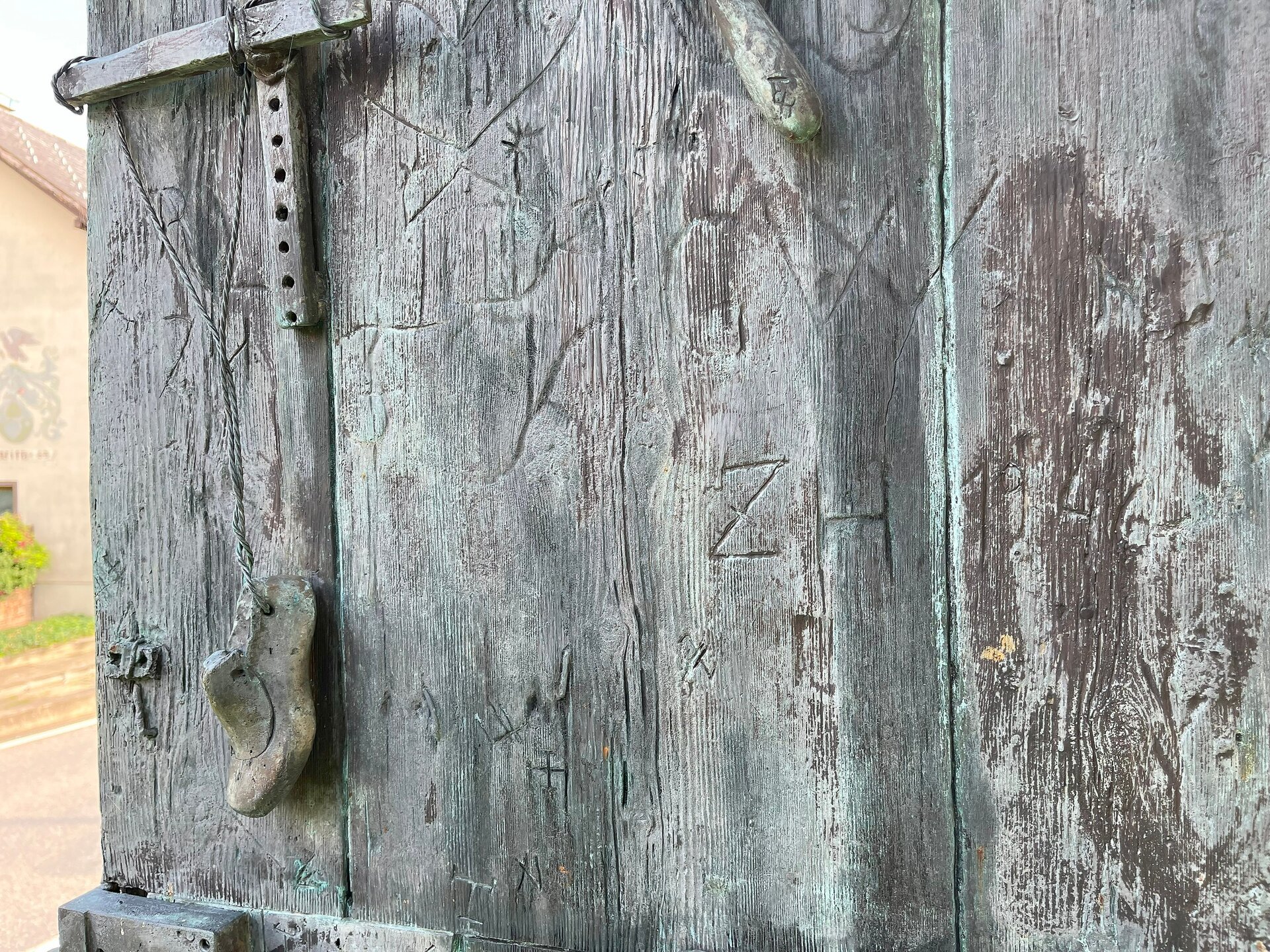
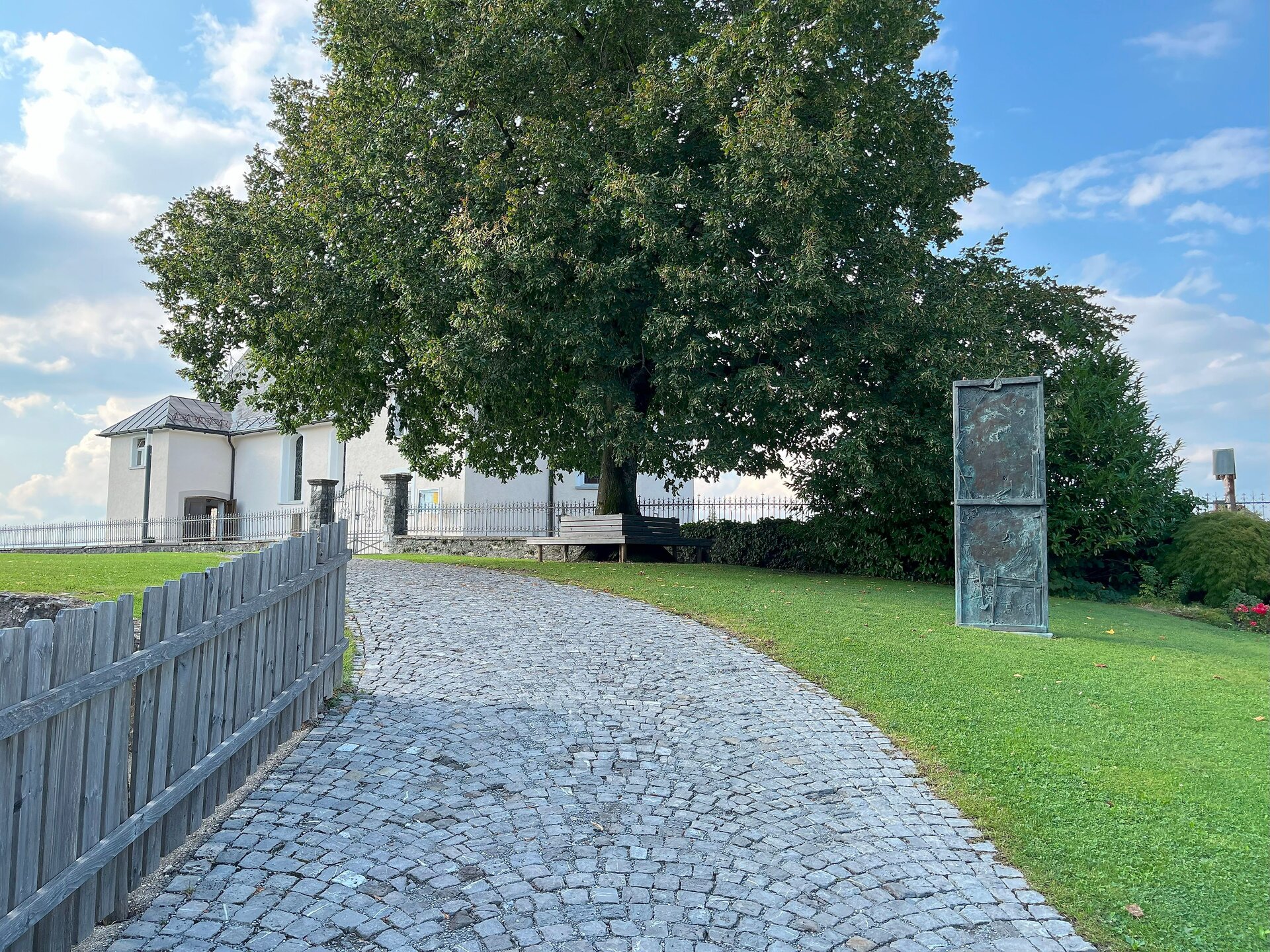
The starting point for the cross-border art and communication project called “Gisalz 98” is the Walser house symbols, which have been handed down since the Middle Ages and were taken up and brought together by the Vorarlberg artist Herbert Fritsch. In the center of the village, Fritsch installed a freestanding bronze gate, carved on both sides, which commemorates the Walser migration and thus the origins of the village’s inhabitants. The “Great Gate” was erected in September 1998 on the Gisalz plot. On one side of the gate, objects and tools that have long since fallen out of use (a sickle, a laundry reel, a shoe last) have been affixed, evoking the mountain farming lifestyle of days gone by. On the other side, Fritsch has mounted driftwood (cast in bronze), which, steeped in history, held enormous significance for the mountain villages of Vorarlberg.
For Übersaxen, Fritsch also designed house numbers in yellow and black, each featuring a corresponding house symbol. In the Middle Ages, these served to identify property for farmers who could neither read nor write. Although this symbolic language has since lost its former significance, the artist drew upon it, updated it, and developed a new symbol for every house in Übersaxen. The street signs also bear a symbol.
Herbert Fritsch (b. 1945 in Düns, d. 2007 in Feldkirch), environmental artist, draftsman, sculptor. 1960–1965: Studied at the Teacher Training College, Feldkirch; 1970–2002: Taught at the Pedagogical Academy in Feldkirch; 1974–1981: Academy of Fine Arts, Vienna (Maximilian Melcher, Edelbert Köb).
Location
- Address
-
Art: Gisalz 98
Kirchplatz
6834 Übersaxen, Austria
(c) Amt der Vorarlberger Landesregierung - Abteilung Kultur