Alemannic Carnival
The fifth season on Lake Constance
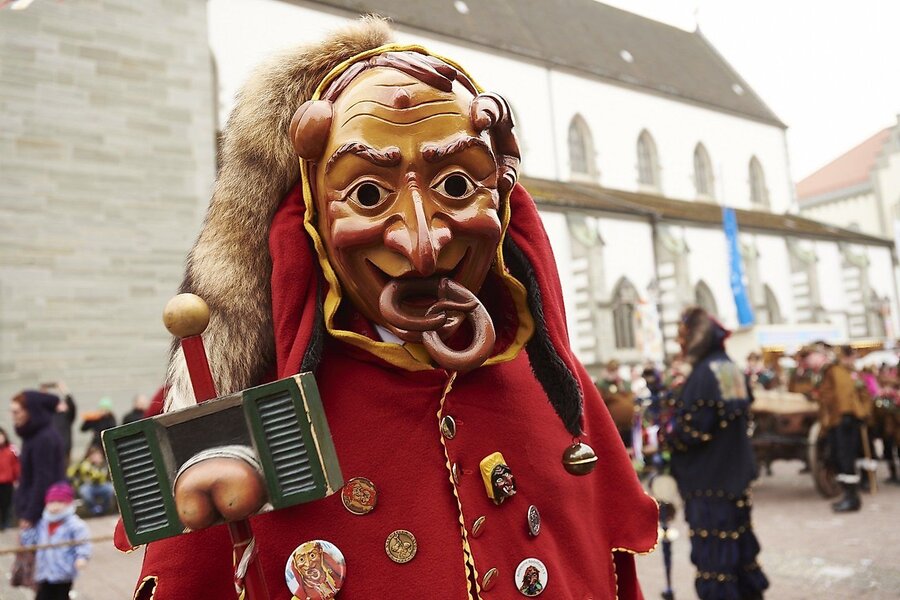
When bells ring out through the streets, intricately carved masks appear and Guggenmusik fills the squares, the ‘fifth season’ begins around Lake Constance. In Germany, Austria, Switzerland and the Principality of Liechtenstein, a wide variety of traditions and customs have developed over the centuries.
Sometimes it is called Fasnet, sometimes Alemannic Carnival or Fasching – what they all have in common is that special blend of time-honoured customs, exuberant celebrations and regional identity. Fools’ guilds, historical figures, parades and traditional rituals make the carnival season a special experience in this four-country region.
Fasnet, Alemannic Carnival or Fasching?
Around Lake Constance, the ‘fifth season’ goes by many names. In Baden-Württemberg, the Swabian-Alemannic ‘Fasnet’ is particularly widespread; in Switzerland, the term ‘Alemannic Carnival’ is predominantly used, whilst in Vorarlberg the term ‘Fasching’ is frequently employed.
But it is not just the names that differ. Each region has developed its own characters, carnival chants, musical traditions and rituals. It is precisely these regional differences that make the Alemannic Carnival around Lake Constance so diverse.
The Crazy Days: A calendar of the carnival season
When does the spectacle begin, and when does it reach its climax? In the Four-Country Region, time moves at a different pace to the Rhineland. Whilst carnival revellers get things underway on 11 November, the Swabian-Alemannic Fasnet season, in strict accordance with tradition, does not begin until 6 January – Epiphany. On this day, the ritual of ‘Häs-Abstauben’ takes place. The masks and costumes are taken out of their boxes, dusted off after a year in storage and officially prepared for the coming season.
The absolute highlight, however – the so-called ‘crazy days’ – takes place in the week before Lent. This period is packed with specific events:
- Schmutziger Donnerstag (also known as ‘Schmotziger Dunschtig’ or ‘Gumpiger Donnerstag’): This is the most important festival in the Swabian-Alemannic region. The term ‘schmotzig’ means ‘greasy’ in the Alemannic dialect and stems from the traditional frying of doughnuts, Fasnetsküchle and Scherben in hot fat, as these supplies had to be used up before Lent. On this day, town halls are stormed, mayors are deposed and the fools officially take power.
- Carnival Sunday and Rose Monday: The largest and most colourful parades take place on these days. Tens of thousands of spectators line the streets as the carnival guilds make their way through the historic old towns around Lake Constance.
- Carnival Tuesday: The final day of unbridled revelry. In many towns, the ‘Fasnetsverbrennung’ (Carnival burning) takes place late in the evening. A straw effigy or a symbolic object is burnt or sunk into Lake Constance amidst the loud lamentations of the revellers.
- Ash Wednesday: The carnival season comes to an abrupt end on Ash Wednesday. All the carnival costumes are stowed away in chests once more. Traditionally, people get together for a fish dinner or a bowl of snail soup to mark the start of the 40-day Christian period of Lent leading up to Easter.
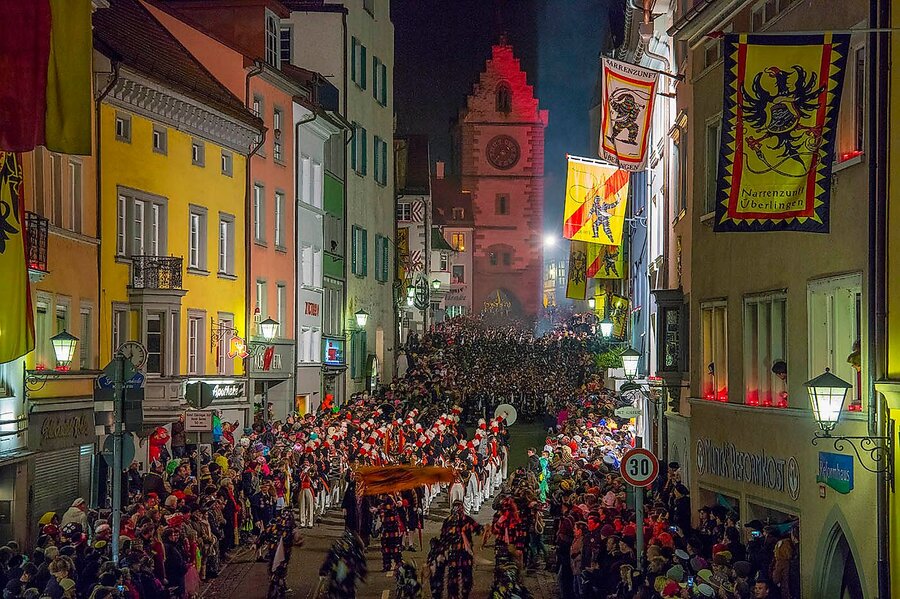
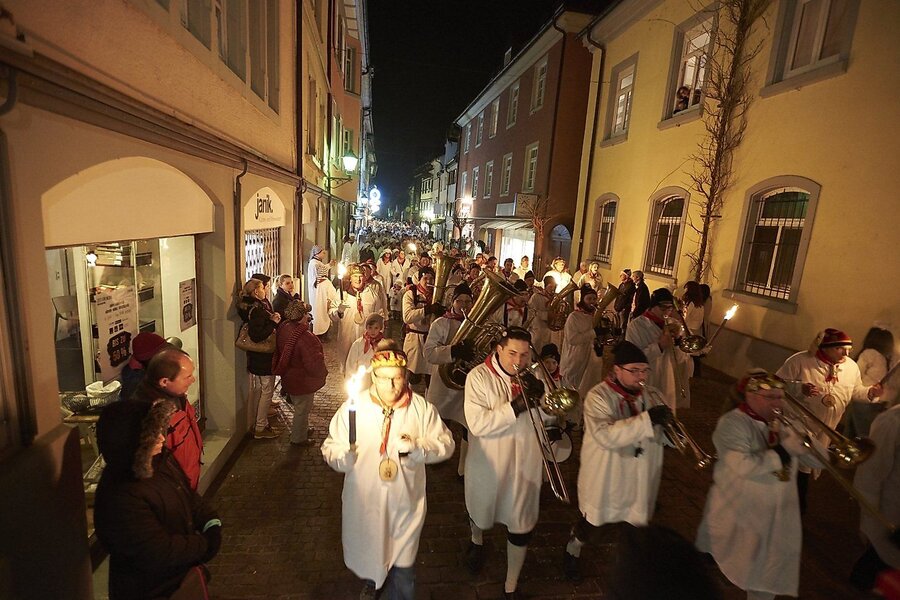
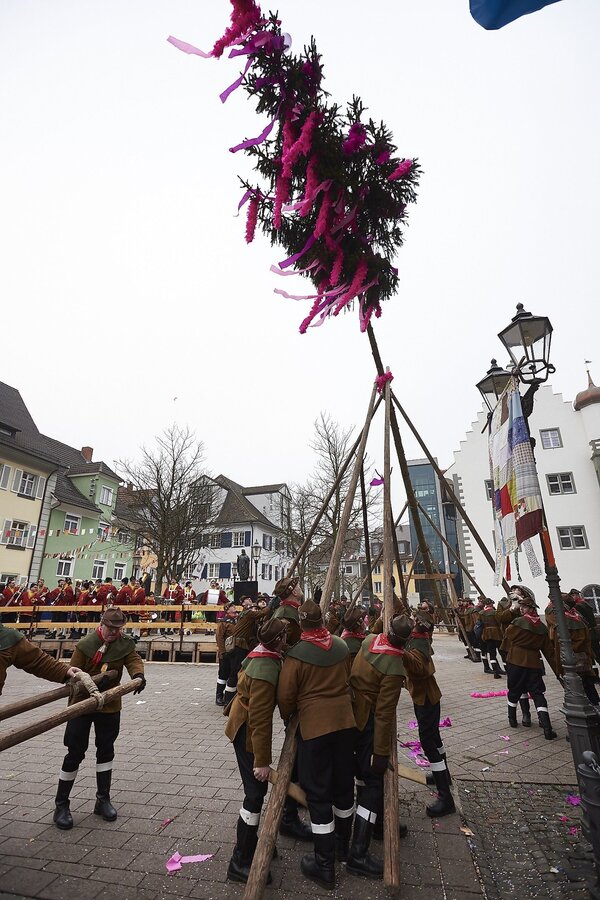
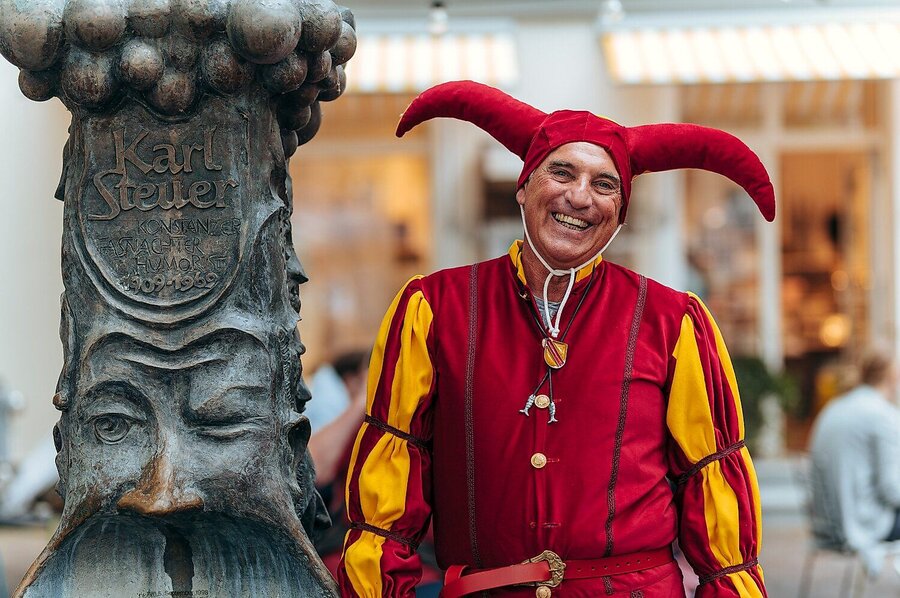
Carnival parades and events
Anyone wishing to experience this special spectacle for themselves should keep an eye on the calendar: the dates for the Alemannic Carnival are determined by the moon and the date of Easter calculated from it – and therefore vary from year to year. In the days leading up to Ash Wednesday, the ‘fifth season’ finally reaches its climax and the Vierländerregion is completely taken over by revellers. The latest events calendar shows when and where the celebrations are taking place.