Hops & Beer
Hops & Beer: A Tradition
Hop fields, traditional breweries and a diverse beer culture are all part of the culinary landscape around Lake Constance. In Germany, Austria, Switzerland and the Principality of Liechtenstein, centuries-old brewing craftsmanship, regional ingredients and modern brewing concepts come together. Hops, in particular, link the landscape with culinary delights: around the lake, you can discover where they grow, how they are used to make beer and which brewing traditions have been preserved to this day.
Anyone wishing to delve deeper into the beer culture of this four-country region can not only taste it but also experience it first-hand. Museums and interactive exhibits tell the story of hop cultivation and the history of brewing, breweries open their doors, and walking and themed trails lead through the cultural landscapes where one of beer’s most important ingredients grows.
Hop growing on Lake Constance
Alongside water, malt and yeast, hops are one of the basic ingredients of beer. They provide the characteristic bitterness, influence the aroma and help to preserve the beer. There is a long tradition of hop-growing around Lake Constance. The Tettnang hop-growing region, to the north of the lake, is particularly well known. However, hops are also cultivated in Switzerland, including in Thurgau.
The region offers favourable conditions for hop growing. The comparatively balanced climate, sufficient rainfall and suitable soils support the growth of this demanding plant. Lake Constance also influences the regional climate and helps to stabilise temperature fluctuations. As a result, hop growing has developed over generations into a distinctive feature of the cultural landscape.
In spring, the hop plants begin to grow and climb several metres up the wires. In summer, the characteristic cones form. Inside them lies the yellowish lupulin, whose bitter and aromatic compounds later play an important role in brewing.
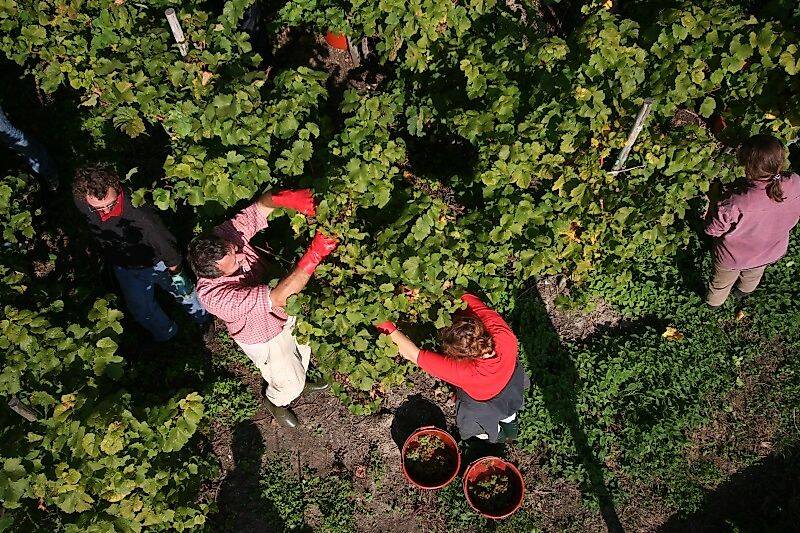
Harvesting usually takes place from the end of August through to September. The exact timing depends, amongst other things, on the hop variety and the weather. After the harvest, the cones are separated from the plants, dried and prepared for further processing.
Hops are more than just a raw material for breweries. The tall hop trellises characterise the landscape of the growing regions; hop cultivation preserves agricultural knowledge and traditions, and has long been a tourist attraction in its own right. Themed trails, museums and events bring the connection between agriculture and beer culture to life for visitors.
Wedding traditions in the Four-Country Region
Beer has been part of the culture of enjoyment and craftsmanship around Lake Constance for centuries. The famous St. Gallen monastery plan from the early 9th century shows just how far back this tradition stretches. It already included plans for three breweries serving different purposes within the monastery grounds – an extraordinary testament to the early importance of the brewing trade in the St. Gallen-Lake Constance region.
To this day, this craft is nurtured and developed around Lake Constance. Traditional, family-run breweries stand alongside smaller establishments and modern craft breweries. Time-honoured brewing expertise meets new recipes, regional ingredients and modern beer styles.
The journey to the finished beer begins with just a few ingredients: water, malt, hops and yeast. During mashing, crushed malt is mixed with water and heated. The resulting wort is then boiled with hops, which determine the bitterness and aroma. Once the yeast has been added, fermentation, storage and maturation follow. Depending on the ingredients and brewing method, this results in a wide variety of beers – from Helles, Export, Kellerbier and Zwickelbier to pale ales, IPAs and other specialities.
Beer-related experiences
Discover hops and beer
How are hops grown, how are they turned into beer, and where can you learn about the region’s brewing culture? Around Lake Constance, there are numerous opportunities to experience hops and beer first-hand. Traditional family-run businesses, small breweries and modern craft breweries offer insights into a brewing culture that has developed over centuries and remains vibrant to this day.
On brewery tours, visitors can take a look behind the scenes and follow the journey of the raw materials from the brewhouse to the finished beer. Tasting sessions offer the chance to discover different beer styles, flavours and regional specialities. Museums and interactive exhibits are also dedicated to hop cultivation, the harvest and the history of brewing.
This means that the beer culture of the Four-Country Region can be explored in a whole host of different ways – from the hops in the field, through the art of brewing, to the finished beer in the glass.
Discover breweries, museums, guided tours, tastings and other experiences centred on hops and beer around Lake Constance.

A walk through the hop-growing countryside
Hops and beer can be explored around Lake Constance not only in museums or breweries. Walking, hiking and themed trails wind through the region’s cultural landscapes, combining physical activity with insights into agriculture, hop-growing and brewing culture.
Hops transform the landscape, particularly during the growing season: the plants climb up structures several metres high, forming long green rows. Along the way, themed trails provide interesting facts about cultivation, harvesting and processing, and highlight just how closely the landscape and the enjoyment of beer are linked.
This allows you to discover beer culture without ever setting foot in a brewhouse – on foot and right where one of its most important raw materials grows.
Discover walks and themed trails centred on hops and beer.